• Car enthusiast? Join us on Cars Connected! iOS | Android | Desktop
  • Hint: Use a descriptive title for your new message
    If you're looking for help and want to draw people in who can assist you, use a descriptive subject title when posting your message. In other words, "I need help with my car" could be about anything and can easily be overlooked by people who can help. However, "I need help with my transmission" will draw interest from people who can help with a transmission specific issue. Be as descriptive as you can. Please also post in the appropriate forum. The "Lounge" is for introducing yourself. If you need help with your G70, please post in the G70 section - and so on... This message can be closed by clicking the X in the top right corner.

GV80 Eating Rear Tires

Tranquil

Registered Member
Joined
Jun 13, 2021
Messages
115
Reaction score
36
Points
28
Genesis Model Year
2021
Genesis Model Type
Genesis GV80
I have a Prestige,V6 that went through a set of tires at ~15K. I attributed the center tire wear to over inflation as I had run pressures above the factory settings. Replaced them and now, after close inspection, at 23,900 miles my rear tires are severely worn again. The wear pattern is in the center treads, both left and right tires evenly worn. I paid close attention to tire pressure on these tires ensuring 36 psi (cold) on the rear and 33psi (cold) on the front throughout the 8000 miles. My driving habit is very conservative with only moderate acceleration and easy turns. The front tires have very minimal and even, tread wear. Based on the presented evidence, I wonder if my problem transcends the usual tire wear diagnosis protocol. Has anyone had this problem?
 
I have a Prestige,V6 that went through a set of tires at ~15K. I attributed the center tire wear to over inflation as I had run pressures above the factory settings. Replaced them and now, after close inspection, at 23,900 miles my rear tires are severely worn again. The wear pattern is in the center treads, both left and -6 right tires evenly worn. I paid close attention to tire pressure on these tires ensuring 36 psi (cold) on the rear and 33psi (cold) on the front throughout the 8000 miles. My driving habit is very conservative with only moderate acceleration and easy turns. The front tires have very minimal and even, tread wear. Based on the presented evidence, I wonder if my problem transcends the usual tire wear diagnosis protocol. Has anyone had this problem?
I'm at 60,000 km in my Prestige 3.5 with lots of tread on the evenly worn tires. They are rotated every 8 - 10000 km (5 - 6000 miles). You may have an alignment issue, but the fact that only your rear tires are affected suggests that rotation would at least even out the wear.
 
I'm at 60,000 km in my Prestige 3.5 with lots of tread on the evenly worn tires. They are rotated every 8 - 10000 km (5 - 6000 miles). You may have an alignment issue, but the fact that only your rear tires are affected suggests that rotation would at least even out the wear.
Thanks BillZ. Tires were just rotated. Doesn't alignment usually address other problems including outside edge wear and not, center wear?
 
Thanks BillZ. Tires were just rotated. Doesn't alignment usually address other problems including outside edge wear and not, center wear?
I don't have the technical knowledge to comment, but you may well be right. A combination of over-inflation and the wrong alignment might do it though.
 
Mine wear more in the middle too. I keep them at 36 like the door plate states. I had the initial oil change done by the dealer and they deflated the rear to 33 like the front. Not sure why they did that but that may help with the issue.
 
Mine wear more in the middle too. I keep them at 36 like the door plate states. I had the initial oil change done by the dealer and they deflated the rear to 33 like the front. Not sure why they did that but that may help with the issue.
Jango, upon learning of the tire wear, my immediate thought was to do exactly the same thing, reduce the rear to 33. Thanks.
 
Jango, upon learning of the tire wear, my immediate thought was to do exactly the same thing, reduce the rear to 33. Thanks.
Depends. There is a reason the engineers came up with 36psi. It is an SUV and had a lot of cargo capacity in the back. If the most you ever haul is a bag of groceries, 33 may be fine. OTOH, if you are often loaded down with equipment, the 36 will be better especially on the highway.
 
Depends. There is a reason the engineers came up with 36psi. It is an SUV and had a lot of cargo capacity in the back. If the most you ever haul is a bag of groceries, 33 may be fine. OTOH, if you are often loaded down with equipment, the 36 will be better especially on the highway.
EdP, That makes sense. In my case, I rarely carry significant weight in the rear seat or cargo areas. I have had several other SUV's that all ran with factory recommended same front and rear tire pressures with no wear problems what-so-ever.
 
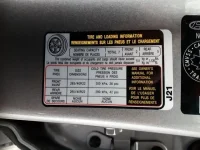
As I have commented in previous posts (since 2021), the tire pressure recommendations from Genesis are all over the place in different markets and even the same market. See the attachments as examples. I think the limited consensus that was arrived at was to consider the local road conditions and lower the pressures with care so as to not risk tire and rim damage from potholes, etc. I do agree with EdP that it makes sense to run a little higher pressure in the rear. That seems to be a constant among all the disparate recommended pressures. I'd be very careful going below 33 PSI at a minimum. I should also note that almost all of this discussion was directed at trims running the 22" wheels and more toward ride quality than tire wear. Blowouts from potholes also figured into the mix as well.
 

Attachments

As I have commented in previous posts (since 2021), the tire pressure recommendations from Genesis are all over the place in different markets and even the same market. See the attachments as examples. I think the limited consensus that was arrived at was to consider the local road conditions and lower the pressures with care so as to not risk tire and rim damage from potholes, etc. I do agree with EdP that it makes sense to run a little higher pressure in the rear. That seems to be a constant among all the disparate recommended pressures. I'd be very careful going below 33 PSI at a minimum. I should also note that almost all of this discussion was directed at trims running the 22" wheels and more toward ride quality than tire wear. Blowouts from potholes also figured into the mix as well.
BillZ, If I run the recommended 36psi, rear tire pressure, I can look forward to replacing tires at 15 or 16,000 miles- indeed, quite expensive. Genesis should clearly warn buyers of this eccentricity before actual purchase. This is crazy...
______________________________

Help support this site so it can continue supporting you!
 
BillZ, If I run the recommended 36psi, rear tire pressure, I can look forward to replacing tires at 15 or 16,000 miles- indeed, quite expensive. Genesis should clearly warn buyers of this eccentricity before actual purchase. This is crazy...
Interestingly, I do run my rear tires at 36 (or more when fully loaded driving down to Florida from Canada and back at 80 mph; so I am surprised my tires seem to be holding up so much better than yours. That's why I suggested checking alignment (and frequent rotations).
 
Interestingly, I do run my rear tires at 36 (or more when fully loaded driving down to Florida from Canada and back at 80 mph; so I am surprised my tires seem to be holding up so much better than yours. That's why I suggested checking alignment (and frequent rotations).
BillZ, Tires are rotated every 8,000 miles. So far, one other poster has a similar problem. His mechanic reduced rear pressure to 33 psi thinking that 36psi was too much. I am beginning to think the same. You and probably many others do not have this problem. I am at a loss to explain this. Is it, in my case over-inflation or possible improper axle geometry (supposedly rare, but possible) that stresses the middle of tire tread.
 
Looking to update and upgrade your Genesis luxury sport automobile? Look no further than right here in our own forum store - where orders are shipped immediately!
If the front and rear tires regularly take turns being the front and rear, then aren’t the front tires also rear tires half the time? Seems a strange conundrum. Maybe the tires were rotated by an inexperienced new mechanic (without four-wheel-drive experience) from left to right instead of front to back. Possible? I’ve seen a lot of crazy stuff over the years, like leftover tools on top of my engine or wrong fluids into the wrong location (not Genesis). Looking forward to hearing about the solution. There must be tire experts at Michelin etc who would have a point of view.
 
Last edited:
If the front and rear tires regularly take turns being the front and rear, then aren’t the front tires also rear tires half the time? Seems a strange conundrum. Maybe the tires were rotated by an inexperienced new mechanic (without four-wheel-drive experience) from left to right instead of front to back. Possible? I’ve seen a lot of crazy stuff over the years, like leftover tools on top of my engine or wrong fluids into the wrong location (not Genesis). Looking forward to hearing about the solution. There must be tire experts at Michelin etc who would have a point of view.
I believe in our AWD-RWD vehicle most of the time spent rolling forward is propelled by the rear wheels. As such I believe it is normal for the rear tires to wear more then the front, but in my situation, the rear tires middle treads are abnormally losing ~half their dimension in ~ 8,000 miles. As I said in my original posting, the same thing happened on the OEM tires that had to be replaced at 15,600 miles. I admitted running 2 lbs. extra in all tires. I assumed I may have overinflated actually causing the problem. At this point, I am not sure as to the cause, however I do suspect their may possibly be some fault with the suspension geometry that causes only one symptom, the tire wear. Otherwise, no vibrations or unwarranted steering motions or sounds are present. The way things are going, every 16,000 miles will require approximately $2000 to replenish tires.
 
I believe in our AWD-RWD vehicle most of the time spent rolling forward is propelled by the rear wheels. As such I believe it is normal for the rear tires to wear more then the front, but in my situation, the rear tires middle treads are abnormally losing ~half their dimension in ~ 8,000 miles. As I said in my original posting, the same thing happened on the OEM tires that had to be replaced at 15,600 miles. I admitted running 2 lbs. extra in all tires. I assumed I may have overinflated actually causing the problem. At this point, I am not sure as to the cause, however I do suspect their may possibly be some fault with the suspension geometry that causes only one symptom, the tire wear. Otherwise, no vibrations or unwarranted steering motions or sounds are present. The way things are going, every 16,000 miles will require approximately $2000 to replenish tires.
Even so, if all four tires are over inflated and the rear tires are as you say, “pushing the car forward” in “rear wheel drive”, the tire wear should still be the same theoretically since fronts and rears are regularly rotated to expose all tires to the same experience and wear. If a rotation was missed or the schedule is not regular, then I would understand the irregular tire. But if all four wheels are treated equally and rotated (or even with different pressures for front and rear), at regular intervals, I don’t have the answer to what is causing this dilemma. Good luck keep us posted.
 
Even so, if all four tires are over inflated and the rear tires are as you say, “pushing the car forward” in “rear wheel drive”, the tire wear should still be the same theoretically since fronts and rears are regularly rotated to expose all tires to the same experience and wear. If a rotation was missed or the schedule is not regular, then I would understand the irregular tire. But if all four wheels are treated equally and rotated (or even with different pressures for front and rear), at regular intervals, I don’t have the answer to what is causing this dilemma. Good luck keep us posted.
Yes, I agree with your logic, but in my situation, the rears are severely reduced 50% in the middle treads in 8K miles, so when rotated to the front another 8K miles nearly finishes them. I appreciate your concern and will keep the group informed when and if, I get an answer.
 
Tire tread wearing faster in the center of the tread is almost always from over-inflation or some other factor making the tire pressures increase. Suspension issues cause wear along either/both tire edges, for the tread blocks to "feather" (rub your hand around the tire clockwise and then counter-clockwise... if your hand moves easily in one direction but the other direction is "like petting cat fur backwards" then the tire has feathering wear typically caused by toe in/out issues), scalloping or scoop-like cutouts (worn shocks/dampers), etc.

A few things come to mind...
1: what gauge are you using to measure tire pressures - is it accurate? And are you measuring tire pressures "cold" which means the vehicle has been parked for several hours at least? Tire pressures naturally increase with temperature. It is not uncommon to need to pump up the tires in winter, and then to let a little air out in summer, to maintain constant cold tire pressures. Tire shops use nitrogen when filling tires as nitrogen does not respond to temperature changes as much as plain "air." But the difference isn't dramatic - don't let a tire store "up-sell" you on nitrogen.

2: Dragging brakes will raise the wheel temperature which in turn cranks up the air pressures in the tires. After a bit of a drive, hold your hand NEAR but NOT TOUCHING the rims... see if the rear wheels seem hotter than the front wheels. Normally the front brakes do most of the work so they should feel warmer. If the rear wheels feel hotter then either the rear brakes are dragging and/or the front brakes aren't applying as much as they should so the rear brakes work harder.

3: Exhaust leaks, or poorly routed exhaust pipes, can cook the rear wheels too.

I thought the recommended 33psi front/36psi rear pressures sounded odd - this is the first car I've owned suggesting different tire pressures when the tires are identical in size. Different pressures front-to-rear are more common on sports cars with fat rear wheels. As others have already noted/posted, I attribute this recommendation to the cargo and/or towing capability. 36psi might be more than necessary when the rear axle isn't heavily loaded. I run my GV80 at 33psi on all four wheels... I can't say what my tire wear is yet since I've only owned the vehicle for about 6 weeks.

mike c.
 
Tire tread wearing faster in the center of the tread is almost always from over-inflation or some other factor making the tire pressures increase. Suspension issues cause wear along either/both tire edges, for the tread blocks to "feather" (rub your hand around the tire clockwise and then counter-clockwise... if your hand moves easily in one direction but the other direction is "like petting cat fur backwards" then the tire has feathering wear typically caused by toe in/out issues), scalloping or scoop-like cutouts (worn shocks/dampers), etc.

A few things come to mind...
1: what gauge are you using to measure tire pressures - is it accurate? And are you measuring tire pressures "cold" which means the vehicle has been parked for several hours at least? Tire pressures naturally increase with temperature. It is not uncommon to need to pump up the tires in winter, and then to let a little air out in summer, to maintain constant cold tire pressures. Tire shops use nitrogen when filling tires as nitrogen does not respond to temperature changes as much as plain "air." But the difference isn't dramatic - don't let a tire store "up-sell" you on nitrogen.

2: Dragging brakes will raise the wheel temperature which in turn cranks up the air pressures in the tires. After a bit of a drive, hold your hand NEAR but NOT TOUCHING the rims... see if the rear wheels seem hotter than the front wheels. Normally the front brakes do most of the work so they should feel warmer. If the rear wheels feel hotter then either the rear brakes are dragging and/or the front brakes aren't applying as much as they should so the rear brakes work harder.

3: Exhaust leaks, or poorly routed exhaust pipes, can cook the rear wheels too.

I thought the recommended 33psi front/36psi rear pressures sounded odd - this is the first car I've owned suggesting different tire pressures when the tires are identical in size. Different pressures front-to-rear are more common on sports cars with fat rear wheels. As others have already noted/posted, I attribute this recommendation to the cargo and/or towing capability. 36psi might be more than necessary when the rear axle isn't heavily loaded. I run my GV80 at 33psi on all four wheels... I can't say what my tire wear is yet since I've only owned the vehicle for about 6 weeks.

mike c.
MikeC, very interesting response on your part, especially the potential rim heat up from dragging brake pads. I have experienced this in other cars, but my bet is that it is not causing my current problem. I will soon drive the vehicle and hand guage the rear and front wheels after which I will get back with results. The tire pressure guage is the cheap pencil like slider type. The tpm monitor readout on the dash, after driving several miles in 80-90 degrees, seems to go no higher then 39 psi for any wheel.
 
Tire tread wearing faster in the center of the tread is almost always from over-inflation or some other factor making the tire pressures increase. Suspension issues cause wear along either/both tire edges, for the tread blocks to "feather" (rub your hand around the tire clockwise and then counter-clockwise... if your hand moves easily in one direction but the other direction is "like petting cat fur backwards" then the tire has feathering wear typically caused by toe in/out issues), scalloping or scoop-like cutouts (worn shocks/dampers), etc.

A few things come to mind...
1: what gauge are you using to measure tire pressures - is it accurate? And are you measuring tire pressures "cold" which means the vehicle has been parked for several hours at least? Tire pressures naturally increase with temperature. It is not uncommon to need to pump up the tires in winter, and then to let a little air out in summer, to maintain constant cold tire pressures. Tire shops use nitrogen when filling tires as nitrogen does not respond to temperature changes as much as plain "air." But the difference isn't dramatic - don't let a tire store "up-sell" you on nitrogen.

2: Dragging brakes will raise the wheel temperature which in turn cranks up the air pressures in the tires. After a bit of a drive, hold your hand NEAR but NOT TOUCHING the rims... see if the rear wheels seem hotter than the front wheels. Normally the front brakes do most of the work so they should feel warmer. If the rear wheels feel hotter then either the rear brakes are dragging and/or the front brakes aren't applying as much as they should so the rear brakes work harder.

3: Exhaust leaks, or poorly routed exhaust pipes, can cook the rear wheels too.

I thought the recommended 33psi front/36psi rear pressures sounded odd - this is the first car I've owned suggesting different tire pressures when the tires are identical in size. Different pressures front-to-rear are more common on sports cars with fat rear wheels. As others have already noted/posted, I attribute this recommendation to the cargo and/or towing capability. 36psi might be more than necessary when the rear axle isn't heavily loaded. I run my GV80 at 33psi on all four wheels... I can't say what my tire wear is yet since I've only owned the vehicle for about 6 weeks.

mike c.
Mikec, I drove the GV for ~10 miles and touched the rear rims as well as the front rims. The rear were mildly warm near center point out just past the lugs. The front were a bit hotter. I don't think there is any abnormal brake drag.

I like your idea of running 33psi on all 4 tires.
 
Back
Top