• Car enthusiast? Join us on Cars Connected! iOS | Android | Desktop
  • Hint: Use a descriptive title for your new message
    If you're looking for help and want to draw people in who can assist you, use a descriptive subject title when posting your message. In other words, "I need help with my car" could be about anything and can easily be overlooked by people who can help. However, "I need help with my transmission" will draw interest from people who can help with a transmission specific issue. Be as descriptive as you can. Please also post in the appropriate forum. The "Lounge" is for introducing yourself. If you need help with your G70, please post in the G70 section - and so on... This message can be closed by clicking the X in the top right corner.

3.8 Fuel - Regular or better?

Yes, regular 87 in the 3.8.
 
The engine management on the 3.8L will not be able to take advantage of higher octane fuel.

You can give it higher octane, but it'll not increase the bhp output.

The 5.0L has an engine management that will take advantage of higher octane fuel. So giving it higher octane fuel will result in marginally higher bhp output.
 
Looking to update and upgrade your Genesis luxury sport automobile? Look no further than right here in our own forum store - where orders are shipped immediately!
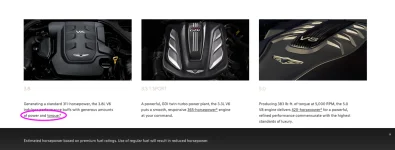
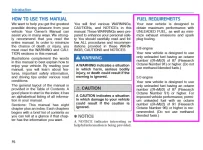
I was poking around on genesis.com. On this page 2020 Genesis G80 when you click on the links in the PERFORMANCE section you get a note stating "Estimated horsepower based on premium fuel ratings. Use of regular fuel will result in reduced horsepower." On the genesis.com site, this note applies to each engine currently offered - 3.8, 3.3, and 5.0 (image attached). In the manual (image attached), Hyundai did not note the "Improved Vehicle Performance" difference based on fuel when talking about the 3.8, they only mention it for the 5.0.

After doing some searching and reading on this forum I see many have thoughts and some serious passion on this topic. According to Genesis (website note), the 3.8 on 87 octane, appears to not be 311hp engine. I would think that average owner would assume that 87 being recommend fuel connect to the stated 311 HP number if they did not see this notation in the various places it is published (typically in mouse type). While the use of 87 octane is great ... I am just wondering to what degree the 3.8 and the other engines are able to take advantage of higher octane. Whatever the answer, I don't think I would be able to notice a change to the driving experience, more just interested in knowing the real numbers.
 

Attachments

  • Screen Shot 2020-01-15 at 6.58.23 PM.webp
    Screen Shot 2020-01-15 at 6.58.23 PM.webp
    66.6 KB · Views: 14
  • Screen Shot 2020-01-15 at 7.42.44 PM.webp
    Screen Shot 2020-01-15 at 7.42.44 PM.webp
    125.3 KB · Views: 15
Hyundai did not note the "Improved Vehicle Performance" difference based on fuel when talking about the 3.8, they only mention it for the 5.0.

After doing some searching and reading on this forum I see many have thoughts and some serious passion on this topic. According to Genesis (website note), the 3.8 on 87 octane, appears to not be 311hp engine. I would think that average owner would assume that 87 being recommend fuel connect to the stated 311 HP number if they did not see this notation in the various places it is published (typically in mouse type). While the use of 87 octane is great ... I am just wondering to what degree the 3.8 and the other engines are able to take advantage of higher octane.

I don't know what you mean that the 3.8 is NOT the 311 hp engine.

There is a definite difference if I fill up using 93 octane. When done, my wallet is about $10 thinner. Car drives the same.
 
My guess is that the asterisk on the 3.8 engine graphic was an oversight. The owner's manual seems to confirm that.

It makes sense the 3.3 and 5.0 would perform better on 91+ octane fuel.

I think the 3.8 is correctly rated at 311 HP with 87. I'm happy to have that horsepower in regular fuel. STL, like you, I was curious when I bought the car and that's why I started this thread.
 
My wife’s CX9 with turbo specifically states to get the full 250hp you must use premium. Regular yields you about 227hp. I could see Genesis being similar with their numbers. The computer dials the car back slightly. She runs mid grade as do I in my G70 3.3. Can I tell a difference in either of our cars based on fuel, no.
 
I don't know what you mean that the 3.8 is NOT the 311 hp engine.

There is a definite difference if I fill up using 93 octane. When done, my wallet is about $10 thinner. Car drives the same.


When I stated, "the 3.8 on 87 octane, appears to not be 311hp engine" I was connecting the engine output directly to the octane rating, meaning the engine must be a 311hp engine when fueled by "Premium" fuel with an octane rating matching that used in the benchmark testing performed by Hyundai. Further, as I am sure you know, the numbers associated with "Premium" octane ratings are often in a range 91–94 (or more Octane rating - Wikipedia). The "Premium" fuel designation is fuzzy, one could infer:

A. The 3.8 engine running on 91 octane results in 311hp
B. The 3.8 engine running on 94 octane results in 311hp

Can both A and B be correct? In the above two instances, I would be inclined to think it is one or the other, not both.
 
My wife’s CX9 with turbo specifically states to get the full 250hp you must use premium. Regular yields you about 227hp. I could see Genesis being similar with their numbers. The computer dials the car back slightly. She runs mid grade as do I in my G70 3.3. Can I tell a difference in either of our cars based on fuel, no.
When I was younger I'd gladly pay for premium to get 23 more HP. These days the pedal is not on the floor very often.
 
When I stated, "the 3.8 on 87 octane, appears to not be 311hp engine" I was connecting the engine output directly to the octane rating, meaning the engine must be a 311hp engine when fueled by "Premium" fuel with an octane rating matching that used in the benchmark testing performed by Hyundai. Further, as I am sure you know, the numbers associated with "Premium" octane ratings are often in a range 91–94 (or more Octane rating - Wikipedia). The "Premium" fuel designation is fuzzy, one could infer:

A. The 3.8 engine running on 91 octane results in 311hp
B. The 3.8 engine running on 94 octane results in 311hp

Can both A and B be correct? In the above two instances, I would be inclined to think it is one or the other, not both.
The asterisk is pretty much a CYA for all engines and they state the same on all of them.

Can both A and B be correct? Sure they can.
As you already posted from the manual:
3.3/3.8 engine
Your new vehicle is designed to use
only unleaded fuel having an octane
number ((R+M)/2) of 87 (Research
Octane Number 91) or higher. (Do not
use methanol blended fuels.)

I'm sure you've seen where some here have added a tune to their cars for more horsepower. Why do they do that? Because the engine was designed to give good power and last for the 100k mile warranty. Adding performance to engines has been going on since the start of the automobile. Before computers controlled things we put on high compression heads, hotter cam shafts, change car jets, changed distributor timing. Today, computers do much of that.

If the parameters are set for the 3.8 to work with regular fuel for 311 hp, what to you have to do to get the maximum power from a higher octane fuel? You have to change parameters. If not programmed to take advantage of the higher octane the engine will not change output. The 5.0 has a different ECU that can sense and do things differently. If you are spending the extra $$$ to get the 5.0 you may be willing to pay for other fuel too. Part of the cost of that engine would include the electronics to top performance.

Can the 3.8 put out more power? Probably, if you (or Genesis) gave it a tune to achieve it. If you put in higher octane: Does the spark occur a few more degrees before TDC? Does the VVT give more duration?

In any case, unless someone does dyno testing you will never know for sure.
 
Hmmm, I guess I should be happy that my ‘12 3.8 makes 333hp and is a lighter car than Gen 2.
I'd not be surprised if it was detuned to suit new EPA ratings.
 
I'd not be surprised if it was detuned to suit new EPA ratings.
I doubt the Gen 2 3.8 gets any/much better mileage than the Gen 1. Maybe somebody wants to look it up?
 
I doubt the Gen 2 3.8 gets any/much better mileage than the Gen 1. Maybe somebody wants to look it up?
Does not get better mpg but has a lot more of a lard ass to haul around.

2018 G80
Curb weight: 4,195 to 4,716 lbs
MPG: Up to 19 city / 27 highway

2012 Hyundai Genesis
MPG: Up to 21 city / 30 highway
Curb weight: 3,294 to 4,046 lbs
 
Does not get better mpg but has a lot more of a lard ass to haul around.

2018 G80
Curb weight: 4,195 to 4,716 lbs
MPG: Up to 19 city / 27 highway

2012 Hyundai Genesis
MPG: Up to 21 city / 30 highway
Curb weight: 3,294 to 4,046 lbs
I like that it has a lard ass. I think it helps the ride comfort.

 
I run non ethanol in everything I own, I believe my Genny runs better on it. I average 28mpg with 5.0 sometimes it goes up to 34mpg believe it or not! Of course that is no red lights or stop signs. Love my Genny!!
I don't even get that in my 3.8 driving it like Morgan Freeman.
 
The best mileage 'ever got with our '18 G80 RWD was 35 mpg going from Mt Shasta CA down to Harris Ranch. It's down hill most of the way!G

Anyone looking for a pretty good App to gather mpg and cost is CarIQ. A bit like Gas Buddy but with less fussing with the Gas Buddy getting in the way. My overall MPG is 20.88.
 
Back
Top