40Hunter69
New member
- Joined
- Jul 18, 2020
- Messages
- 2
- Reaction score
- 0
- Points
- 1
- Genesis Model Type
- Genesis G80 Ultimate
Hi there. Just bought a 2016 G80!! Is it true I have to use premium gas?
thanks
thanks
The car lovers social network
Automotive components
Automotive Hot or Not
Vehicle hacker protection
Genesis parts & accessories
Advertise with us!
Explore Pet Insurance!
The Food Order Method
The car lovers social network
Automotive components
Automotive Hot or Not
Vehicle hacker protection
Genesis parts & accessories
Advertise with us!
Explore Pet Insurance!
The Food Order Method

Hi there. Just bought a 2016 G80!! Is it true I have to use premium gas?
thanks

Definition of tadIf you have the 3.8 regular is recommended and works just fine. The 5.0 is supposed to get a tad more power with premium.


Note that I used the word "supposed" to give. I don't know for sure except what the manual says.Definition of tad
1: a small or insignificant amount or degree
Is that what you meant? And if so how did you determine the increase in power is small or insignificant? It’s just that I keep hearing this repeated as fact.

Dirty????honesty! I drove g80 sport 2018 and tried both regular and premium, there is a huge gap between for power but the same km overall. But beware that after too long for running regular, your car won't be the same as before even put back premium fuel. its take me a month running back the premium to get back the same power, I think regular fuel way to dirty for turbo
You used “supposed” to give and a “tad” more to qualify the statement, as if it might not be significant. But you don’t know that (maybe you hope it if that’s what you use) But I agree all we know is what the manual says.Note that I used the word "supposed" to give. I don't know for sure except what the manual says.

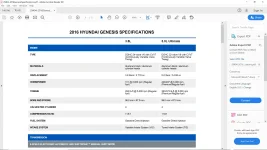
LOL. A "tad" is 13hp/11 ft/lbs improvement per a Hyundai 5.0 engine spec sheet for the 2016 model. Considering that is usually cost about $500+ for most chip tuners to provide similar gains on most non-turbo engines, I would say that is a gain from using premium gas that is worth getting for some drivers who want the most performance out of their engines.You used “supposed” to give and a “tad” more to qualify the statement, as if it might not be significant. But you don’t know that (maybe you hope it if that’s what you use) But I agree all we know is what the manual says.
So “For improved vehicle performance, premium unleaded fuel ... is recommended.“ That says it all.

Where did you get your factual information that regular fuel was dirtier than premium fuel? I believe the only difference between regular gas and premium gas is that the refining process for premium is different to increase the octane rating - the cleanliness of the two fuels are the same.honesty! I drove g80 sport 2018 and tried both regular and premium, there is a huge gap between for power but the same km overall. But beware that after too long for running regular, your car won't be the same as before even put back premium fuel. its take me a month running back the premium to get back the same power, I think regular fuel way to dirty for turbo
well I did ask the mech guys in genesis ( Hyundai ) dealer and he said if you if regular often then they will put 2 bottles of fuel system cleaner at any oil change service and also recommend buy and use it at each 2000km ( maximum is 6 bottle for 10k km ). also i do feel like after a month of regular gas used, even i put back premium, there is a turbo lag badly and horsepower not like beforeWhere did you get your factual information that regular fuel was dirtier than premium fuel? I believe the only difference between regular gas and premium gas is that the refining process for premium is different to increase the octane rating - the cleanliness of the two fuels are the same.

The "stick" was used to measure both amount of gas and water in station tanks. Gasoline level/height was measured by where stick went from dry to wet with gasoline/petrol. Water was level was measured by applying a "brown goop" on the bottom 12" of the stick. Goop changed color to red/pink where it came into contact with water.I always wondered what those long measuring sticks did. I just figured they were measuring how much gas was in the tank.