• Car enthusiast? Join us on Cars Connected! iOS | Android | Desktop
  • Hint: Use a descriptive title for your new message
    If you're looking for help and want to draw people in who can assist you, use a descriptive subject title when posting your message. In other words, "I need help with my car" could be about anything and can easily be overlooked by people who can help. However, "I need help with my transmission" will draw interest from people who can help with a transmission specific issue. Be as descriptive as you can. Please also post in the appropriate forum. The "Lounge" is for introducing yourself. If you need help with your G70, please post in the G70 section - and so on... This message can be closed by clicking the X in the top right corner.

Possible alternator replacement on a 2015 Genesis 5.0 V8.

Hey, could you take some photos of the process?
Here is a pic of the second test after about 12hrs of cure time. The Alum Bond epoxy is pretty hard, but I will not try to bend the plates unit tonight after 10pm to make it a true 24hr cure.

I will try the Loctite HY 4070 epoxy next. I believe that it may be the best epoxy for the job since it is listed as an industrial structural epoxy. The Alum Bond seems to be more for sealing up leaks and cracks, but it does still appears to be a strong epoxy as well.
52228239717_de4bddc2e4_k.jpg
 
Last edited:
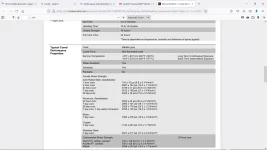
Crap; an over-site on my part. Both of the epoxies only have a temperature rating of about 220F max. Therefore, neither one of the epoxies will last long when hot engine oil make contact with them in the oil sensor port since engine oil can reach over 230F.

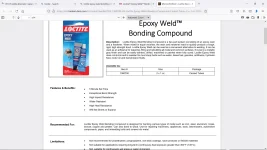
I will buy a different Loctite epoxy with a long term heat rating of 300F named Loctite Epoxy Weld. Make sure to read the technical spec sheet before buying a product or using it. I almost made a big mistake using the wrong epoxy for the job.
1658336679334.png
1658336726627.png
 
Last edited:
Well, it seems that I will just go with good old JB Weld original professional epoxy. It has a max temperature rating of 500F and can handle about 185 in/lbs of bolt head twisting force in a test; which is about 15 ft/lbs. Therefore, JB Weld should be able to repair my oil sensor port with the oil sensor screwed and handle the heat of the engine oil passing through it. I guess I will send back the Loctite Epoxy Weld when it arrives since the JB Weld bested it in a test.

 
Last edited:
JB Weld is pretty tough stuff. Try it. I don't think fiberglass is going to add much strength. I've used Devcon in the past that worked excellent but it's pretty pricey.

But, before you do the cover replacement...

A possible alternative could be to tie into the oil system someplace else (if available) for the sensor and then tap and plug the existing hole with a setscrew and Loctite. I would think there ought to be another oil port somewhere on the engine .
 
JB Weld is pretty tough stuff. Try it. I don't think fiberglass is going to add much strength. I've used Devcon in the past that worked excellent but it's pretty pricey.

But, before you do the cover replacement...

A possible alternative could be to tie into the oil system someplace else (if available) for the sensor and then tap and plug the existing hole with a setscrew and Loctite. I would think there ought to be another oil port somewhere on the engine .
Great idea. I will look in to that idea. However, from what I can see the front cover have a certain channel for the oil to flow pass the oil sensor port; so it may not be that easy tap another location for proper oil flow reading. but it is worth a shot.

I have learned a lot about the TAU V8 the last couple of weeks. The engine is fairly easy to work on and the sub-frame seems to be pretty easy to remove as well if need be for removing the exhaust manifolds and transmission.

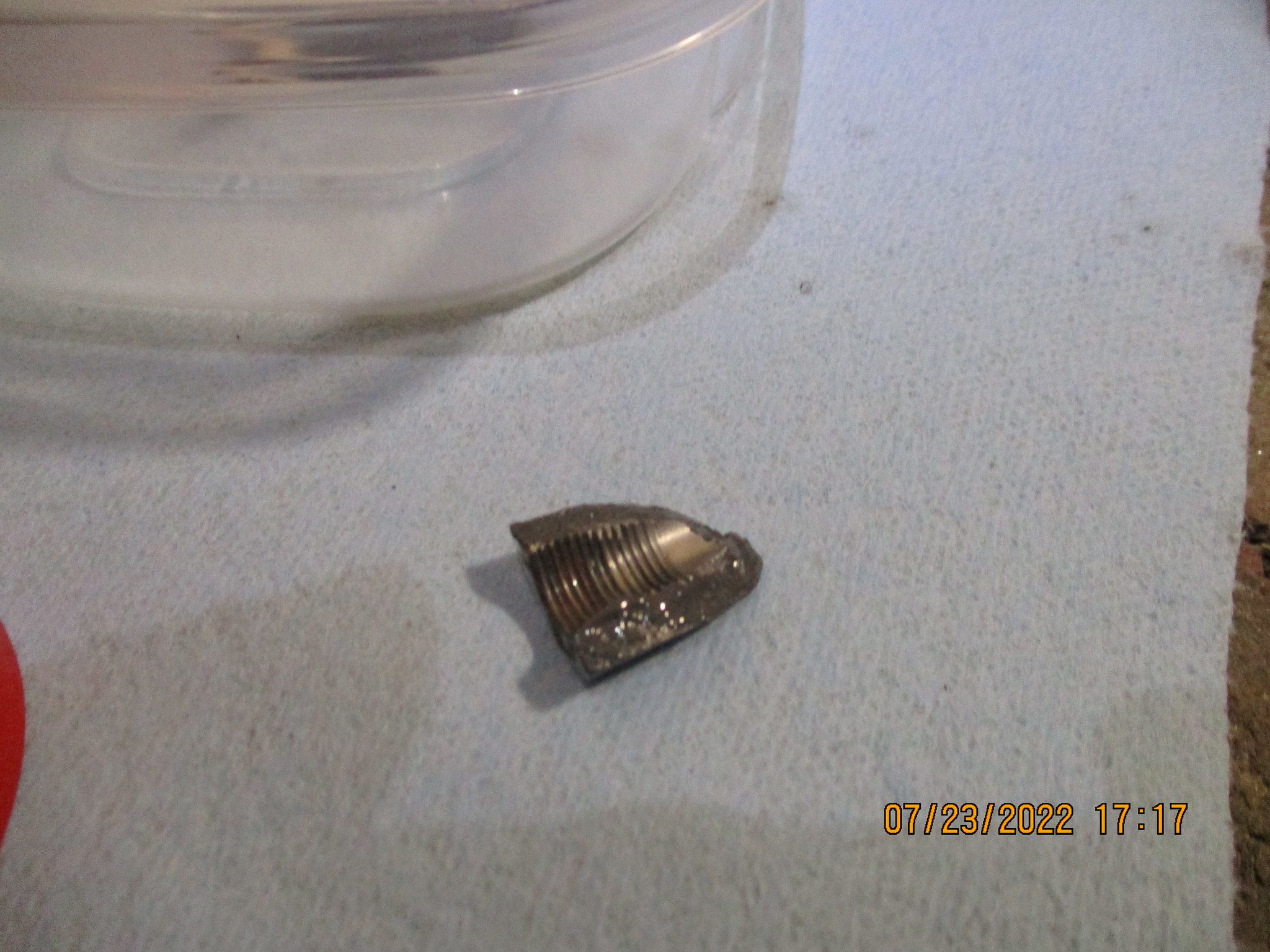
I believe that the issue with the oil sensor port cracking was more of a publication error than a design flaw. Plus, I should have also looked at the oil sensor myself to see where the treads were while I was snugging it down. I did install it blindly; only relying on the torque wrench to click off at 15ft/lbs. I should have known better than to do that on cast aluminum.
 
Last edited:
Cast Aluminum is an unforgiving mistress for sure...!
 
Cast Aluminum is an unforgiving mistress for sure...!
Amen!!!

I got careless and forget that fact. I used to be more cautious when working on cast aluminum blocks. It has been a while(over 10 years) since I made a mistake like this.
 
I tested the JB weld professional epoxy that same way I last tested the Alum Bond epoxy with a 12hr cure time prepped with sand paper and held together for about a minute. The JB Weld bond is strong. I could not break the plates apart by hand and it does not even seem like I even created a crack in the epoxy by trying to flex the plate apart up and down; which broke the Alum Bond. Therefore, I will just go with the JB Weld and start my repair soon and get my Genesis road worthy again.

To reduce a chance of leakage; I will just JB Weld the oil sensor in the port as well after I fix the broken oil sensor port section. I am waiting to do the port first, because I do not want the sensor to accidentally get some excess epoxy in the metering hole. Therefore, I will wait until the epoxy on the broken port has cured and then try to thread in the oil sensor. If successful; then I will add some JB Weld on the oil sensor threads like I would thread sealant and seal it inside the port.

Hopefully; this will be a leak free repair that holds up until I just replace the front lower timing case. Hell; it may be a permanent fix. But, it would be problem if the oil sensor ever go bad since it may never come out. I rather deal with that problem than an leak from the oil sensor threads.

The JB Weld test. The plates are really bonded only after 12hrs. The bond is supposed to be even stronger after 24hrs.
52234662667_a7f76cb76d_k.jpg

52236129645_6d62f1691b_k.jpg

52235922519_f0f245214c_k.jpg

52236130690_663d4c6202_k.jpg

52234665517_cf451ef528_k.jpg

52236131875_f851456cec_k.jpg
 
Last edited:

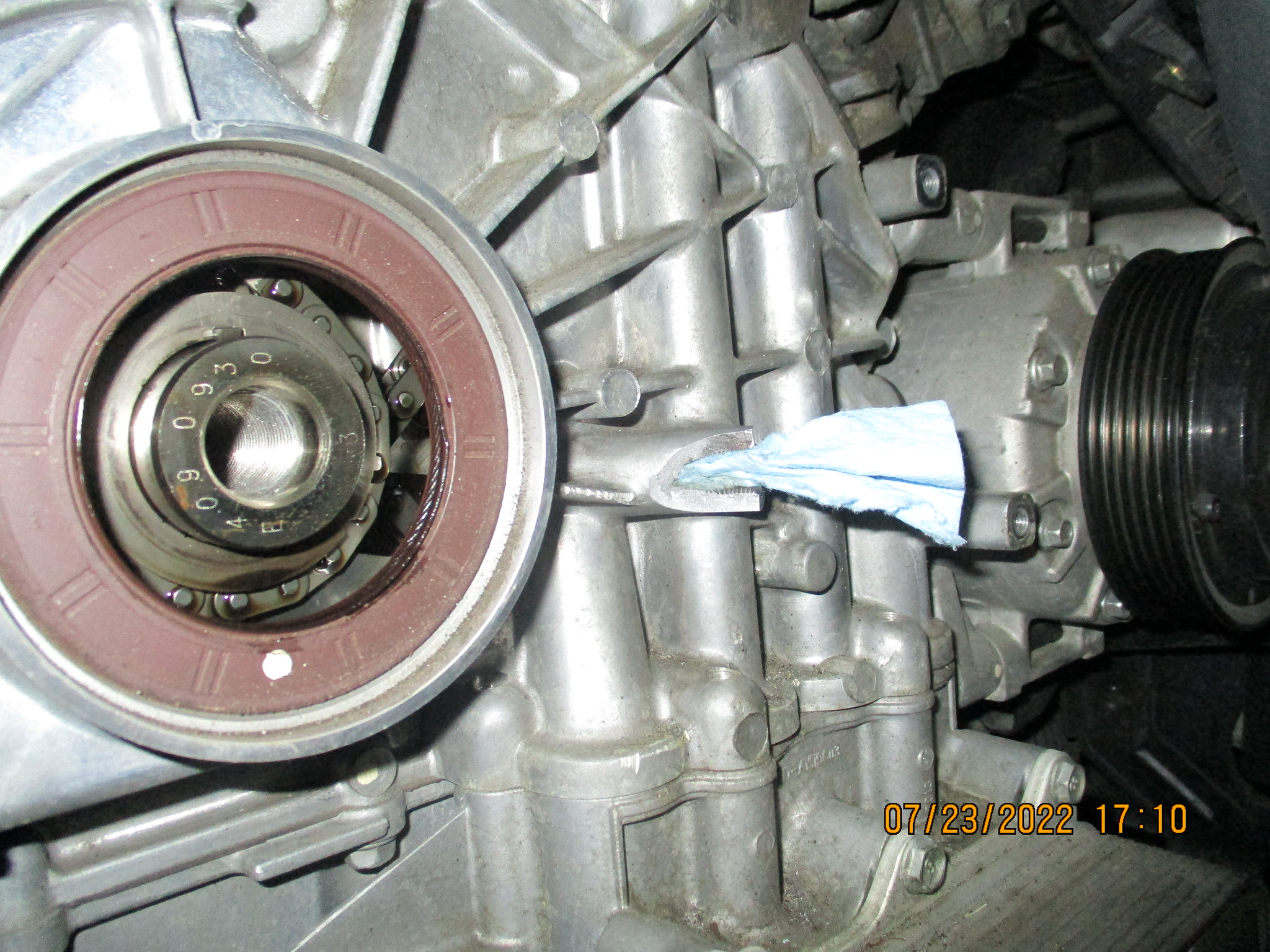
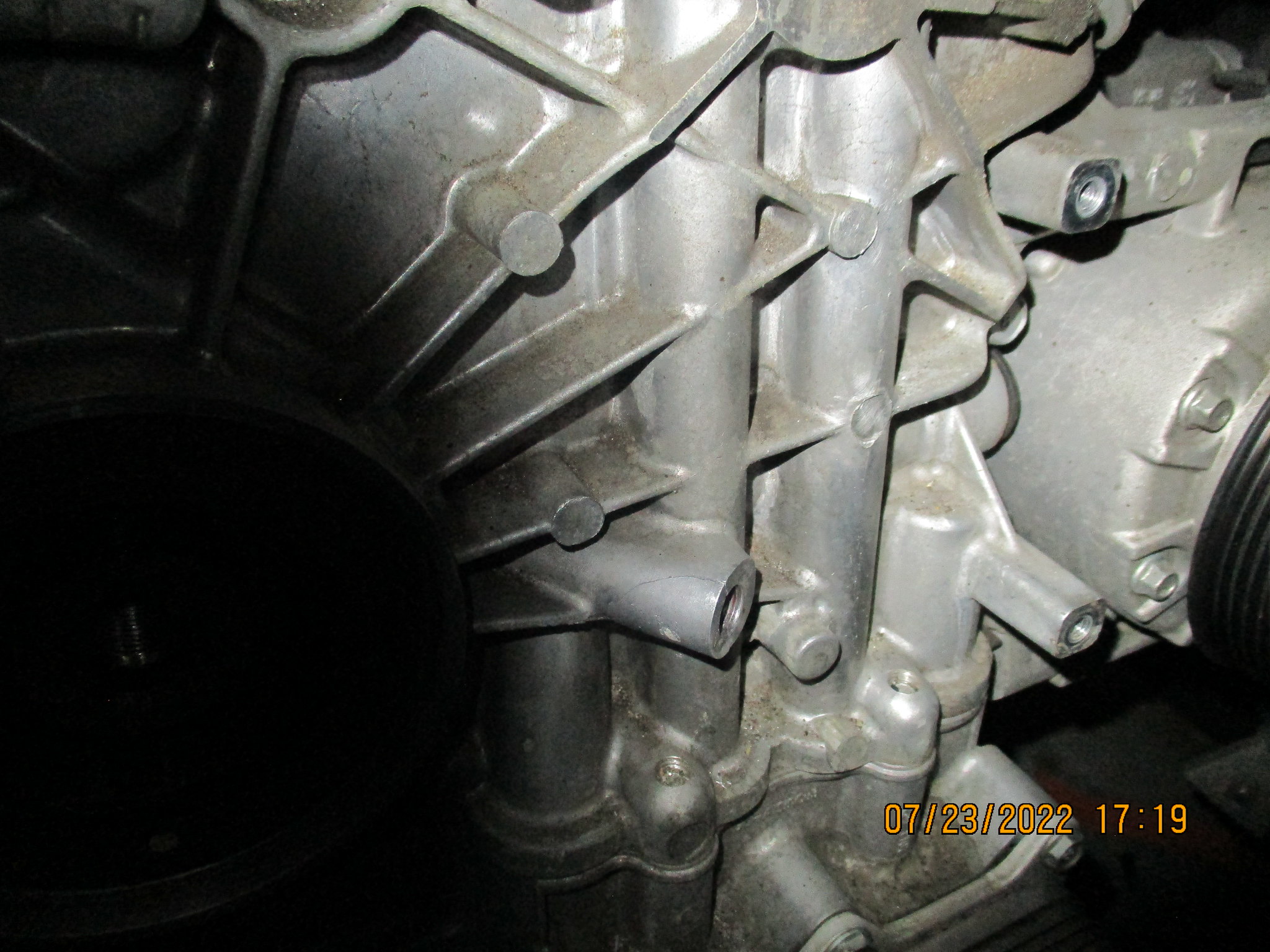
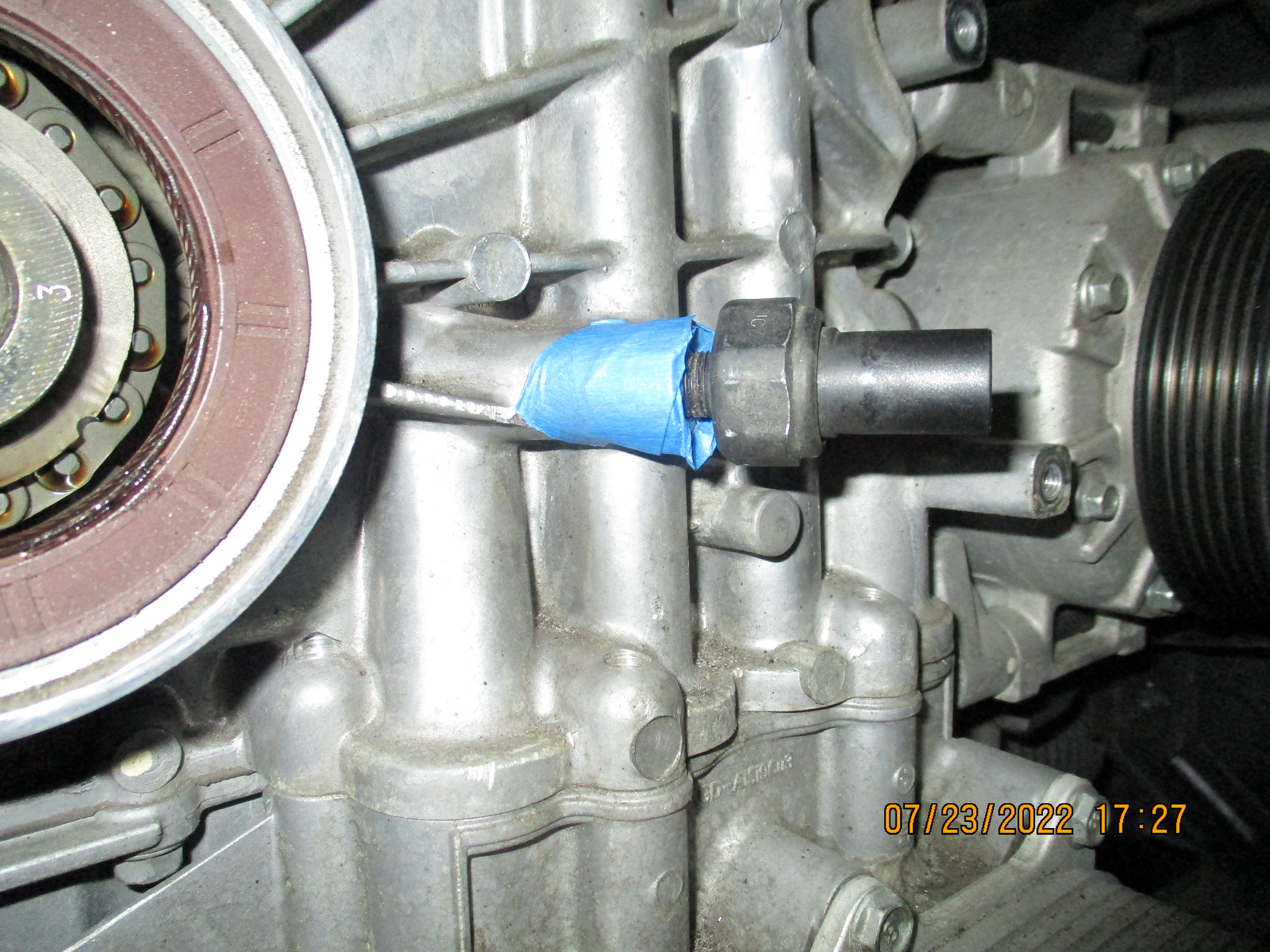
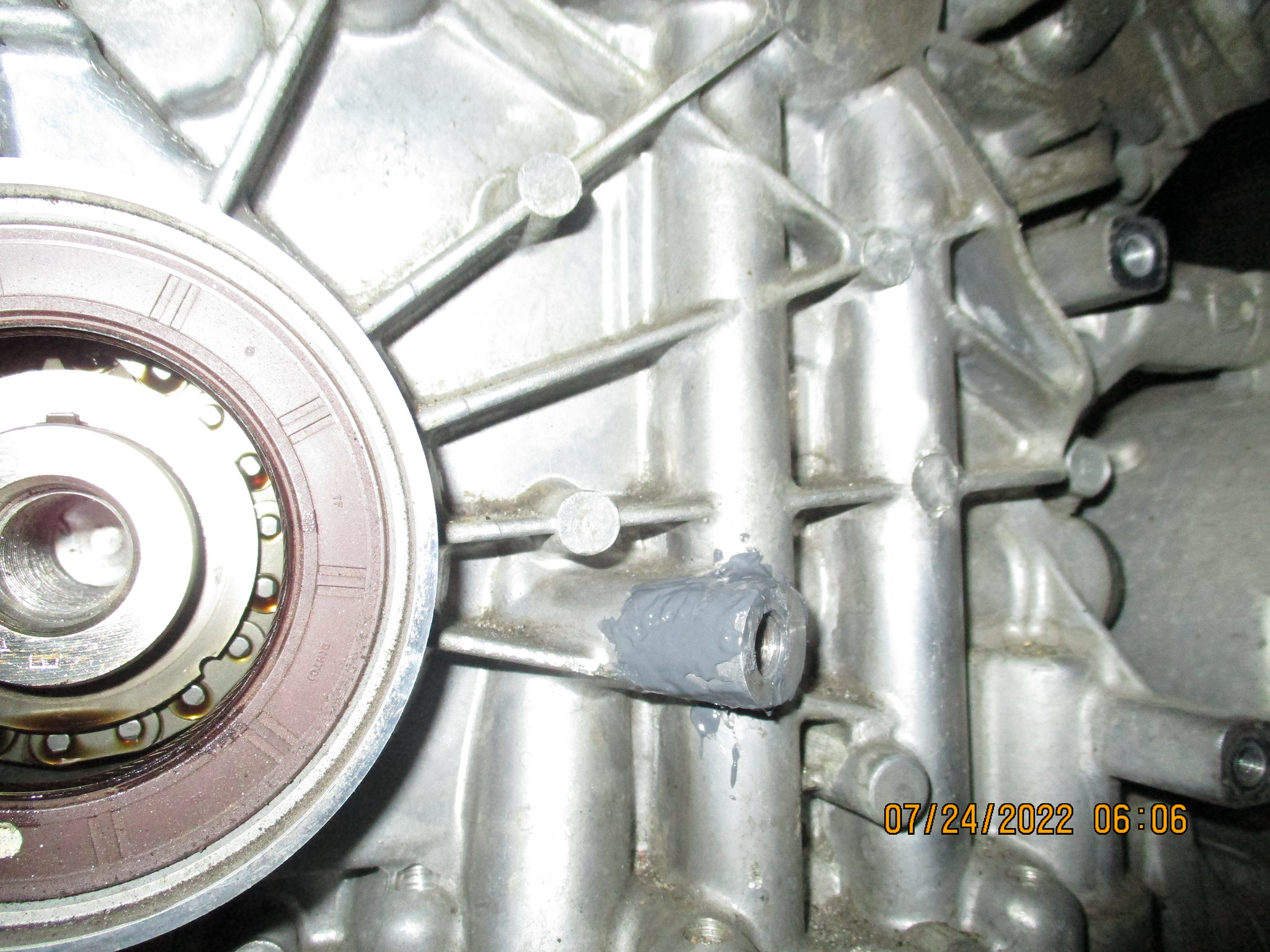
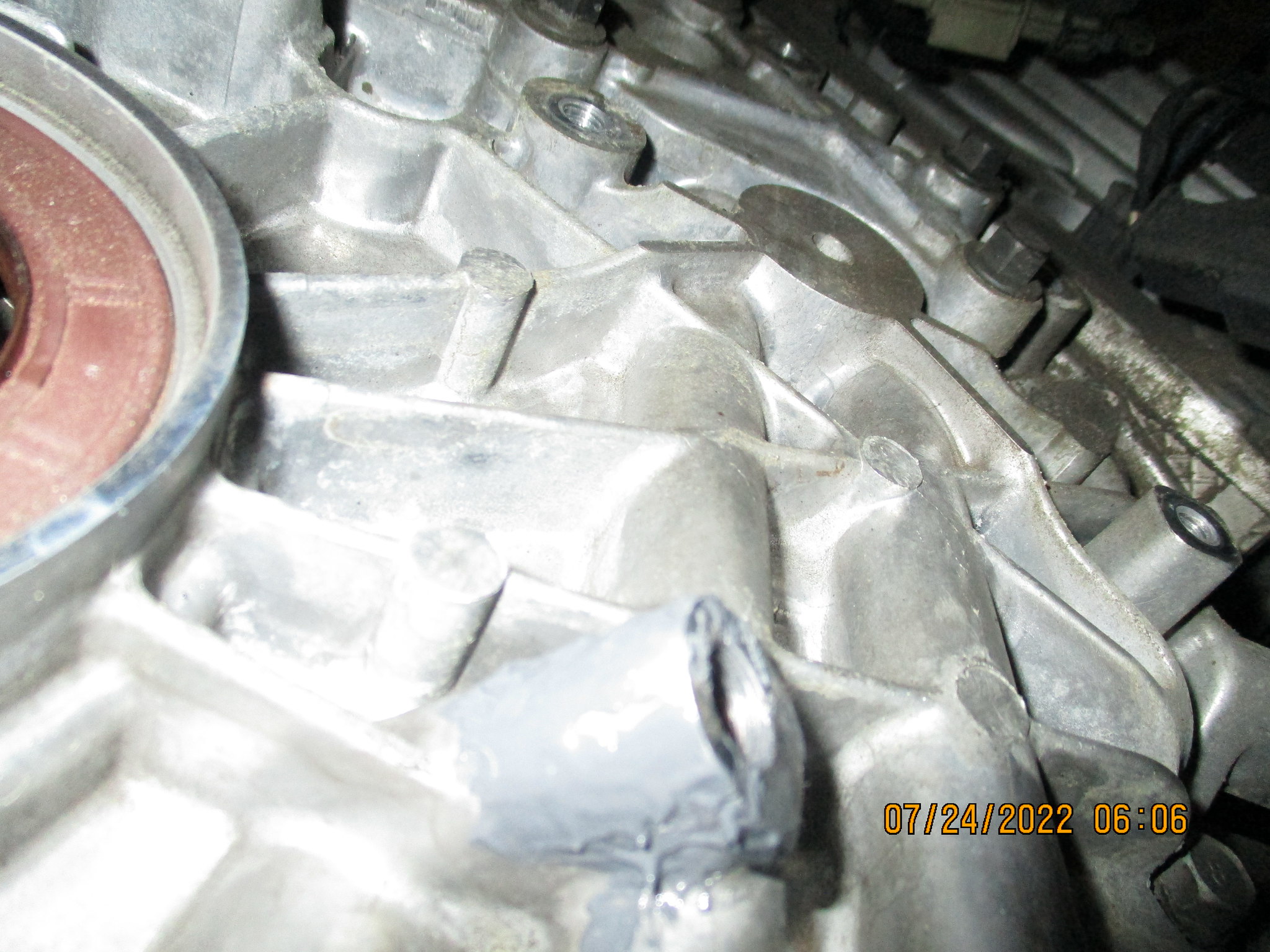
I started the oil sensor port repair. I clean and sanded the mating surfaces before I used the JB weld epoxy. I secured the broken piece with tape and lightly threaded in the old sensor to prevent the broken piece from shifting as the epoxy dries. I will remove the old sensor when the epoxy becomes stiffer(about an hour). I will also cover the outside of the oil sensor port with a coating of JD Weld to make sure it is secured and sealed.

Fingers crossed that it will work.

52236592606_c945854dcf_k.jpg

52235613407_9f3021a114_k.jpg

52236594826_81b5e38b70_k.jpg

52236595521_188ed644f3_k.jpg
 
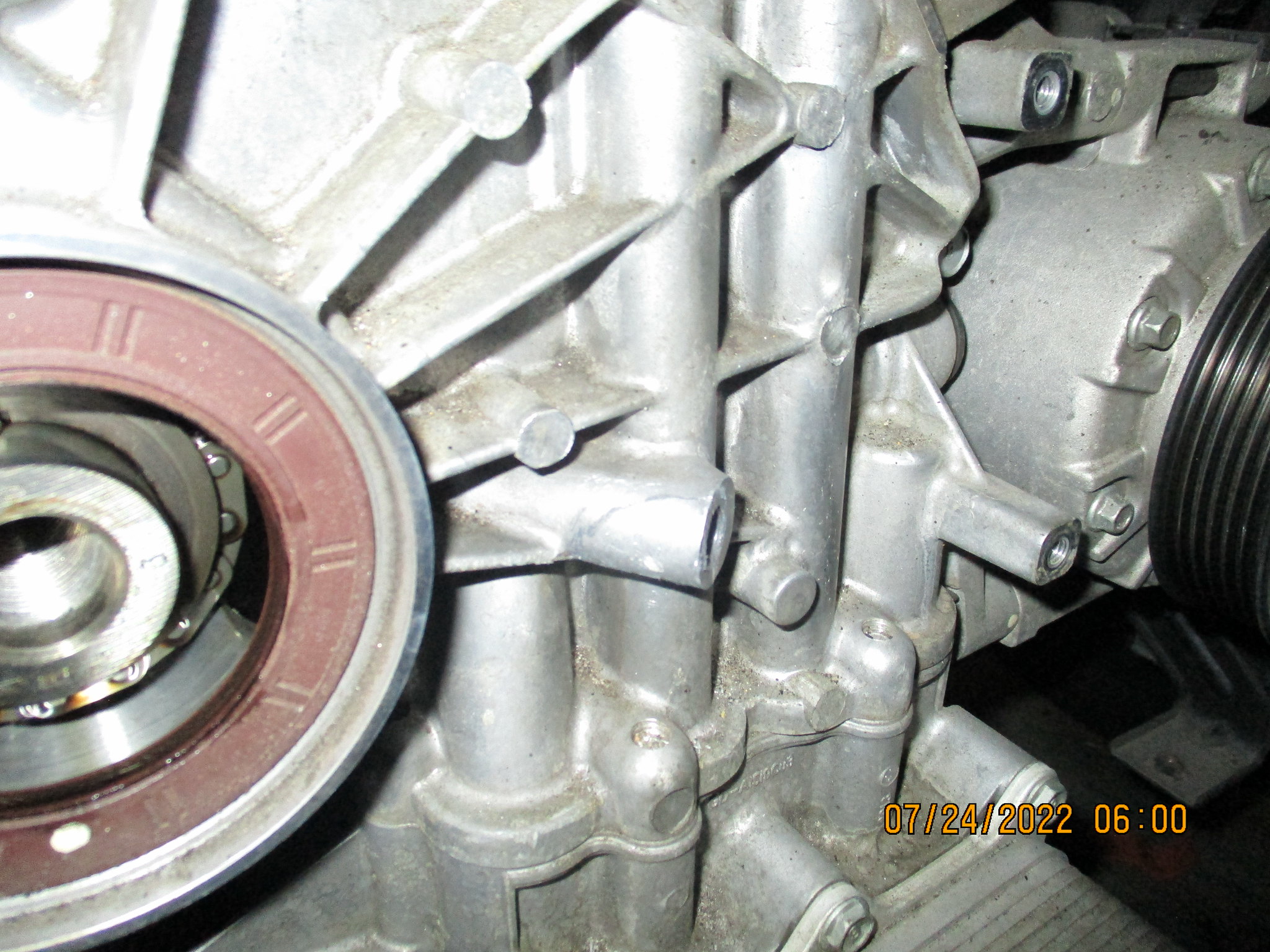
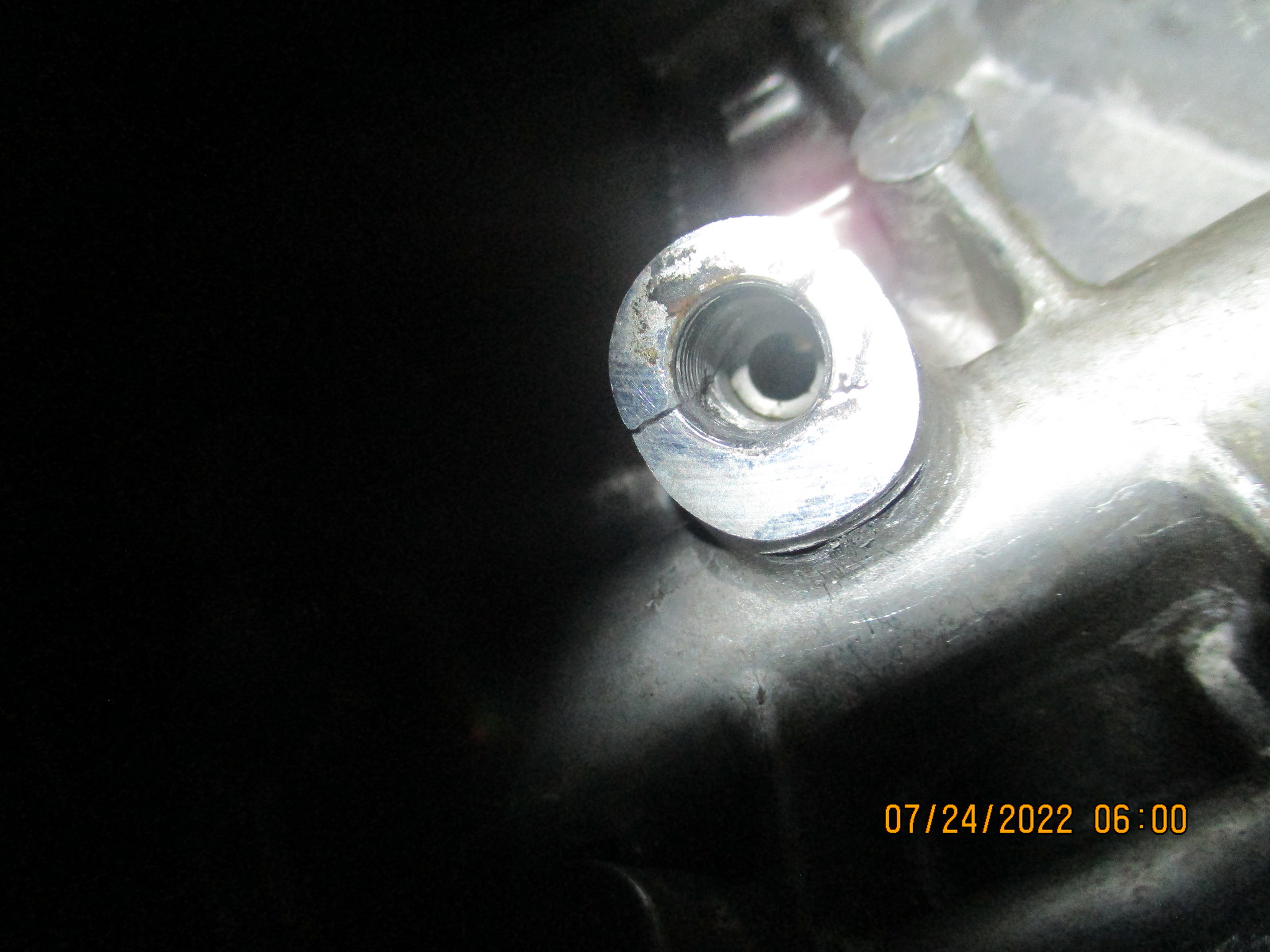
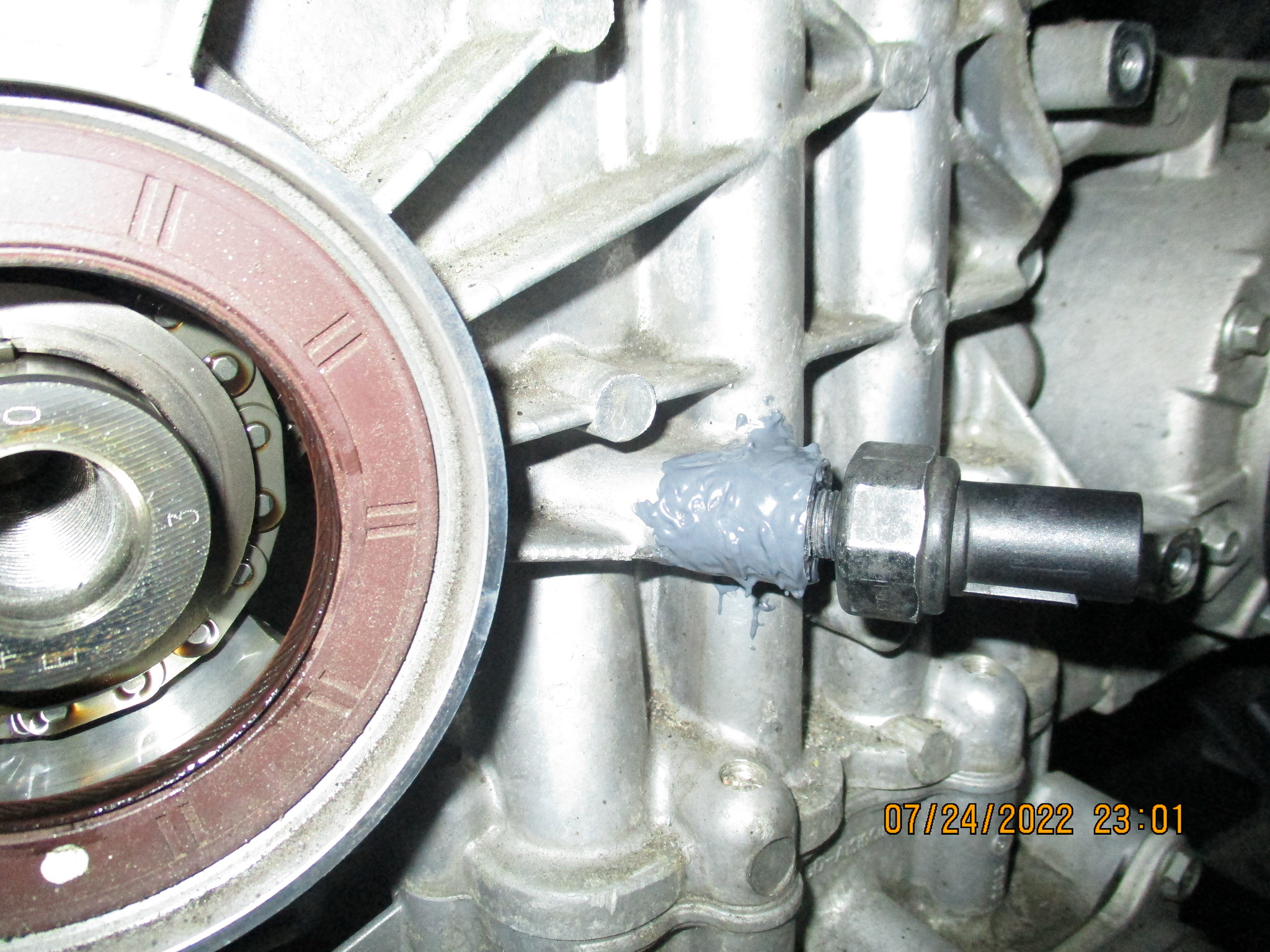
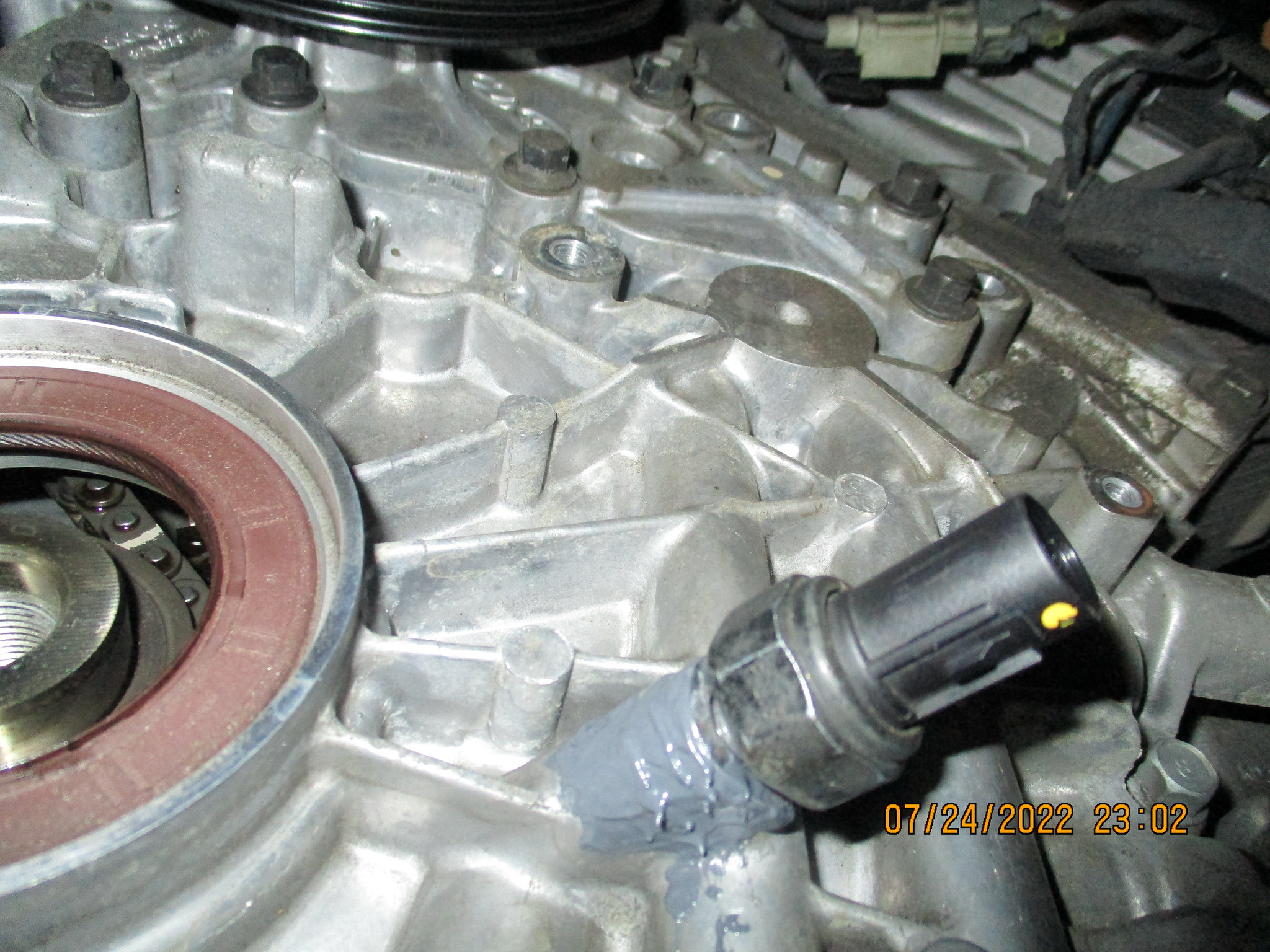
Well it looks like the epoxy mended the broken oil sensor port just fine after about 12hrs of curing. The oil sensor can threaded in pretty snug by hand. Next I applied some more JB Weld over the port itself to create a better seal and strengthen the repair.

52237488986_c67d3d0f11_k.jpg

52237979640_abd0747c46_k.jpg

52236507527_0c24958a24_k.jpg

52237498773_25489406d8_k.jpg
 
the after shot looks good. did you put any weld on the inside?
 
the after shot looks good. did you put any weld on the inside?
I put some epoxy on the old oil sensor threads before it cured and moved the oil sensor in and out of the port to hopefully seal the threads from the inside. It seemed to have worked since the oil sensor actually gets really tight when turning it by hand just like before the incident.

I will let the epoxy cure for 48hrs before I try torquing the oil sensor in the port until the threads are not visable. So far the epoxy is rock hard, but I am letting it fully cure to make sure. I may just use some thread sealant to seal the oil sensor threads instead of gluing the sensor in the port.
 
I have let the JB Weld cure for over 12hrs and the epoxy is rock hard. It looks like I would have to use a grinding disk to remove this stuff off the cover and use a hammer to break the repaired piece back off the port. I have never used JB weld because I would usually just replace a broken part. But in this case it may be more practical to repair the broken section as opposed to replacing the entire part if it is fixable. It appears to be.

The repair is not pretty, but the oil sensor port is probably stronger than before the accident. I am more concerned about stripping the aluminum threads than the port breaking off when tightening down the oil sensor. JB Weld is reinforced with steel so the repair is probably stronger than the cast aluminum port itself.

I see why JB Weld is so popular, it really works in the right application with proper prep. Fingers crossed again that it does not leak. I will still give the JB Weld 48hrs to cure before I button everything back up and start the engine.

52238350537_6590f05968_k.jpg

52238351417_2cbe917315_k.jpg
 
Last edited:
I finally got a quote from the Hyundai dealership about a lower timing cover replacement. I was quoted $3200-$3500 including a new cover. The cover is $400; so I am being charged about $3000 in labor.

I am done with this car. Hyundai is charging BMW and Mercedes Benz repair prices.

To make matters worst; the rear upper oil pan has a slight seep in the rear near the transmission. Therefore, my Genesis will need a oil pan gasket repair soon. So the lower front cover still will have to come off to access the upper oil pan even if I did not damage the oil sensor port.

Furthermore, I do not even trust the service manual to do such a complex repair since it may be some issues with the translation that can cause some costly mistakes like with the oil sensor torque specs.

If the epoxy repair holds without any leaks for a few days then the car is being traded-in for something else with less mileage. This car does not seems like one to hold on to with high mileage unless you willing to drop a subframe to repair most of the engine leak points or pay thousands of dollars to have a shop do it for you. I expect that from BMW not a Hyundai(Genesis) dealership.

To make matters worst; no one online repair these engines so I can not find any videos to help guide me and avoid common pitfalls or service manual errors. Not even on the 4.6 which is pretty similar to the 5.0. I will be pioneering any major engine work and learning the hard way what not to do like with the oil sensor. It would not be an issue if the parts was affordable, but the TAU parts are priced like BMW and Audi parts. If they are not on back-order.

This is not a project car I want to have after 100k miles.
 
Last edited:
Here is the spot on my upper oil pan that seems to be the start of a leak. It seems to be just a very light seeping that is starting to stain the corner. The seeping will eventually get worst as the opening in the gasket gets larger until it turns into a leak. I found the spot when I was doing an inspection and checking out on how to remove the sub-frame. So even if I did not mess up my front timing cover I would have to remove it anyway to properly pull the upper oil pan off the engine to reseal it. The good news is that I caught the oil pan seeping issue early before it became a full on leak since i never remove my engine under covers.

I may just keep the car since the sub-frame is pretty easy to remove and it only weigh 55lbs. I found a used lower timing cover for a 5.0 TAU(2015 K900, but same part number as the 2015 Genesis) on eBay for about $200. So I may just bite the bullet and just fix the darn car; which mean pulling the sub-frame and upper oil pan. I also noticed that the AC lines may be rubber hose near the firewall; so they should be able to be flexed out of the way of the driver side valve cover. Good news since I should be able to easily pull the valve covers without draining the refrigerant.

So I may just keep the car since I actually do like it and do not want an car note just to save $3000 or avoid doing the work myself. I will also check out my timing chain guides and timing chain with the front covers removed; hopefully the timing components are still good with 90k miles. I will still see if the oil sensor leaks first before i make a final decision on keeping the car or just trading it in for a newer ride under warranty because I do need a dependable main ride to get to work. I am now using my gas guzzling backup ride(6.0 V8 SUV )to get to work.


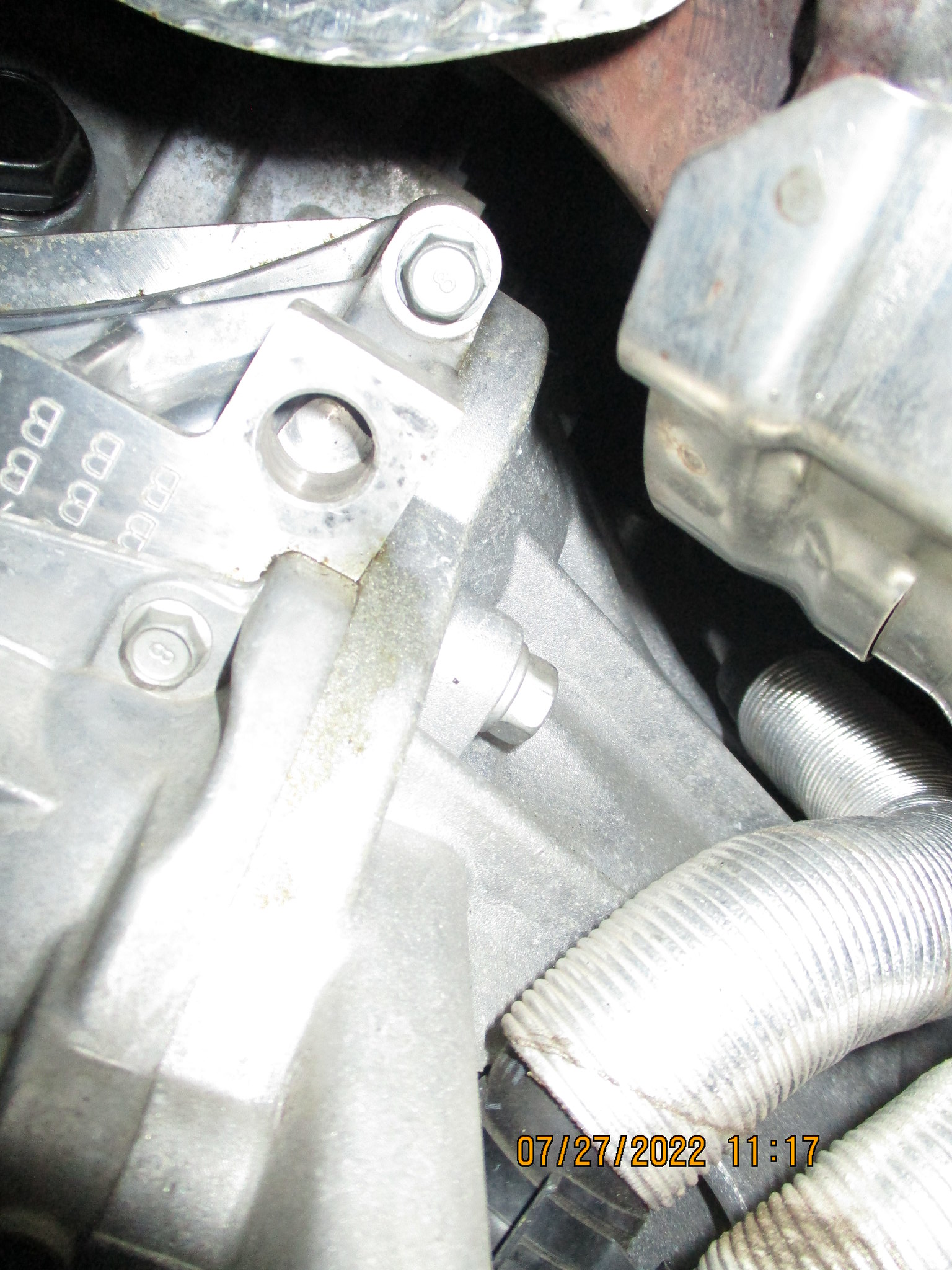
The oil stain(amber spot) on the rear of the upper oil pan where it mates to the transmission bell housing. I recommend that everyone with a high mileage Genesis check your oil pan(upper and lower) for leaks or the start of one.
52245658595_36b4160682_k.jpg
 
Last edited:
Looking to update and upgrade your Genesis luxury sport automobile? Look no further than right here in our own forum store - where orders are shipped immediately!
Im about to hit 100k. I was going to do the plugs and oil this weekend so ill have to check this out! Thank You for the info!
 
Im about to hit 100k. I was going to do the plugs and oil this weekend so ill have to check this out! Thank You for the info!
You are welcome.

Hopefully oil pan leaks are rare on these engines. However, oil pan, timing cover and valve leaks are fairly common on most cars after about 90k miles. My upper oil pan leak is very slight so it may still take a couple years before it gets bad enough to pull the pan. I may even try to use some leak fix oil treatment to seal the oil pan area while the seeping is still very light.

However, I most likely will just remove my pan if I tackle the front timing cover repair myself to properly RTV it. I am still debating if i really want to keep this car or not.

Man, this is why I hate dealing with high mileage cars. I started off changing out a bad alternator, but ended up breaking an oil sensor port due to either bad torque specs or a fragile casting that was weak. Now I notice that I may have a fledgling oil leak in my upper oil pan.

Older cars can become a long term project without end since something new will break when you fix the current issue and so fourth until you get tired of fixing crap and sell the car while you are ahead.:)
 
Last edited:

You are welcome.

Hopefully oil pan leaks are rare on these engines. However, oil pan, timing cover and valve leaks are fairly common on most cars after about 90k miles. My upper oil pan leak is very slight so it may still take a couple years before it gets bad enough to pull the pan. I may even try to use some leak fix oil treatment to seal the oil pan area while the seeping is still very light.

However, I most likely will just remove my pan if I tackle the front timing cover repair myself to properly RTV it. I am still debating if i really want to keep this car or not.

Man, this is why I hate dealing with high mileage cars. I started off changing out a bad alternator, but ended up breaking an oil sensor port due to either bad torque specs or a fragile casting that was weak. Now I notice that I may have a fledgling oil leak in my upper oil pan.

Older cars can become a long term project without end since something new will break when you fix the current issue and so fourth until you get tired of fixing crap and sell the car while you are ahead.:)
I totally understand. Its like running on a treadmill. I had a old CrV that was like that granted it had 240k on it. I was following this post. It sucks that they have the wrong specs in the manual.
 
https://i.ebayimg.com/images/g/BW0AAOSwoYhid7vS/s-l1600.jpgI totally understand. Its like running on a treadmill. I had a old CrV that was like that granted it had 240k on it. I was following this post. It sucks that they have the wrong specs in the manual.
I admit that I was very very upset that I am having this issue with the oil sensor port because of a possible misprint in the service manual. Hence, why I considered dumping the car. However, I am over it now. Crap happens but you move on.

I have decided to just keep the car. I have already ordered the used lower front timing cover off eBay. My plan is to just replace the timing cover and reseal the lower oil pan. I will also look into changing out the high pressure fuel pump cam rollers since the high pressure fuel pumps have to come off the valve covers anyway; so might as well replace them. I may also replace the timing chain tensioners as well since they will be easy to swap out with the timing covers removed.

My Genesis do have 90k miles so I guess it is time to start some maintenance on it. I could not find an replacement car that I liked over my Genesis that cost less than $50k; so I decided to just keep it and fix it.

I will start a new thread that focuses on the timing cover and oil pan repair and leave this thread for the alternator issue.

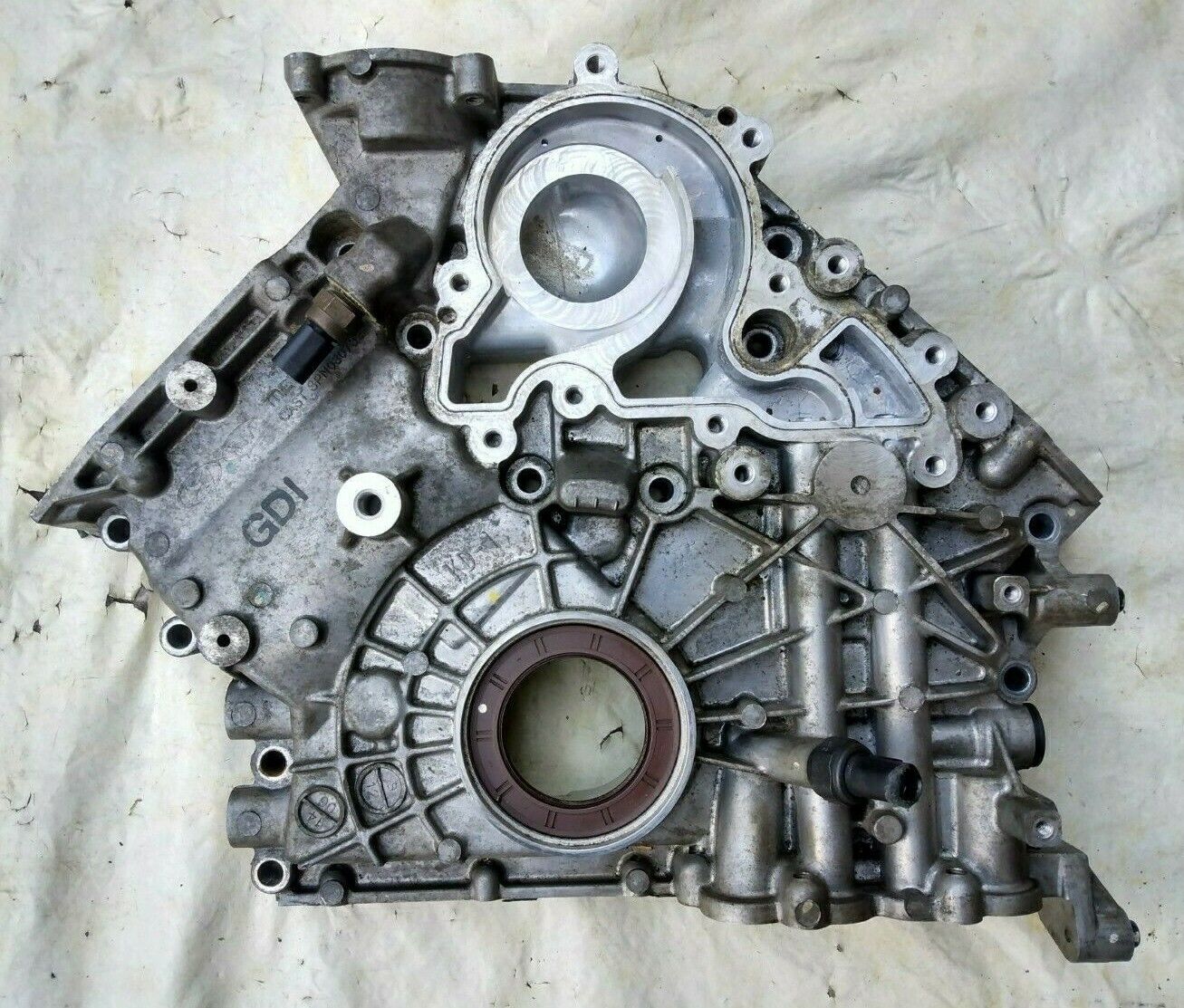
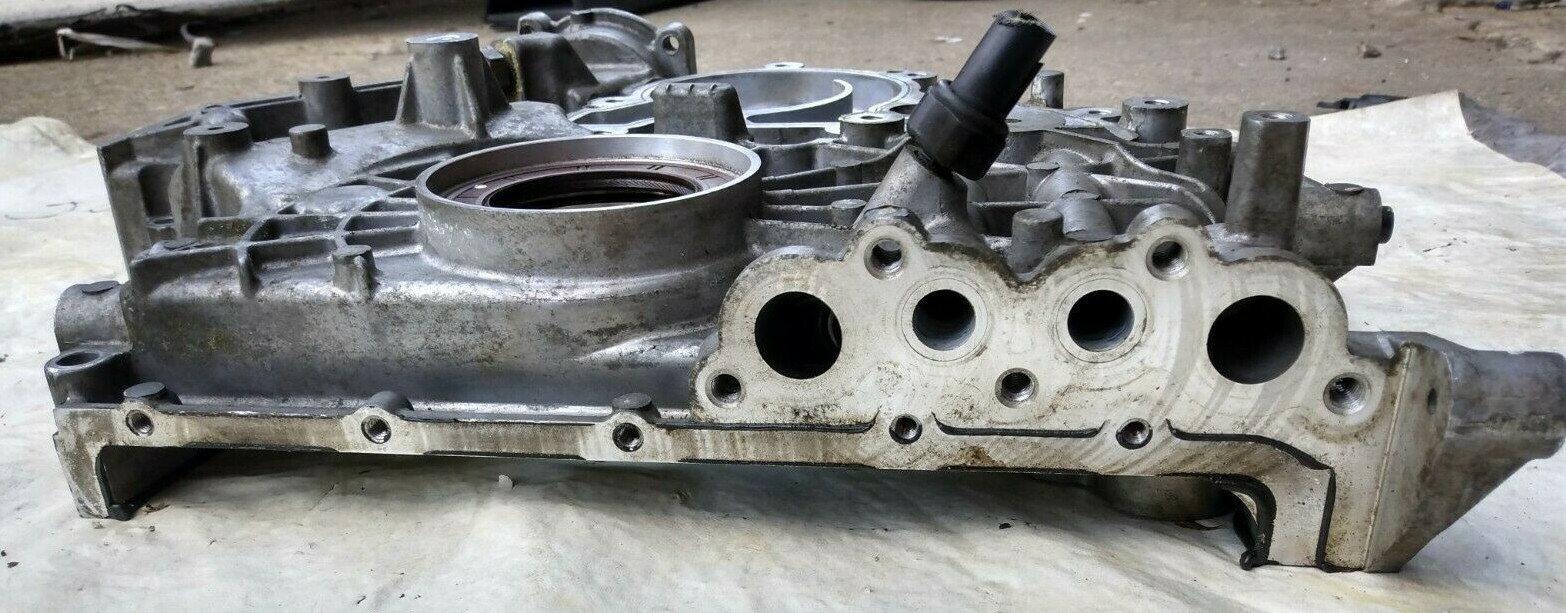
I bought this used 5.0 lower front timing cover pulled from a 2015 KIA K900. It has the same part number as the 2015 Genesis 5.0; so it should work if it is not damaged. I will mark the old oil sensor threads on the replacement cover and replace the new sensor with the same number of threads instead of going by the service manual specs.

s-l1600.jpg

s-l1600.jpg
 
Last edited:
Back
Top