carguy75
Registered Member
- Joined
- Jun 23, 2018
- Messages
- 3,067
- Reaction score
- 1,640
- Points
- 113
- Location
- Atlanta, Georgia
- Genesis Model Year
- 2015
- Genesis Model Type
- 2G Genesis Sedan (2015-2016)
I finally got the old alternator out and tested it properly. It turns out that the rectifier is good. Therefore, after some thought it may just be a bad voltage regulator or worn brushes. Before the battery died it only had about 13volts just after a drive. It should have been about 13.6v-14v just after a drive. My battery charger also does have a hard time charging the battery from the front jump posts if the voltage goes under 11v unless I directly connect it to the battery in the trunk; hence the charging issue. I am also sure the aftermarket amp did not help the charging issue.
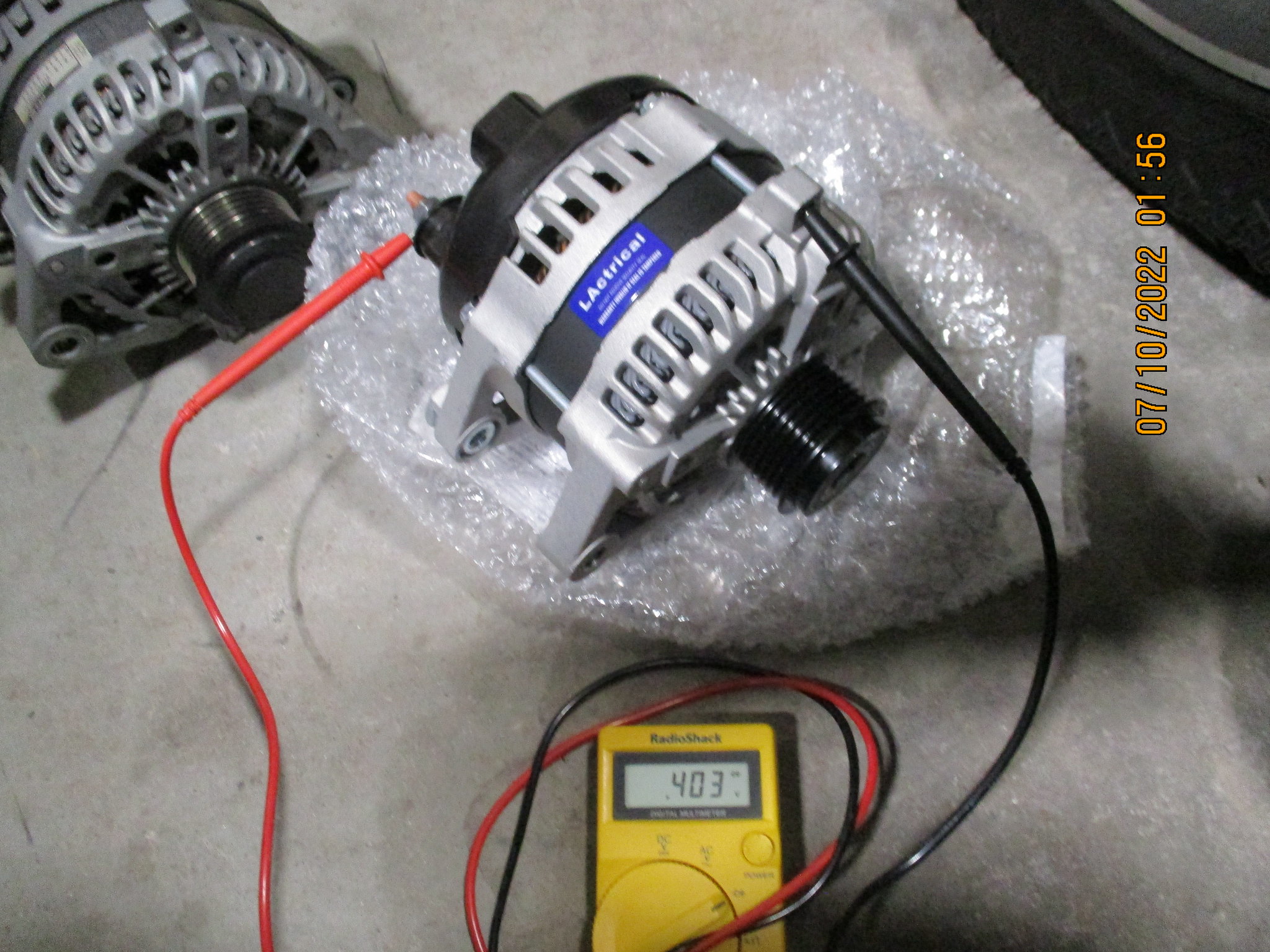
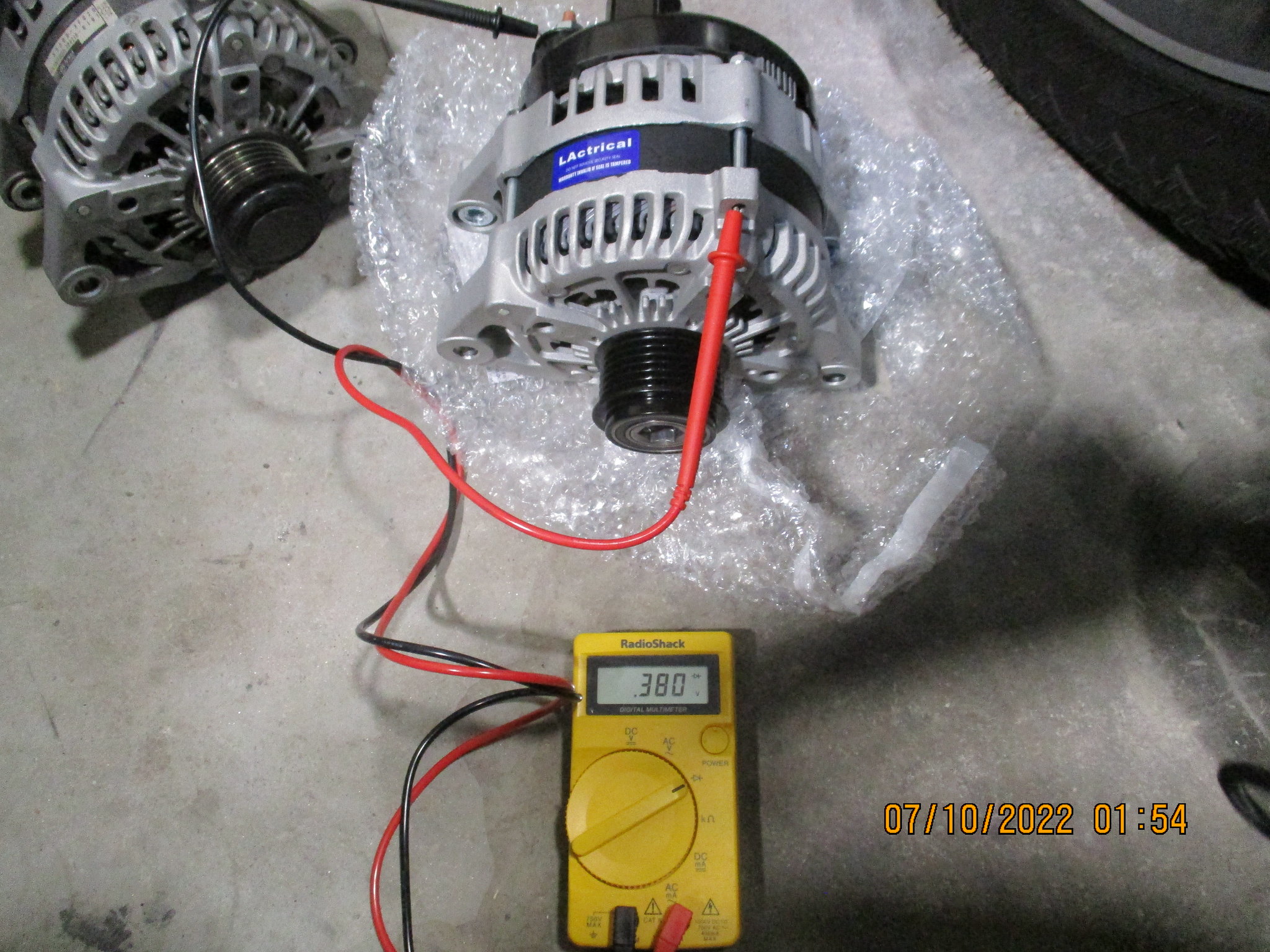
To make matters worst; the LActrical alternator has a bad rectifier new out the box. So the Denso wins by default since it did pass the test. I will try to replace the brushes and voltage regulator in my old alternator to use it as an spare. My OEM alternator is a Denso 180A model just like the Denso aftermarket replacement.
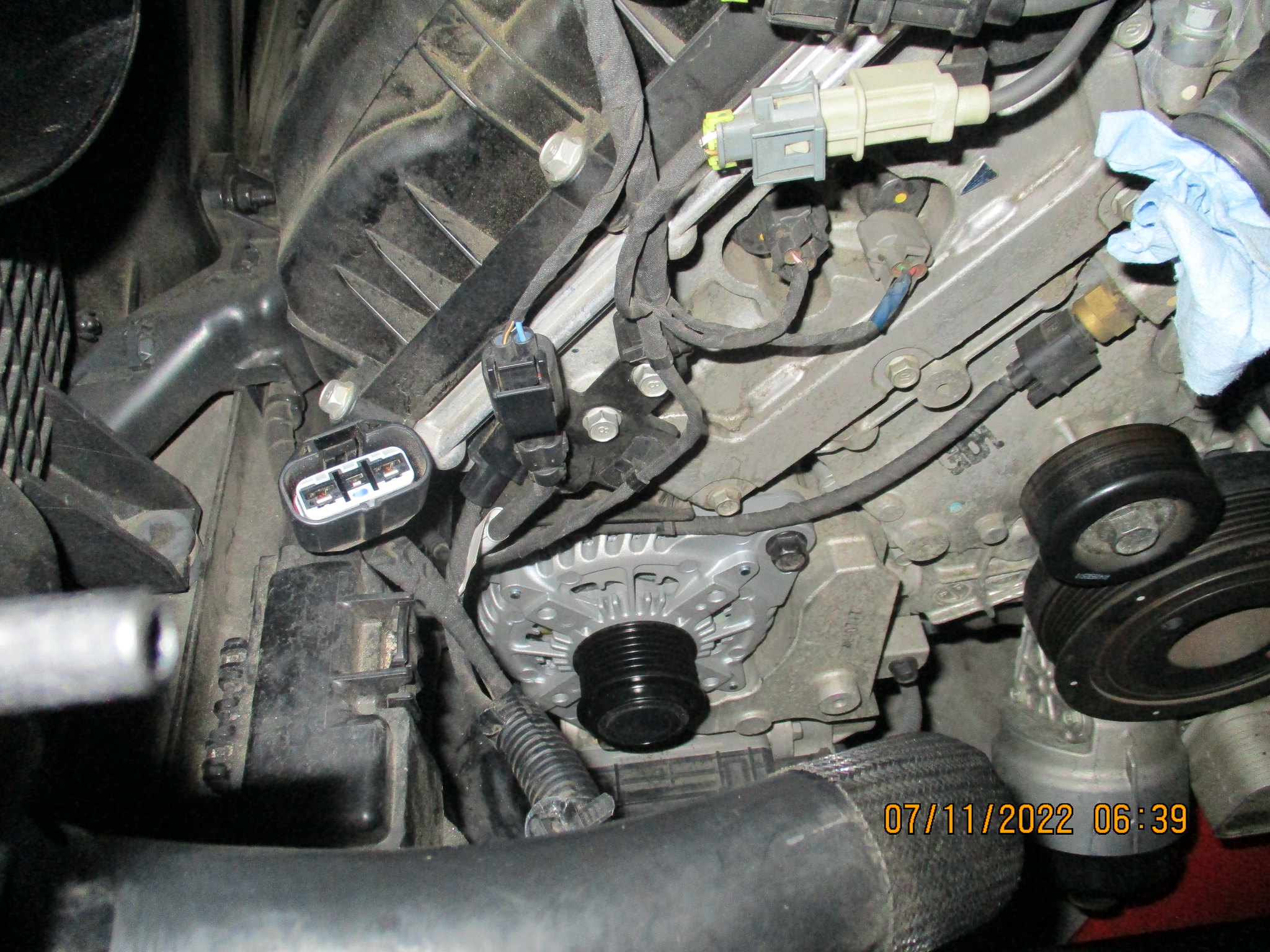
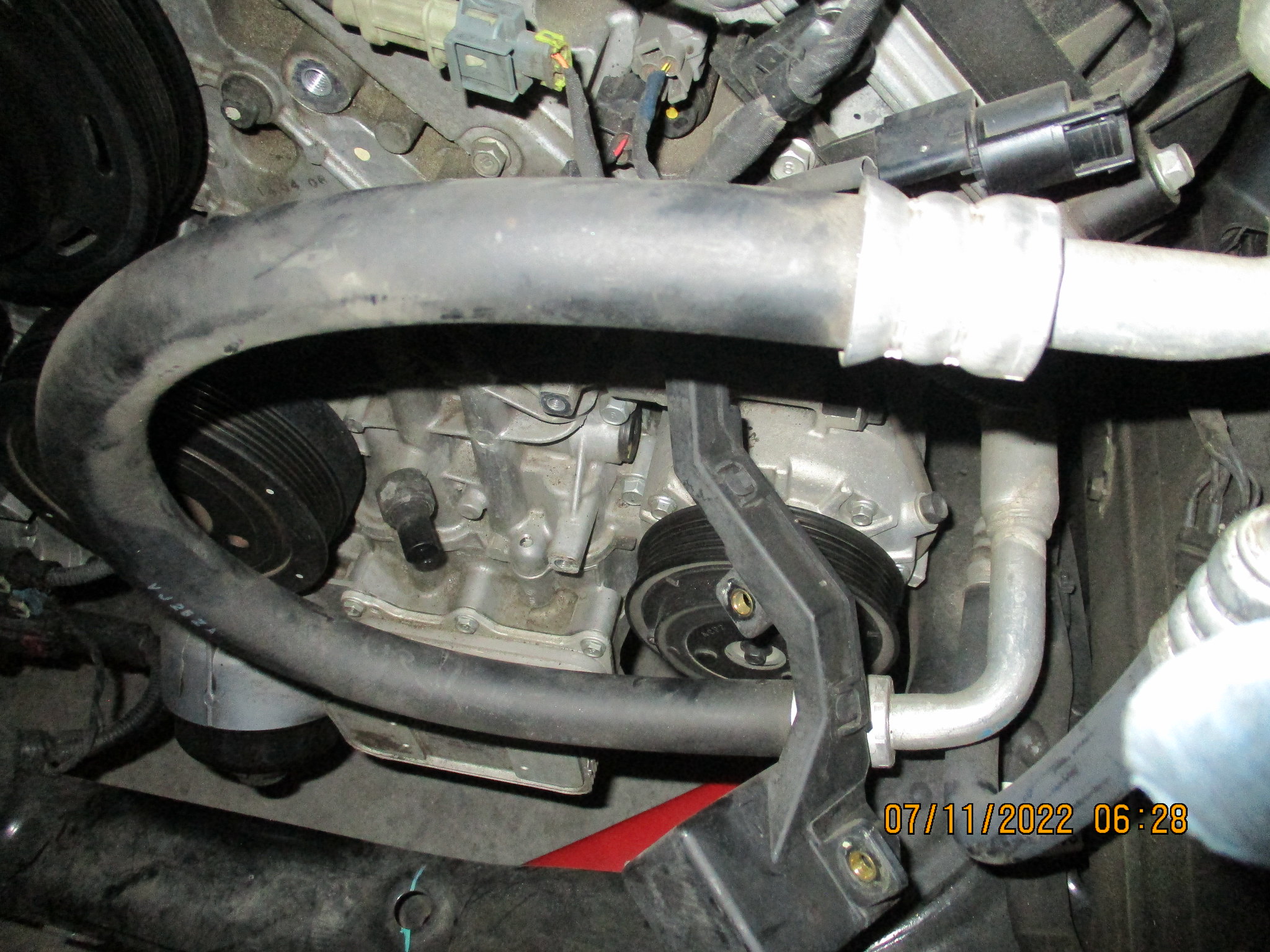
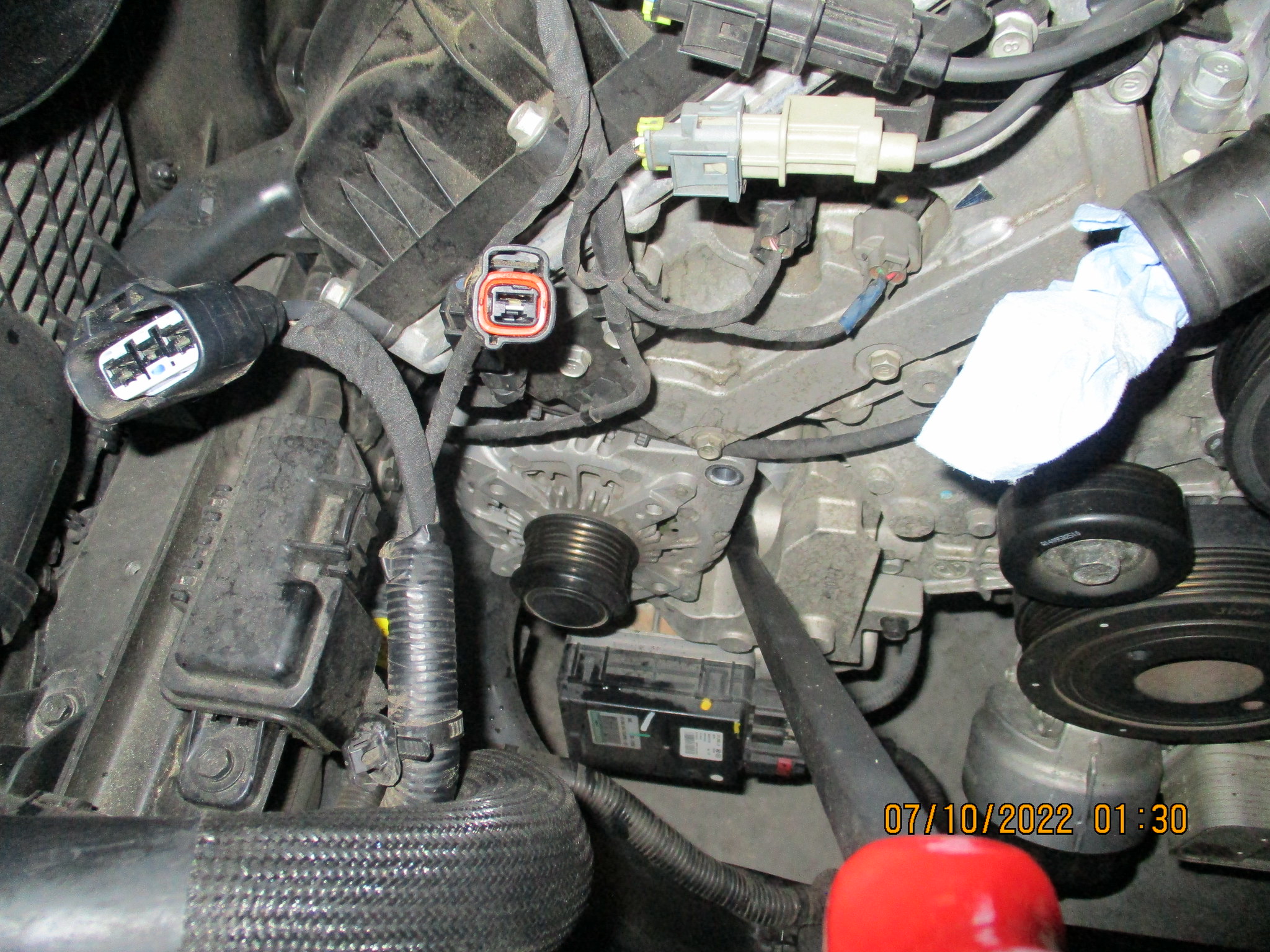
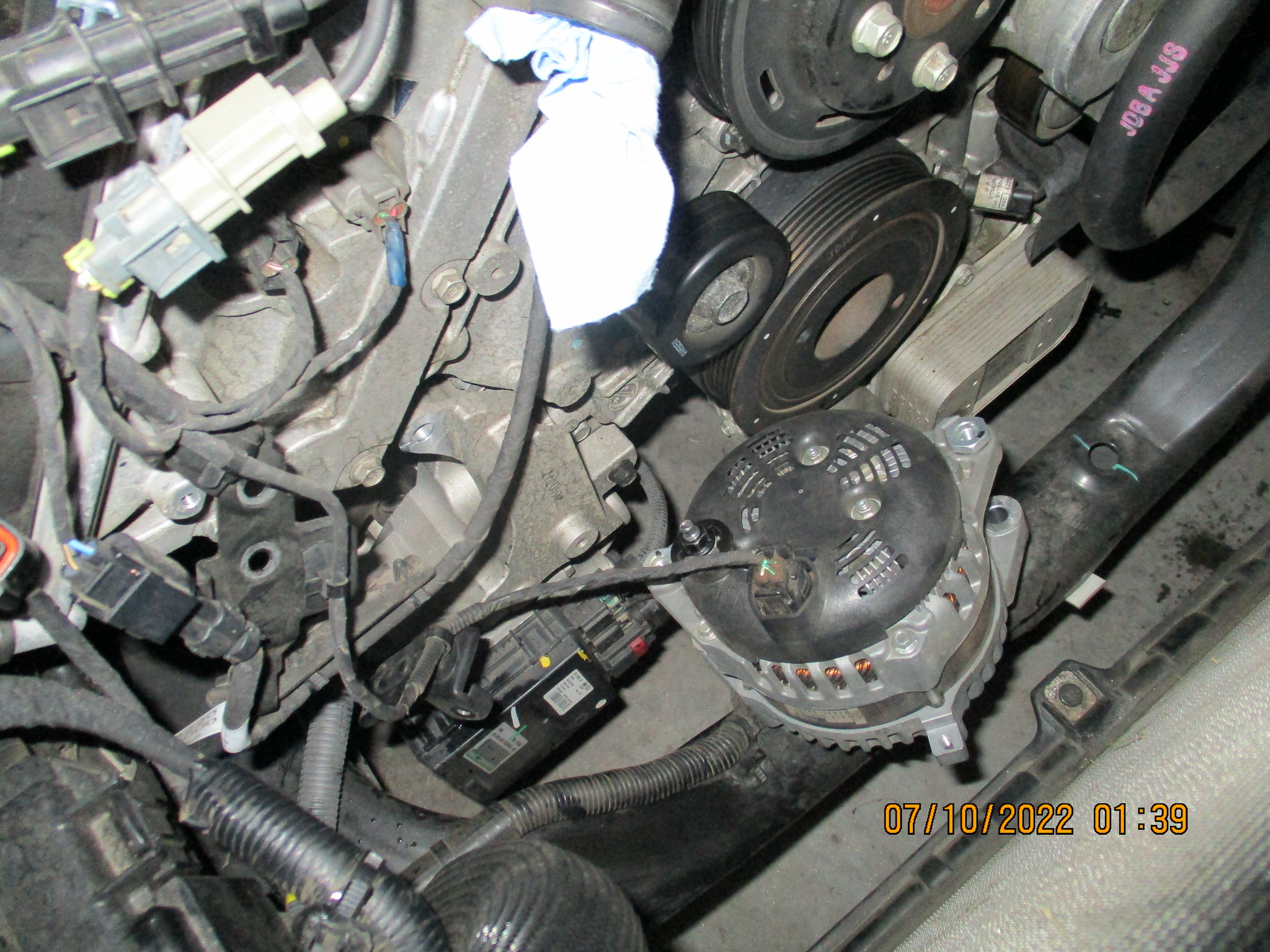
The hardest part of removing the alternator was removing the stuck coolant hoses and accessing the battery post in the rear of the alternator with it mounted in the car. The rest of the work was fairly easy.
I used a pick tool and rubber strap wrench to free the stuck hoses.
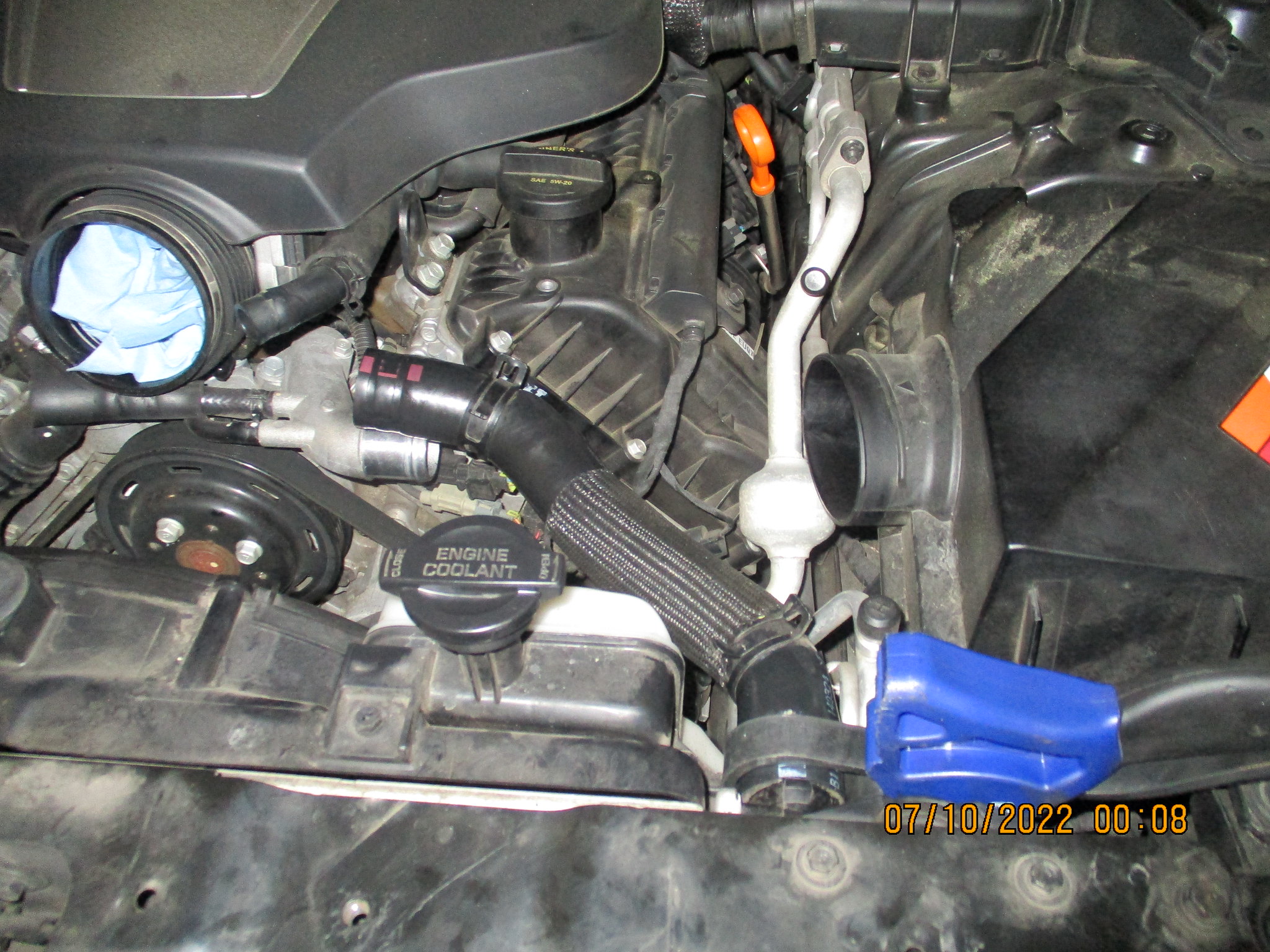
The radiator has an easy to use drain dong. I also recommend using a large drain funnel pan when dealing with coolant.
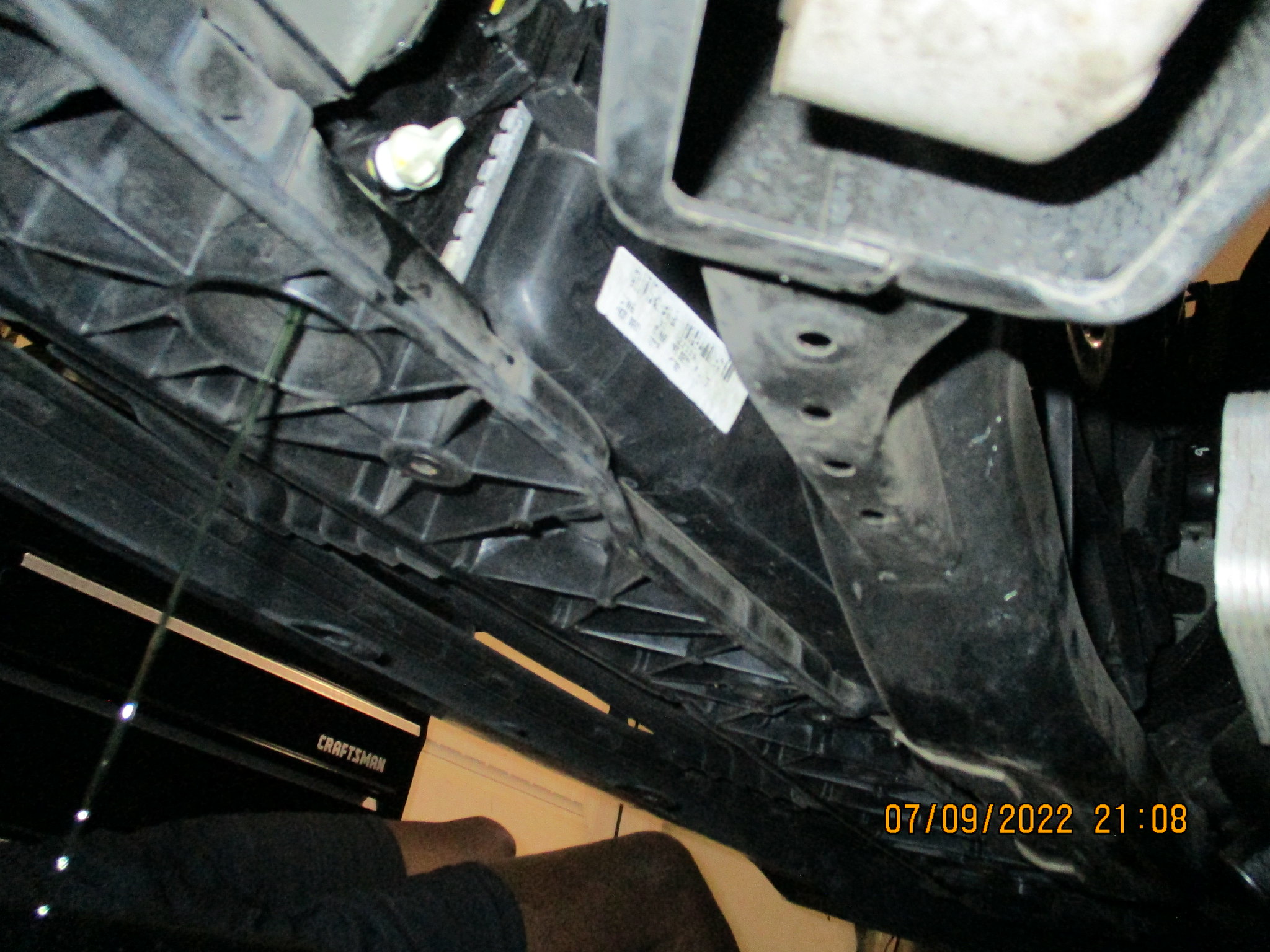
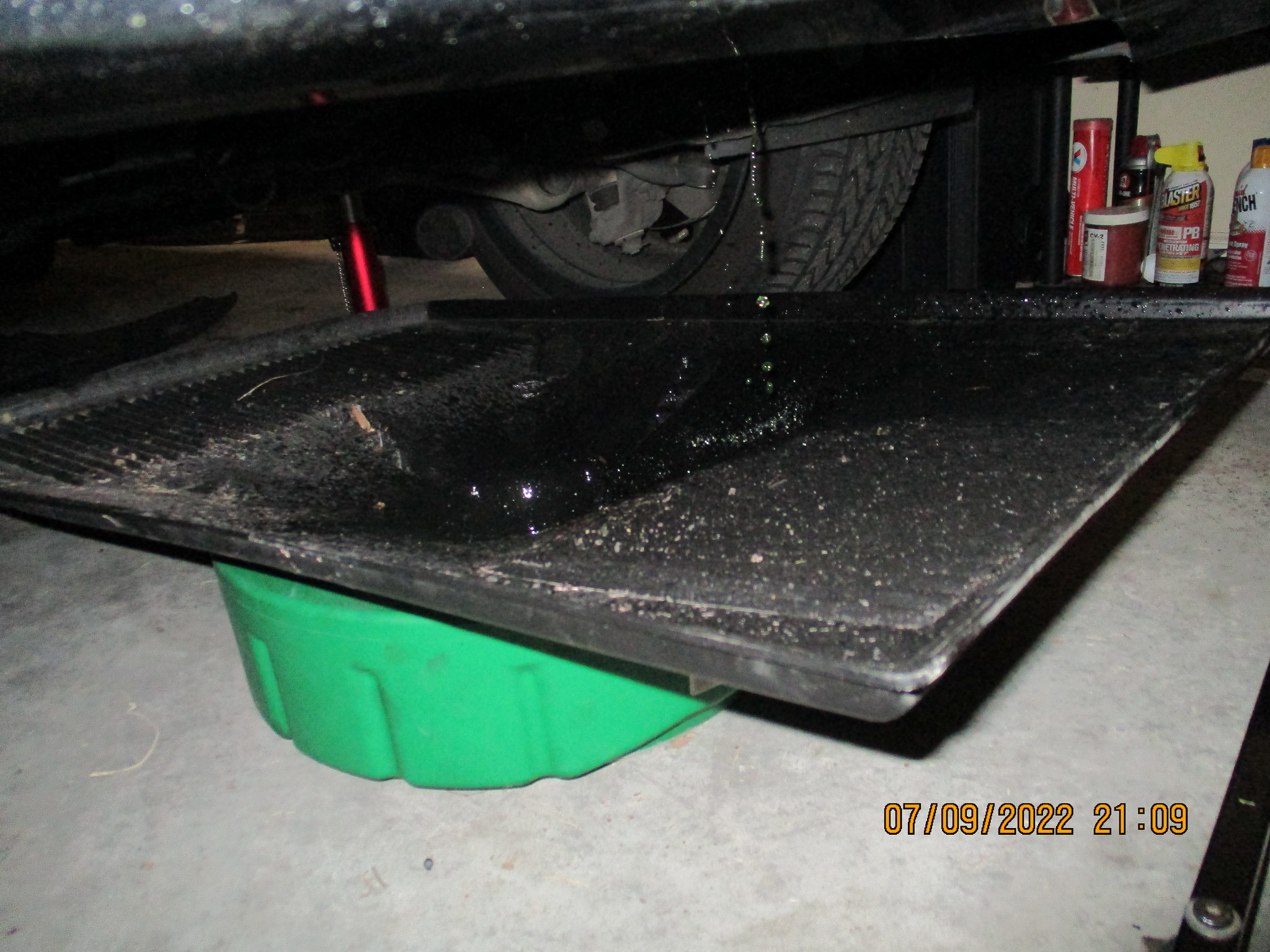
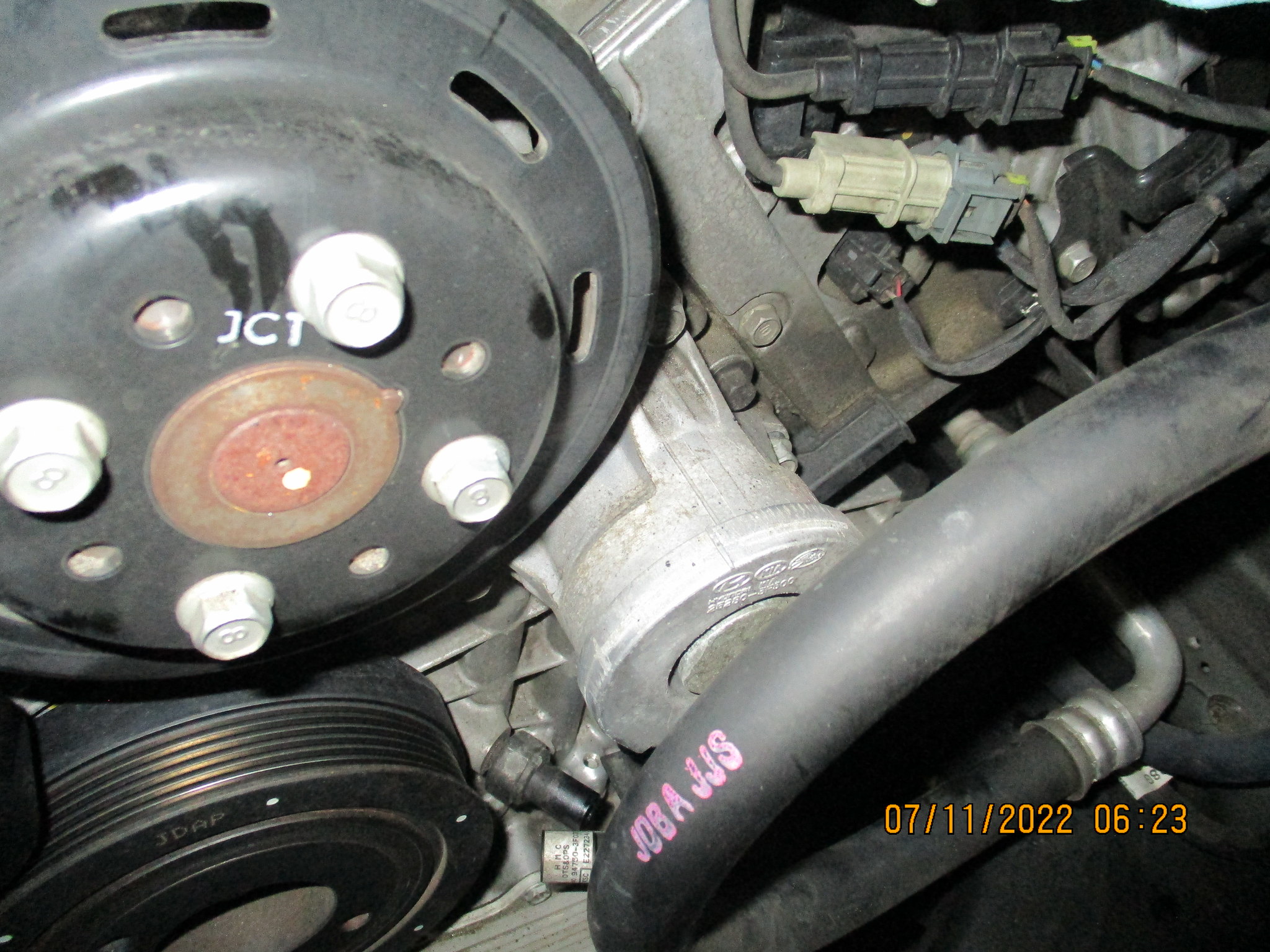
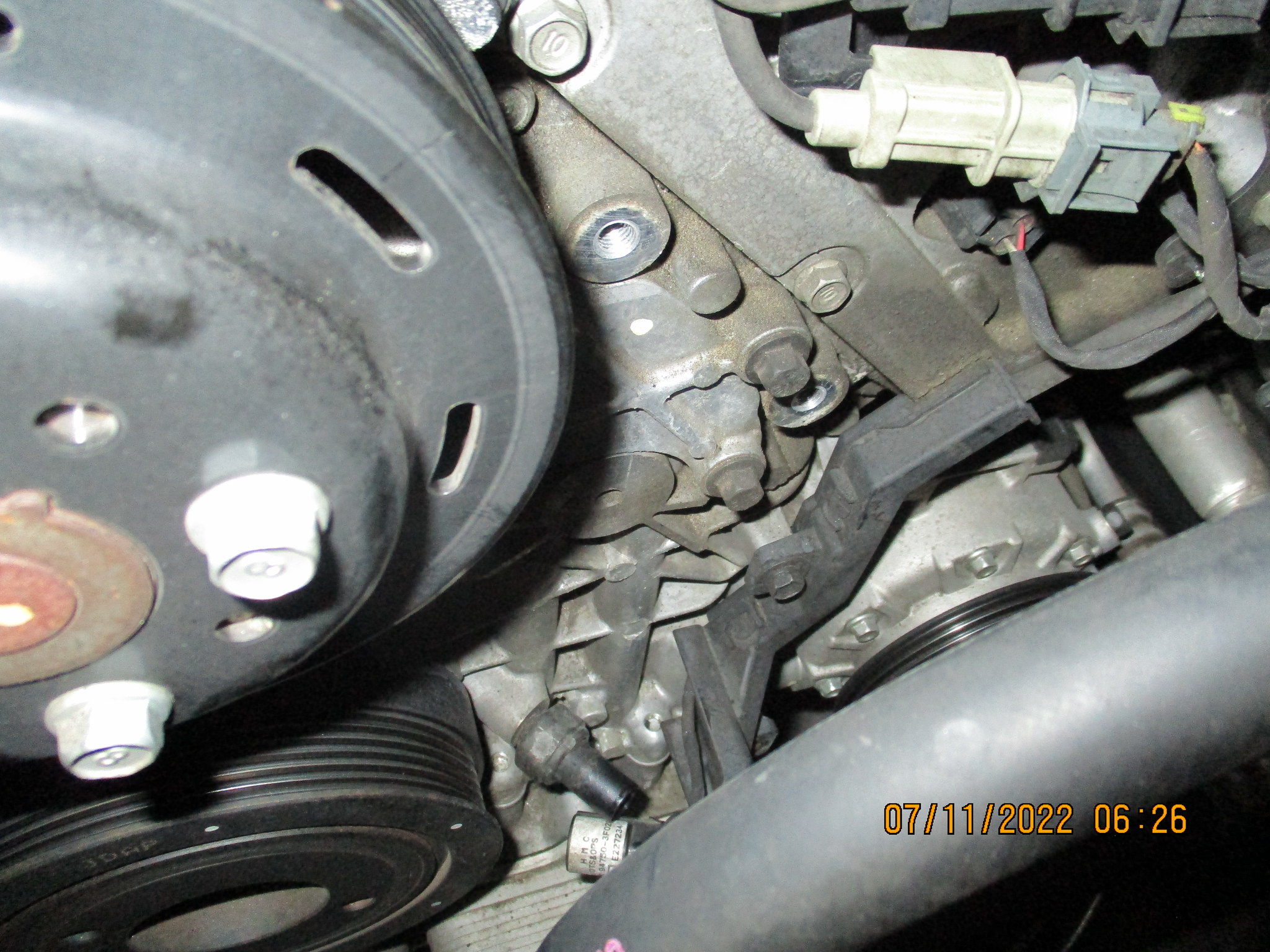
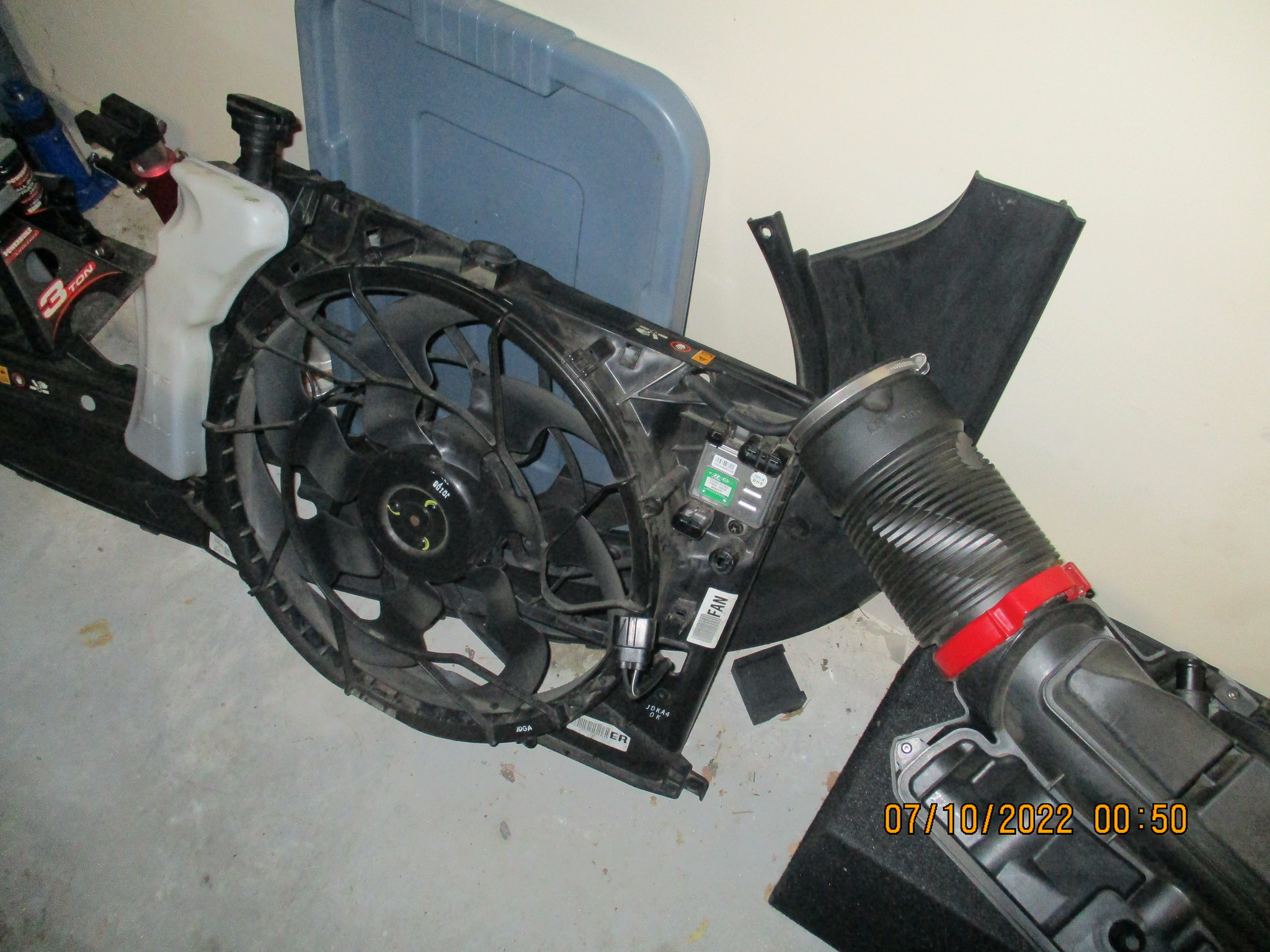
Removing the radiator fan unit does open up the front of the engine to properly work on the drive belt and alternator( and other components like the water pump). It only held in place by (2) upper 10mm nuts and (2) lower slide mounts. You will also have to remove wire loom clip. Hyundai did a good job with the TAU engine in terms of ease of repair for most of the common fail high mileage items such as the alternator, water pump, front timing chain covers, oil pressure sensor,etc.
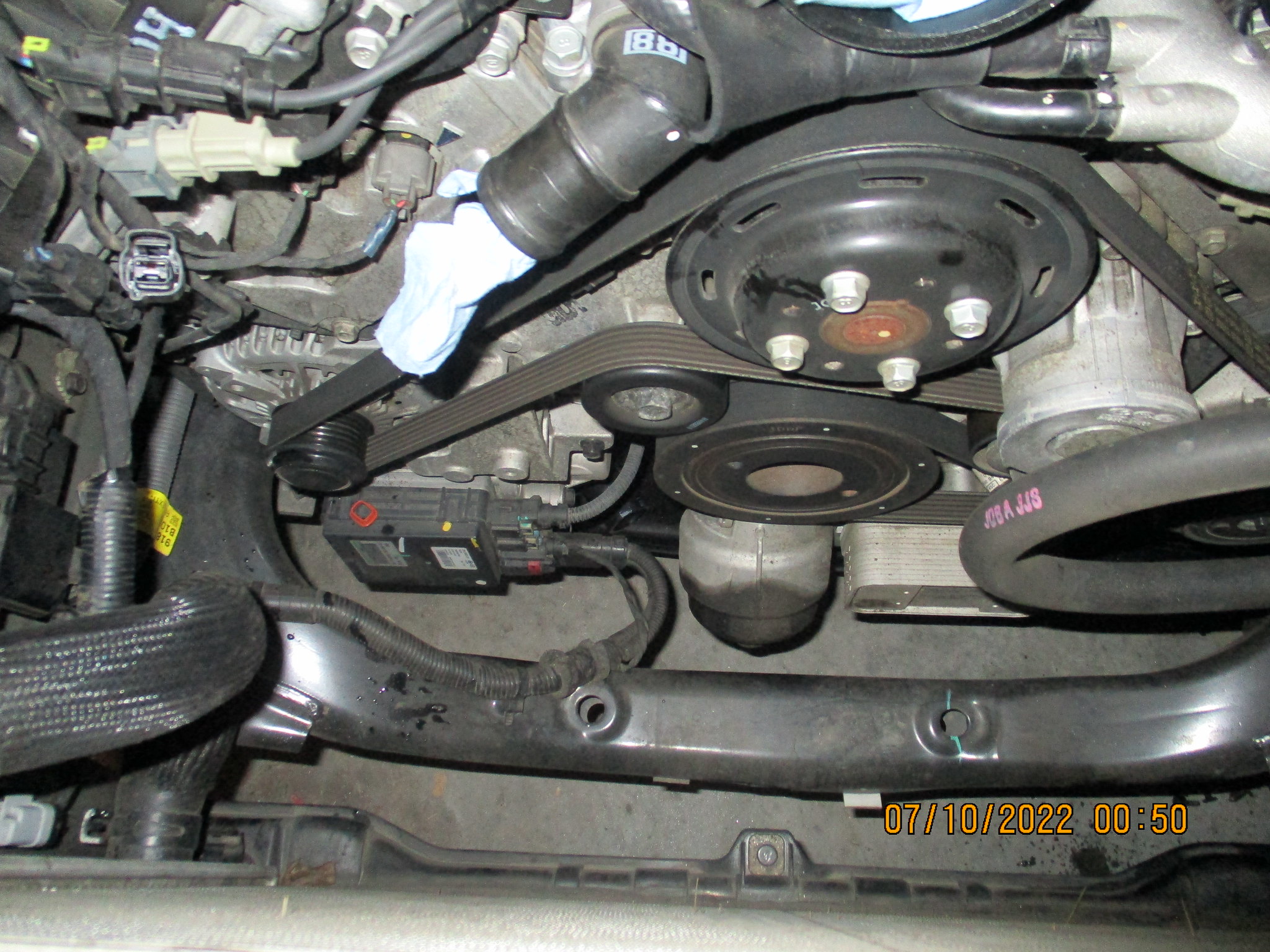
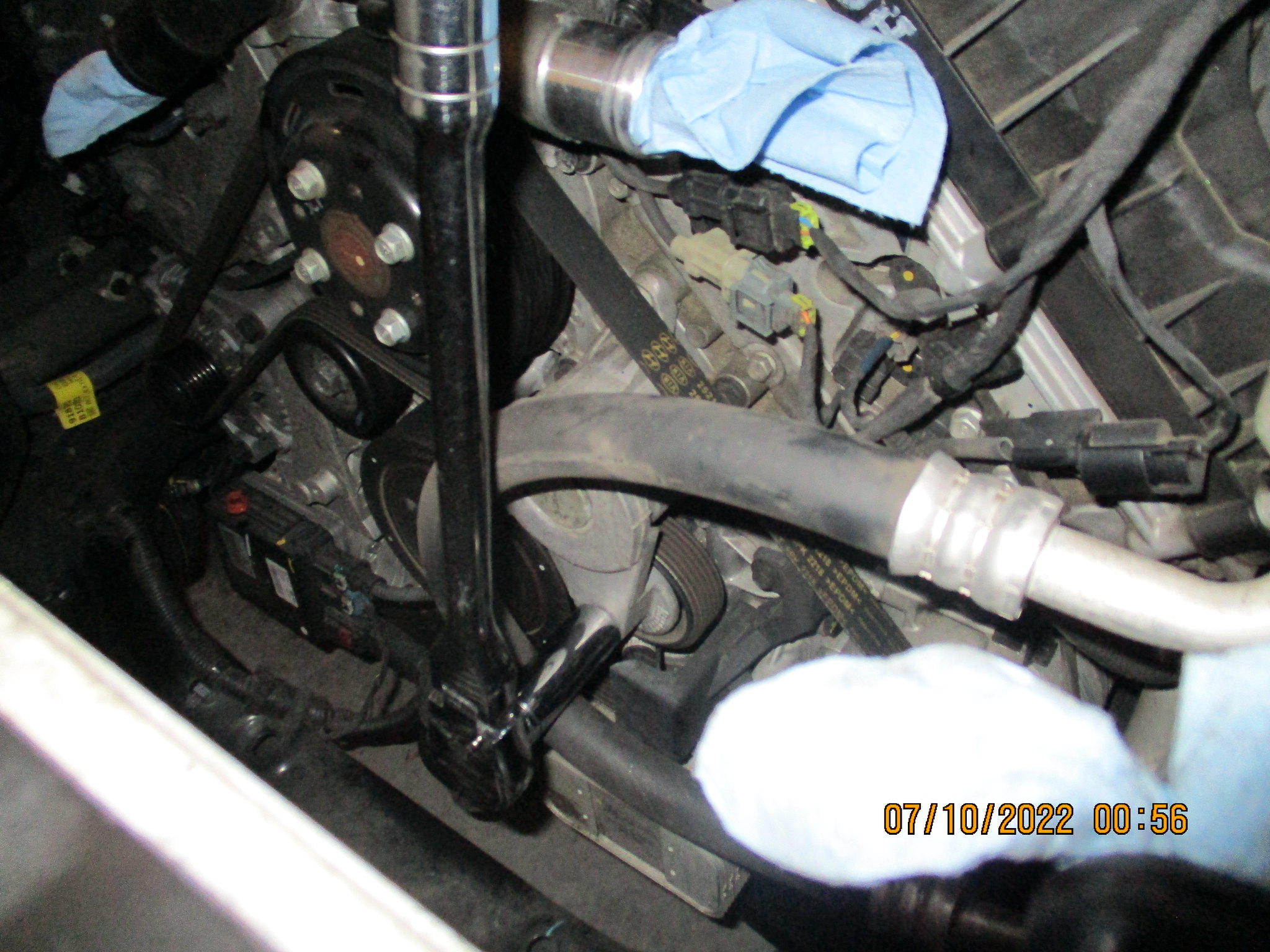
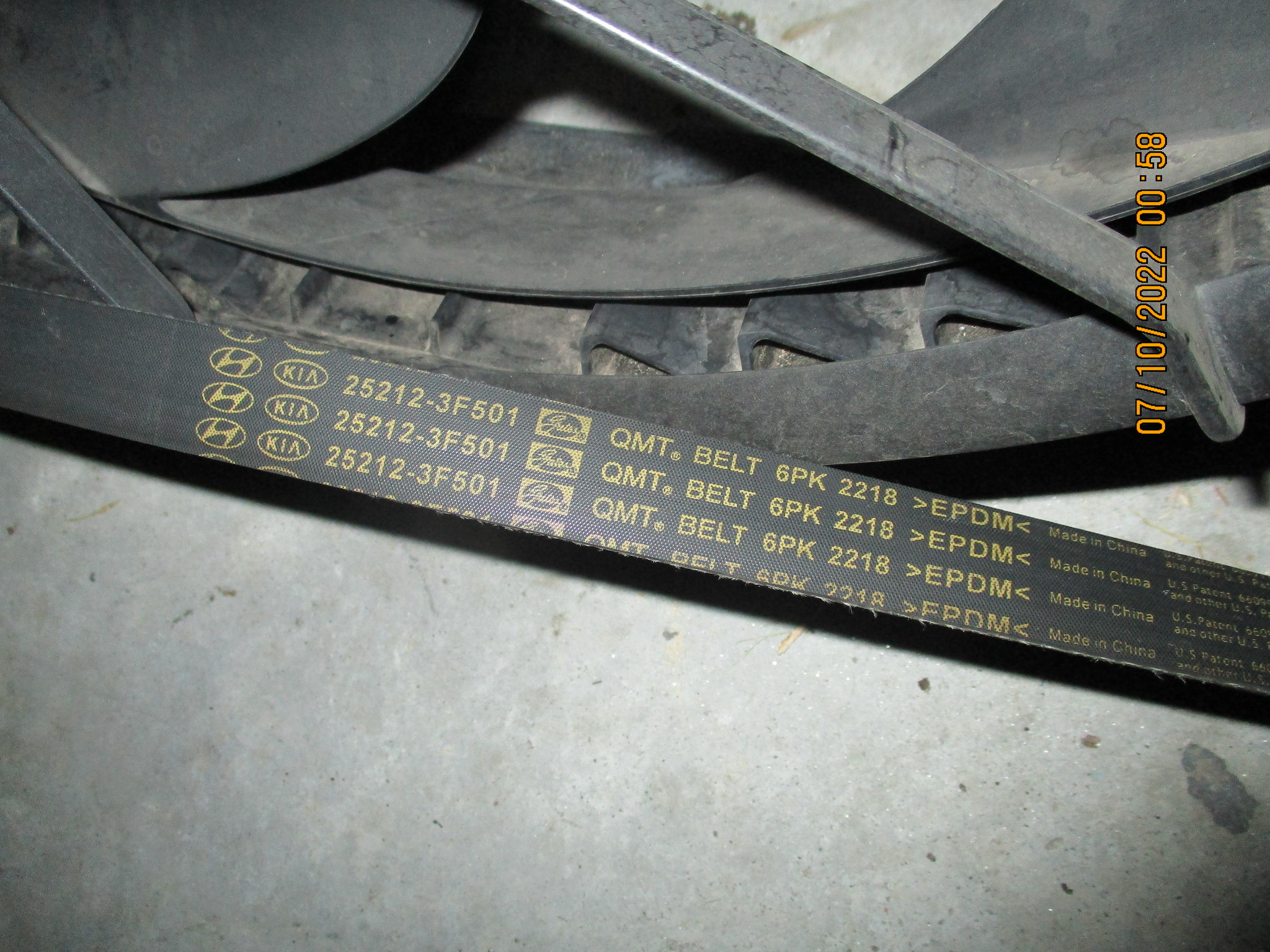
The drive belt was easy to remove as well. The belt tensioner only needs an 19mm socket and long handle socket wrench to disengage(clockwise). Hyundai actually uses a good quality Gates brand belt, mine was till good at 90k miles.
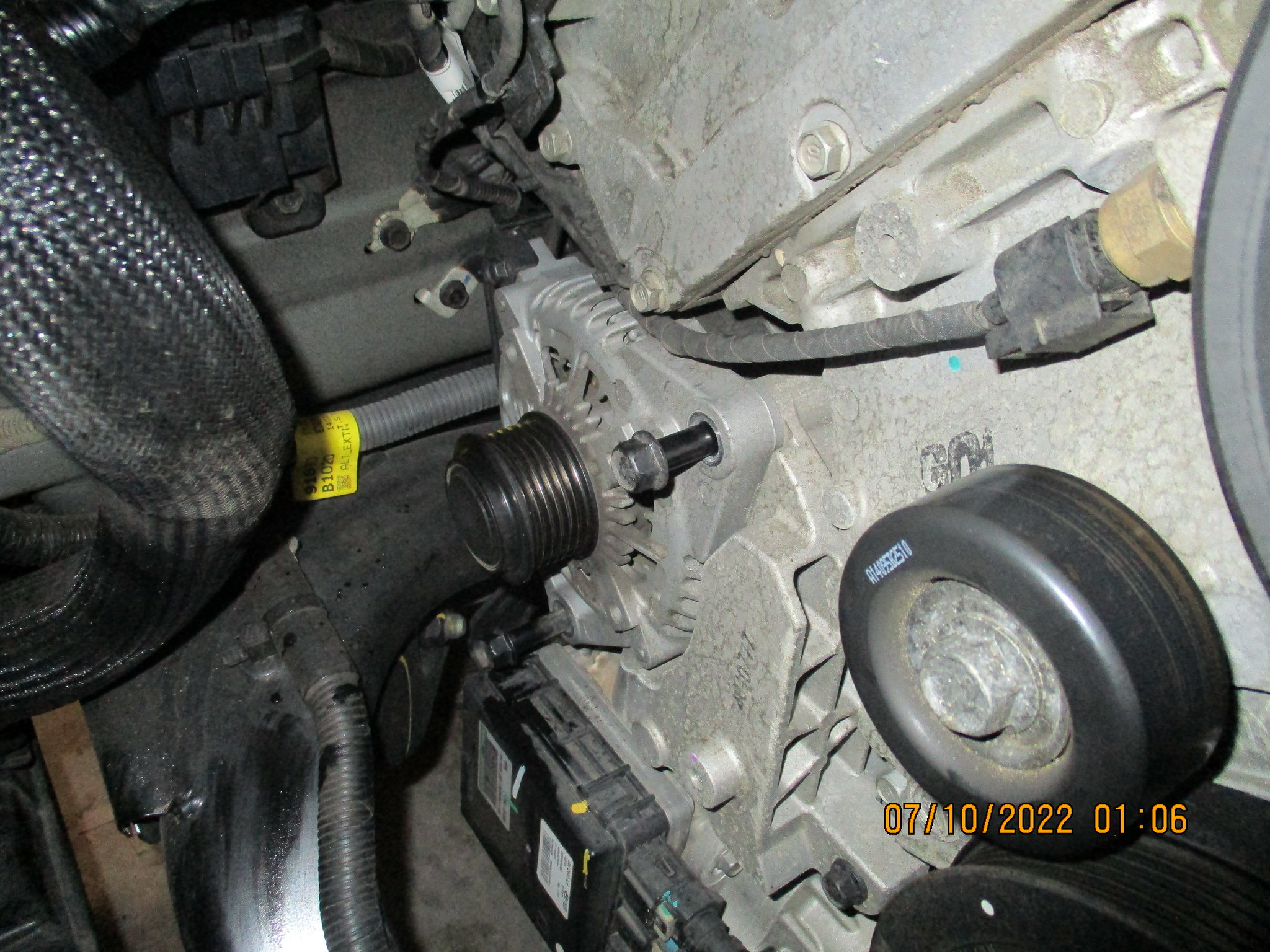
The alternator itself in only held by (2) 14mm nuts, (1) 10mm wire harness bracket, 12mm rear battery post nut and wire harness. I used a crow bar to pry it out of the supports to free it. I also remove the wire harness bracket on the engine block to give the alternator harness wires a bit more slack.
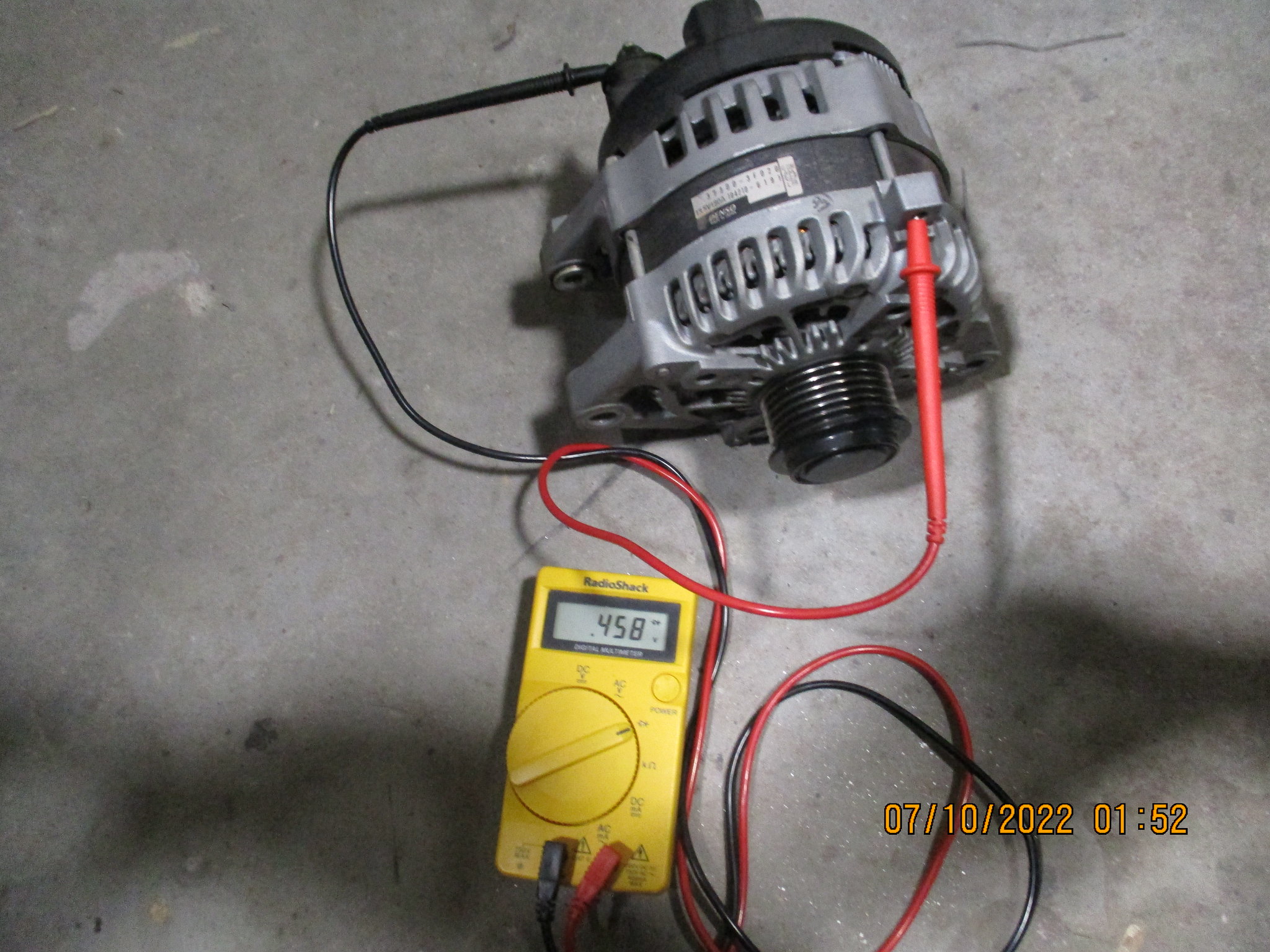
My stock alternator test with my old Radio Shack voltmeter(vintage, but accurate). The rectifer is good, but it may have a bad regulator and worn brushes that reduces the output. The first test was done in a tight space so that my connection may not have been very good with the meter clips; hence the voltage reading until open circuit. The alternator did go to an open circuit right way on this test; which is good
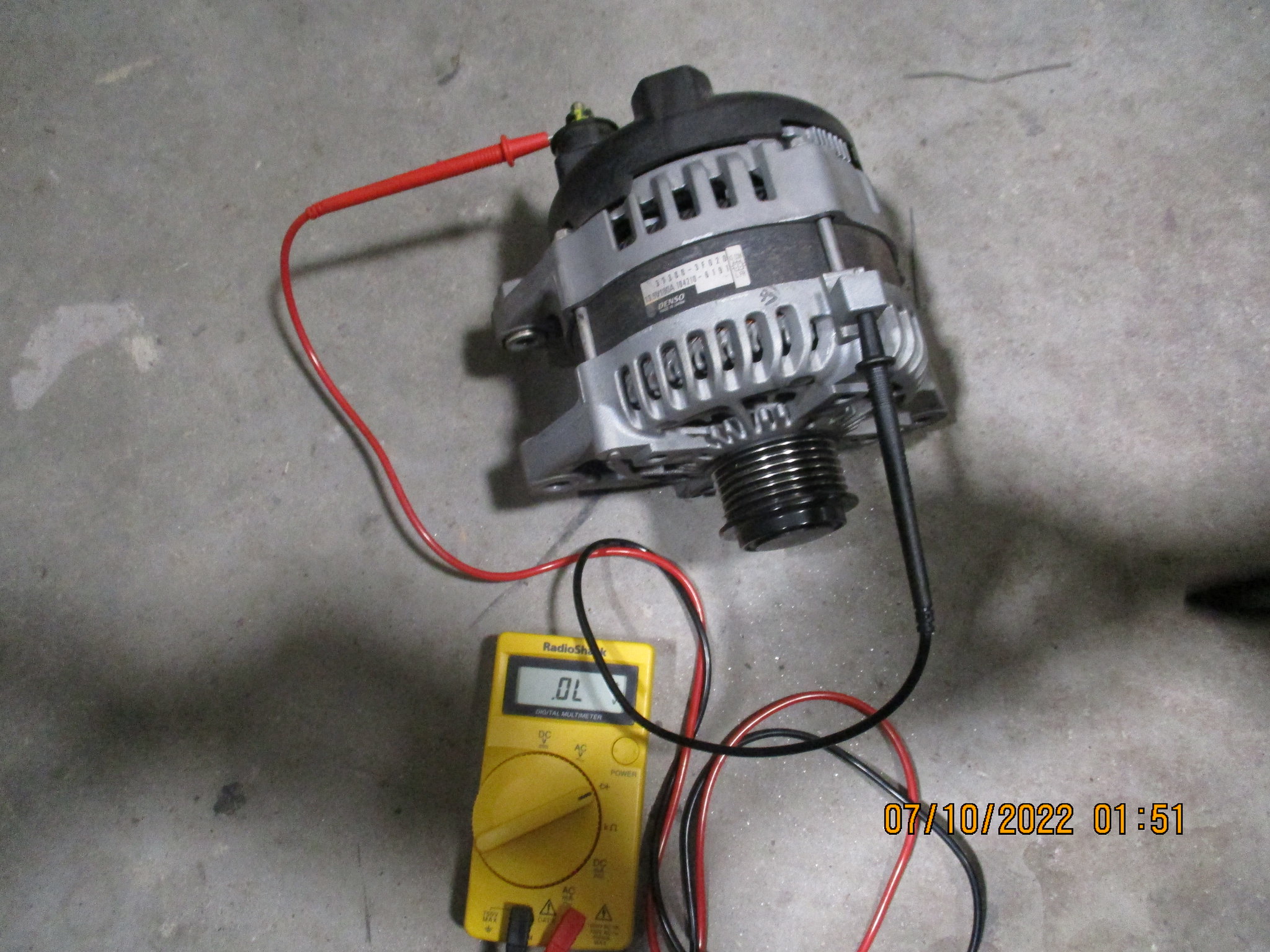
The LActrical failed the rectifier test. It would have just drained the battery if I installed it. It allowed voltage both ways; not good.
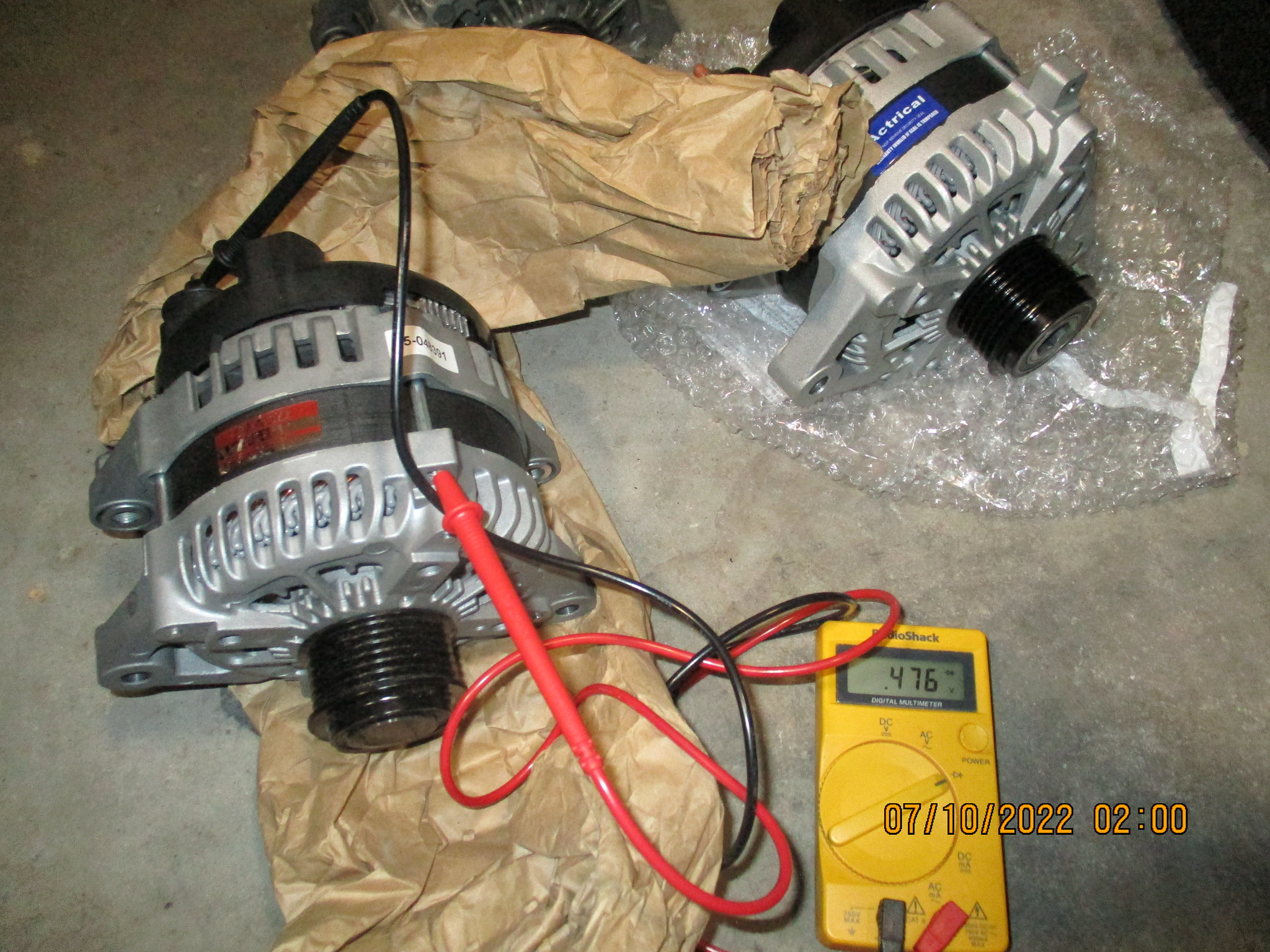
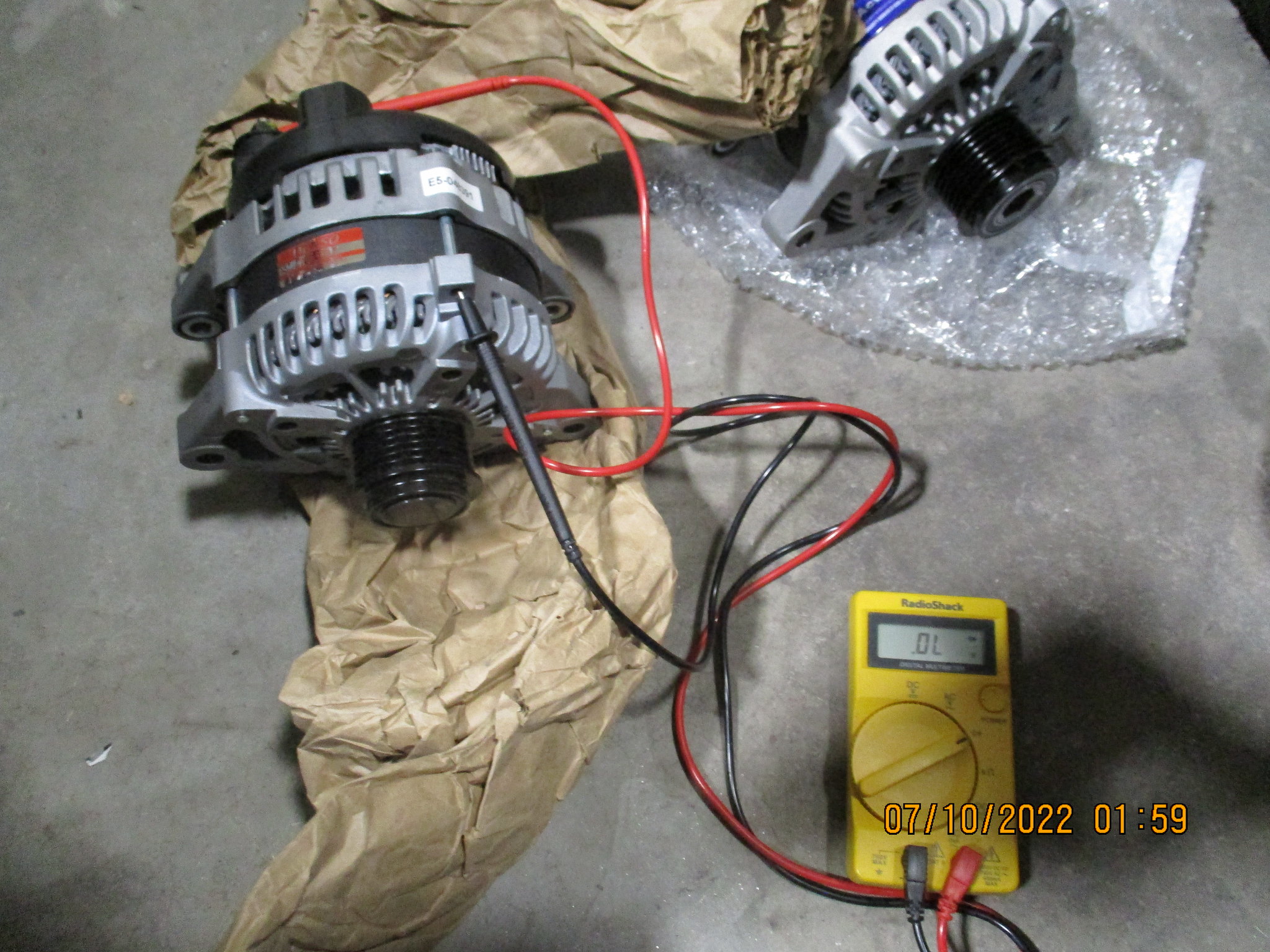
The new Denso alternator passed the rectifier test.
Next , I will install the new alternator.
To make matters worst; the LActrical alternator has a bad rectifier new out the box. So the Denso wins by default since it did pass the test. I will try to replace the brushes and voltage regulator in my old alternator to use it as an spare. My OEM alternator is a Denso 180A model just like the Denso aftermarket replacement.
The hardest part of removing the alternator was removing the stuck coolant hoses and accessing the battery post in the rear of the alternator with it mounted in the car. The rest of the work was fairly easy.
I used a pick tool and rubber strap wrench to free the stuck hoses.
The radiator has an easy to use drain dong. I also recommend using a large drain funnel pan when dealing with coolant.
Removing the radiator fan unit does open up the front of the engine to properly work on the drive belt and alternator( and other components like the water pump). It only held in place by (2) upper 10mm nuts and (2) lower slide mounts. You will also have to remove wire loom clip. Hyundai did a good job with the TAU engine in terms of ease of repair for most of the common fail high mileage items such as the alternator, water pump, front timing chain covers, oil pressure sensor,etc.
The drive belt was easy to remove as well. The belt tensioner only needs an 19mm socket and long handle socket wrench to disengage(clockwise). Hyundai actually uses a good quality Gates brand belt, mine was till good at 90k miles.
The alternator itself in only held by (2) 14mm nuts, (1) 10mm wire harness bracket, 12mm rear battery post nut and wire harness. I used a crow bar to pry it out of the supports to free it. I also remove the wire harness bracket on the engine block to give the alternator harness wires a bit more slack.
My stock alternator test with my old Radio Shack voltmeter(vintage, but accurate). The rectifer is good, but it may have a bad regulator and worn brushes that reduces the output. The first test was done in a tight space so that my connection may not have been very good with the meter clips; hence the voltage reading until open circuit. The alternator did go to an open circuit right way on this test; which is good
The LActrical failed the rectifier test. It would have just drained the battery if I installed it. It allowed voltage both ways; not good.
The new Denso alternator passed the rectifier test.
Next , I will install the new alternator.
Last edited: