PMCErnie
Ancient ‘steemed Member
- Joined
- Jan 2, 2012
- Messages
- 5,940
- Reaction score
- 1,278
- Points
- 113
- Location
- Richmond, VA
- Genesis Model Type
- Genesis GV70
The car lovers social network
Automotive components
Create videos that captivate
Automotive Hot or Not
Vehicle hacker protection
Genesis parts & accessories
Advertise with us!
The car lovers social network
Automotive components
Create videos that captivate
Automotive Hot or Not
Vehicle hacker protection
Genesis parts & accessories
Advertise with us!

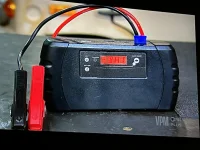
I can see the reasoning. They run from $79 to $384 on Amazon. If you carry one, Says it can hold a charge for up to 6 months. Cables are short but will fit across a battery. If you use the terminals in the engine compartment it would probably depend on how close the ground.So, on the latest episode of Motor Week (PBS) Pat Goss warned against using traditional jumper cables on modern computerized cars. Instead, he says, use a lithium ion battery pack that has surge protection, etc. features.
View attachment 43499
No, but you are probably one of 12 people that actually look at the manual. I'm sure some people hook up the cables and wonder why they are different colors.My manual describes how to use cables safely. Is the manufacturer wrong?
The manufacturer is correct that jumper cables can be used properly without causing electrical damage. However, the problem is that most people think that you connect the negative battery terminals together on the dead and donor battery with the jumper cables. Wrong. That could lead to issues since batteries should be ground to chassis not to each other.My manual describes how to use cables safely. Is the manufacturer wrong?
Maybe no Motorweek viewers? I read that Motorweek will run all of the Goss' Garage segments that had been taped, and at the end will add a memorial to him. I saw one this week and it was a nice touch. I'll miss him and his low key and humorous style.Poor Goss. No words of condolences here.
I was sorry to hear it. I watched him occasionally over the years. It seems like he had that show for many decades. RIP.Poor Goss. No words of condolences here.
You are not too far off base! My 26 year old nephew replaced the battery in his car. Claimed the new one was defective too, when checked, he never took the plastic post covers off. Millennials.No, but you are probably one of 12 people that actually look at the manual. I'm sure some people hook up the cables and wonder why they are different colors.
What electronics did you design and for what automaker?The reason you're supposed to connect the negative (ground) to the chassis, away from the battery, is to prevent the chance of sparks, when connecting it, from igniting any hydrogen gas emitted from the battery under charge.
Also, for cars with trunk mounted batteries, where they put a positive battery post under the hood, they use a chassis mounted post for the negative terminal, rather than having to run another heavy cable the length of the car back too the battery.
As a EE of forty years, I can think of no good reason, from an electrical standpoint, to use the chassis rather than the battery for the negative connection, considering the fact that they are connected by an extremely low ohmic connection (milliOhms).
Also, as someone who has designed electronics for car manufacturers, I can say that there's a lot of misinformation out there regarding how sensitive modern electronics are. Sure, there's a lot more electronics in modern cars and they are certainly more sensitive than light bulbs and motors, which is about all we had in older cars (other than the radio), but electronics designed for the automotive industry are required to work over a very wide voltage range and tolerate various over-voltage conditions for different lengths of time. They are much more robust than many would have you believe.
I don't suggest you Google "load dump" while at work unless your safe search feature is enabled. HahahaI suggest you Google "load dump". You'll get some insight
What did the automotive IC chips that you designed control exactly?After 18 years designing aerospace electronics (military and commercial), I made a career change and became a chip designer, specializing in power management, working for a leading Silicon Valley analog IC company. Over the next 23 years, before I retired, I designed a number of ICs which were targeted to the automotive market. These were catalogue parts, not custom parts, but still needed to meet the requirements of the auto industry for them to be viable.
I suggest you Google "load dump". You'll get some insight into what automotive electronics need to be designed to handle. I think most people would be surprised.