• Car enthusiast? Join us on Cars Connected! iOS | Android | Desktop
  • Hint: Use a descriptive title for your new message
    If you're looking for help and want to draw people in who can assist you, use a descriptive subject title when posting your message. In other words, "I need help with my car" could be about anything and can easily be overlooked by people who can help. However, "I need help with my transmission" will draw interest from people who can help with a transmission specific issue. Be as descriptive as you can. Please also post in the appropriate forum. The "Lounge" is for introducing yourself. If you need help with your G70, please post in the G70 section - and so on... This message can be closed by clicking the X in the top right corner.

Possible alternator replacement on a 2015 Genesis 5.0 V8.

I finally got the old alternator out and tested it properly. It turns out that the rectifier is good. Therefore, after some thought it may just be a bad voltage regulator or worn brushes. Before the battery died it only had about 13volts just after a drive. It should have been about 13.6v-14v just after a drive. My battery charger also does have a hard time charging the battery from the front jump posts if the voltage goes under 11v unless I directly connect it to the battery in the trunk; hence the charging issue. I am also sure the aftermarket amp did not help the charging issue.

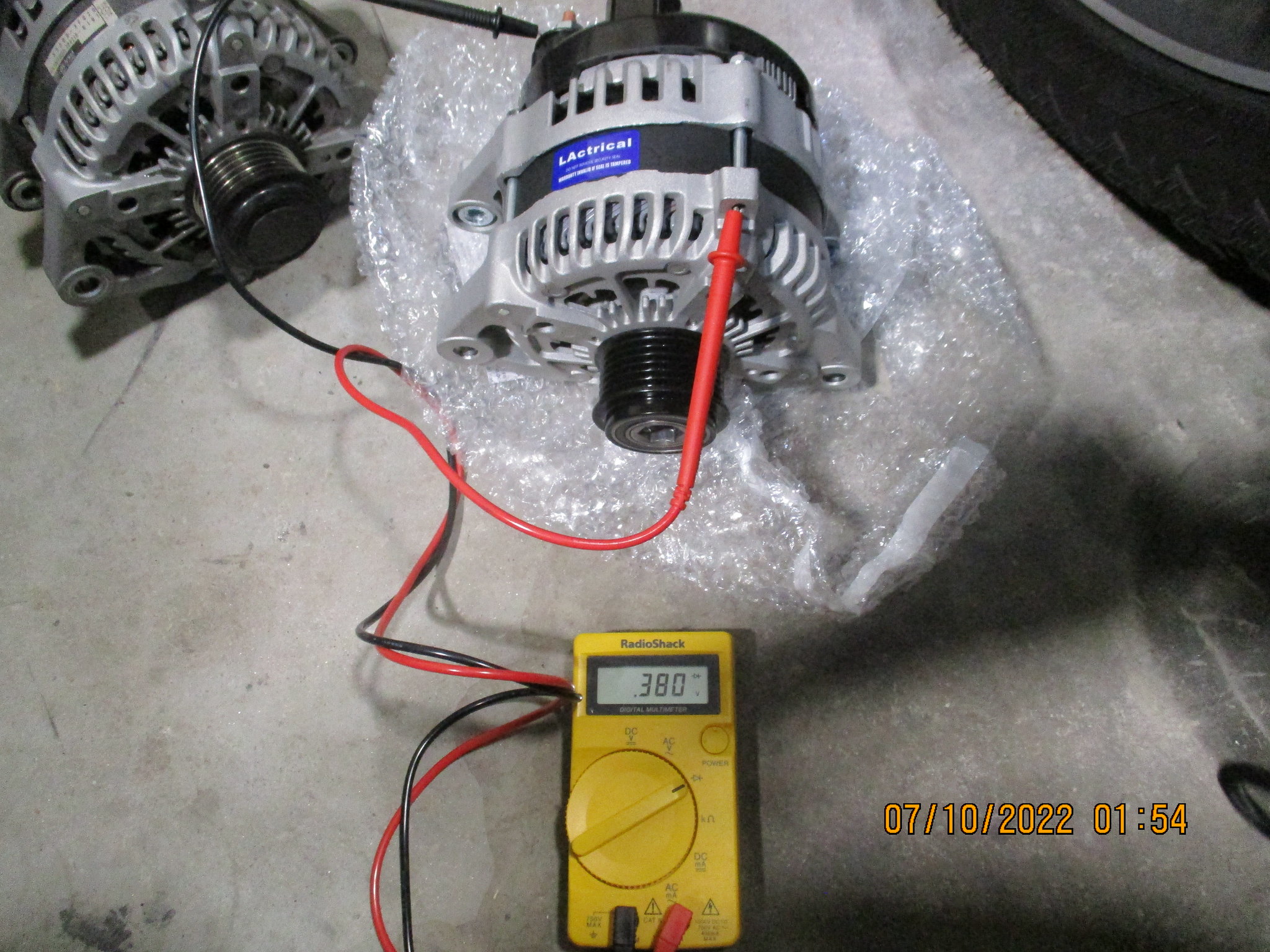
To make matters worst; the LActrical alternator has a bad rectifier new out the box. So the Denso wins by default since it did pass the test. I will try to replace the brushes and voltage regulator in my old alternator to use it as an spare. My OEM alternator is a Denso 180A model just like the Denso aftermarket replacement.

The hardest part of removing the alternator was removing the stuck coolant hoses and accessing the battery post in the rear of the alternator with it mounted in the car. The rest of the work was fairly easy.

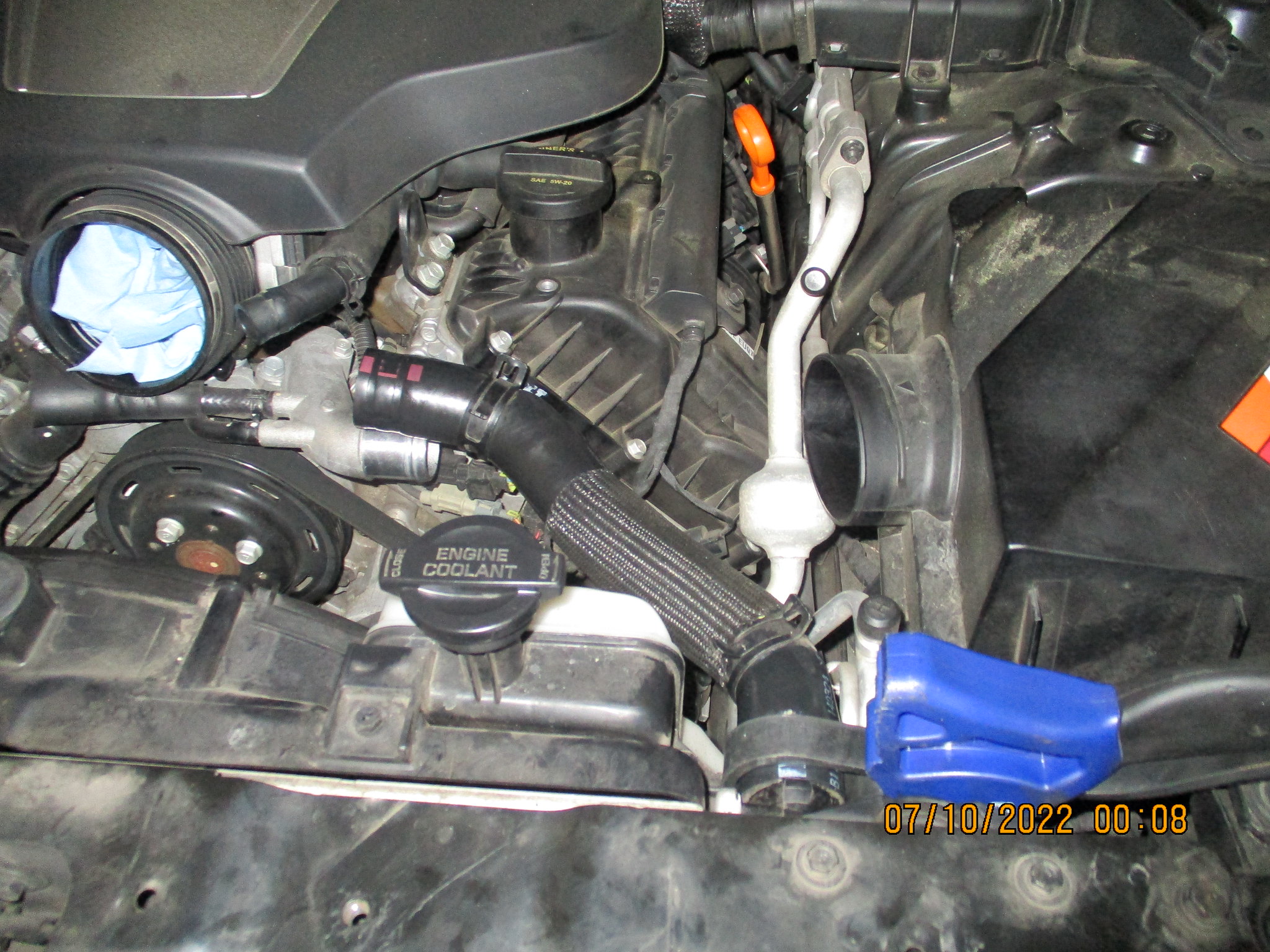
I used a pick tool and rubber strap wrench to free the stuck hoses.
52206207594_d2ea789abf_k.jpg


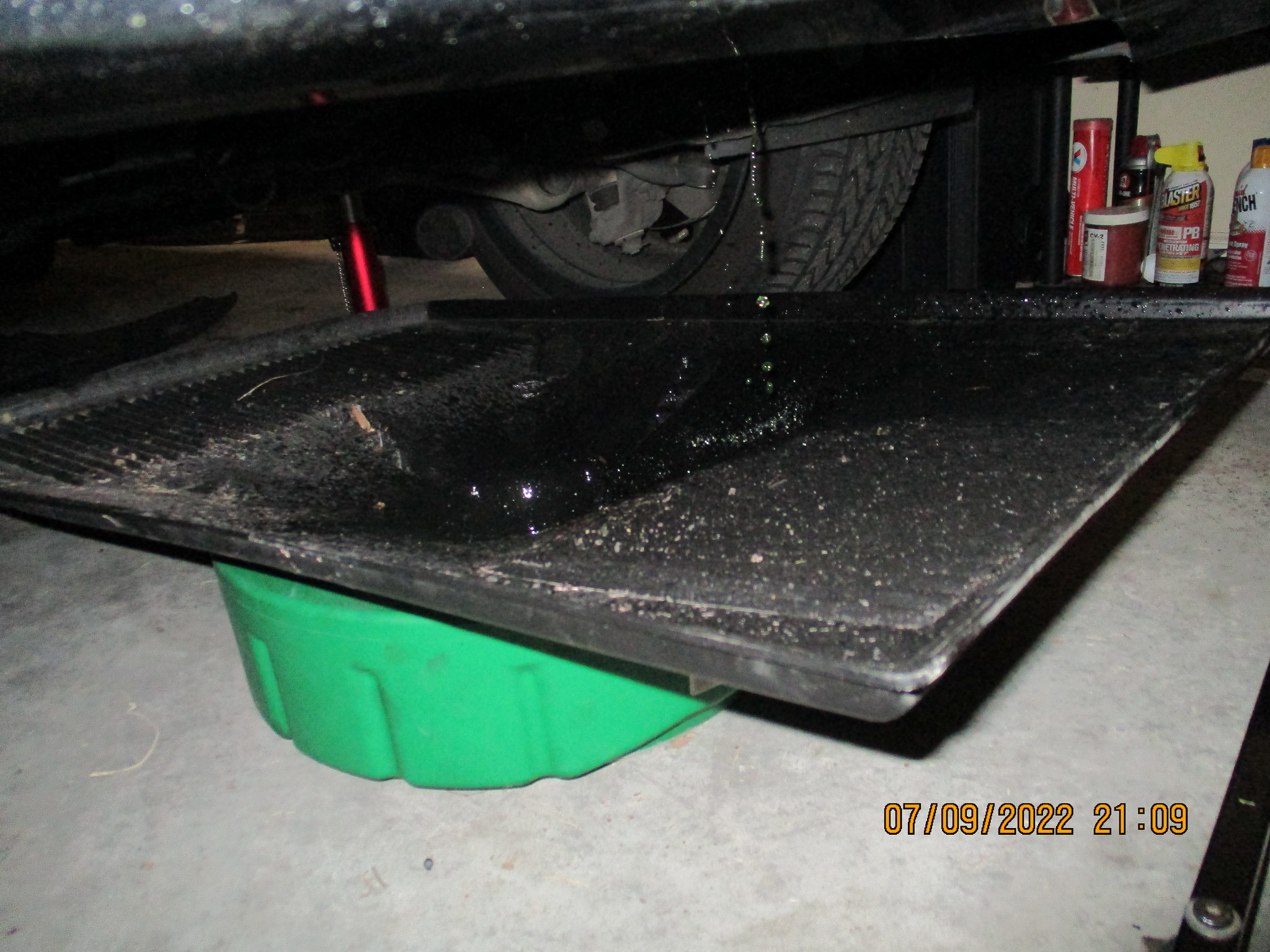
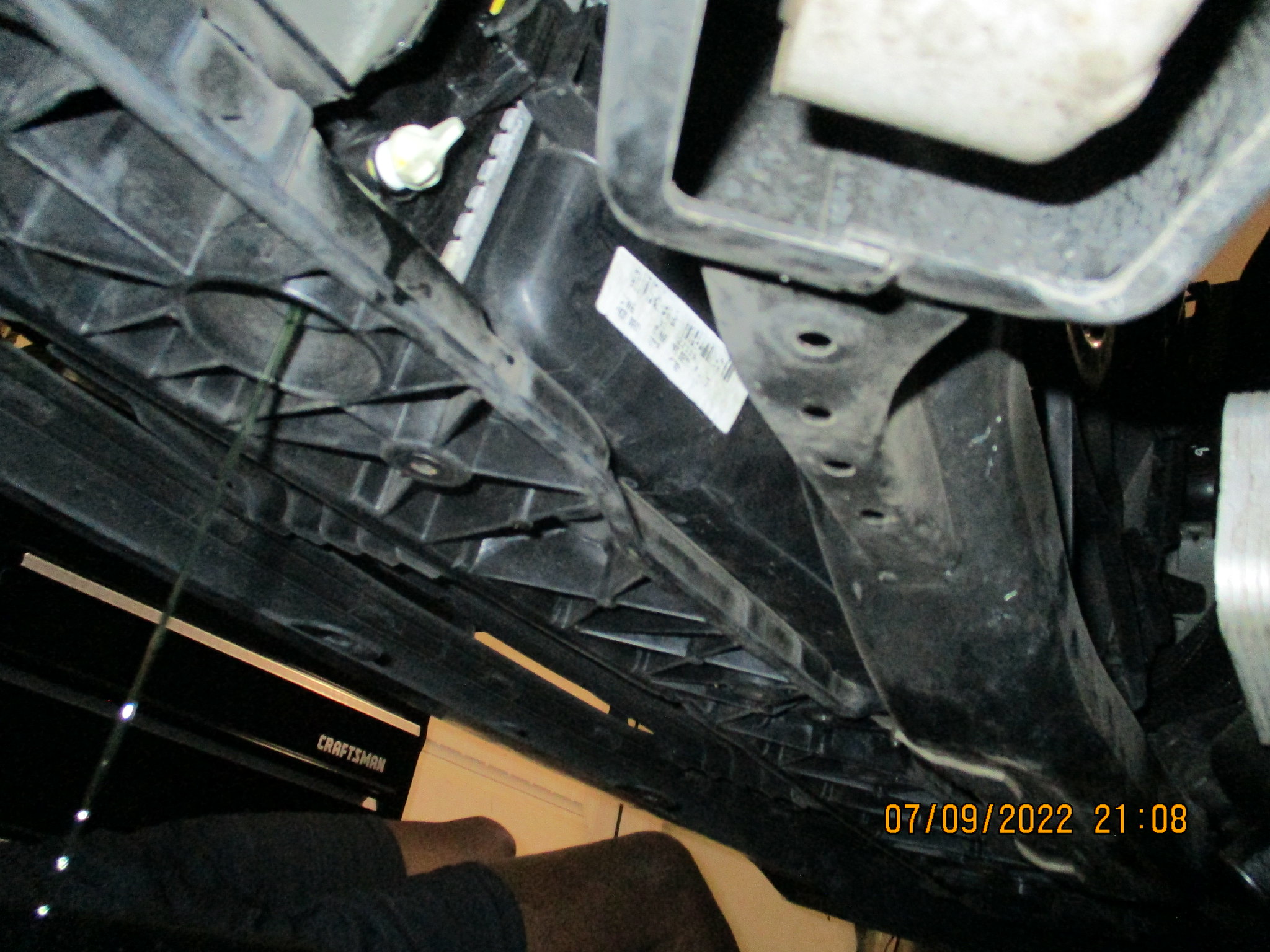
The radiator has an easy to use drain dong. I also recommend using a large drain funnel pan when dealing with coolant.
52206439260_4f38e86039_k.jpg

52205939726_02de6d6adb_k.jpg


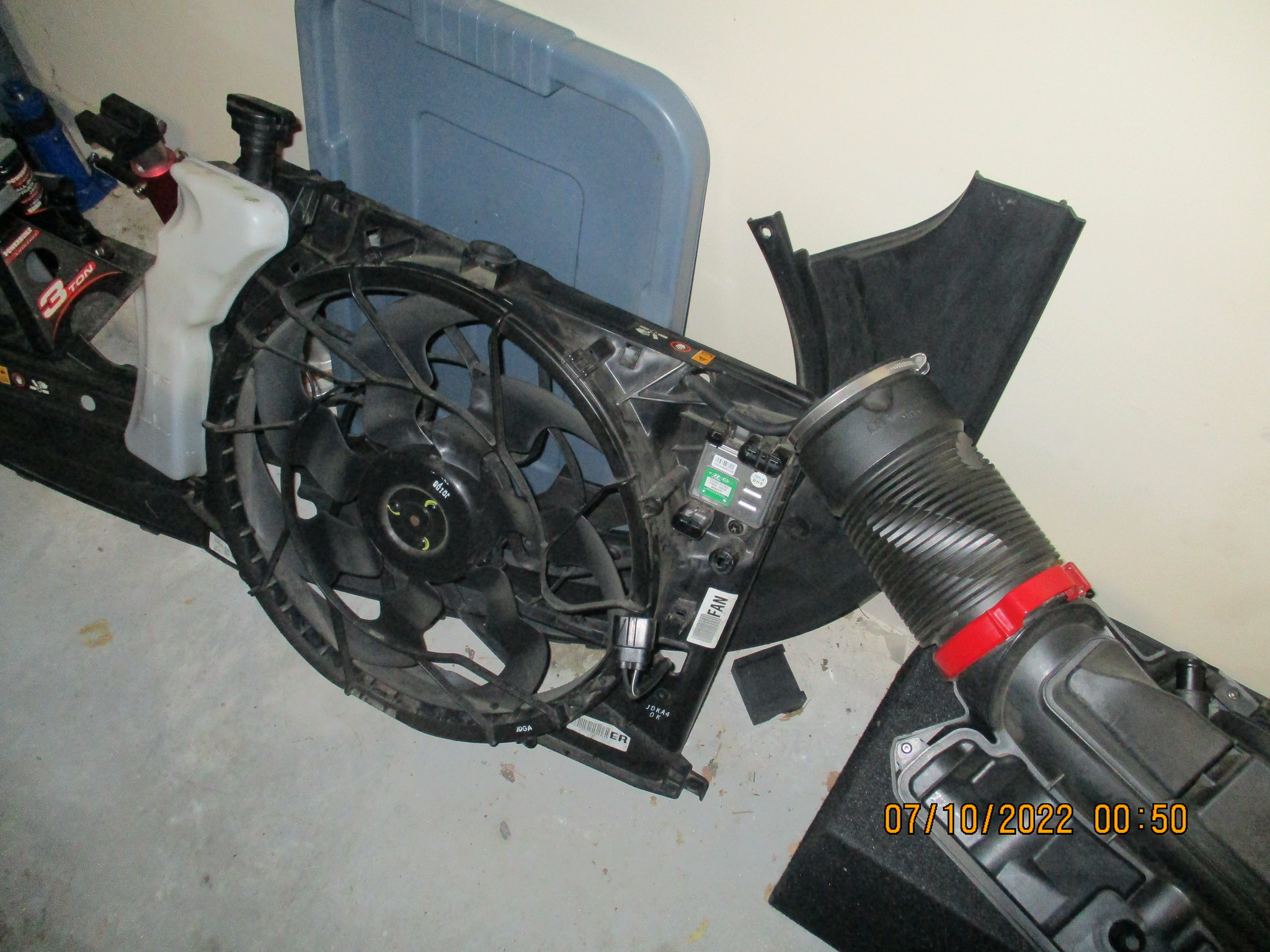
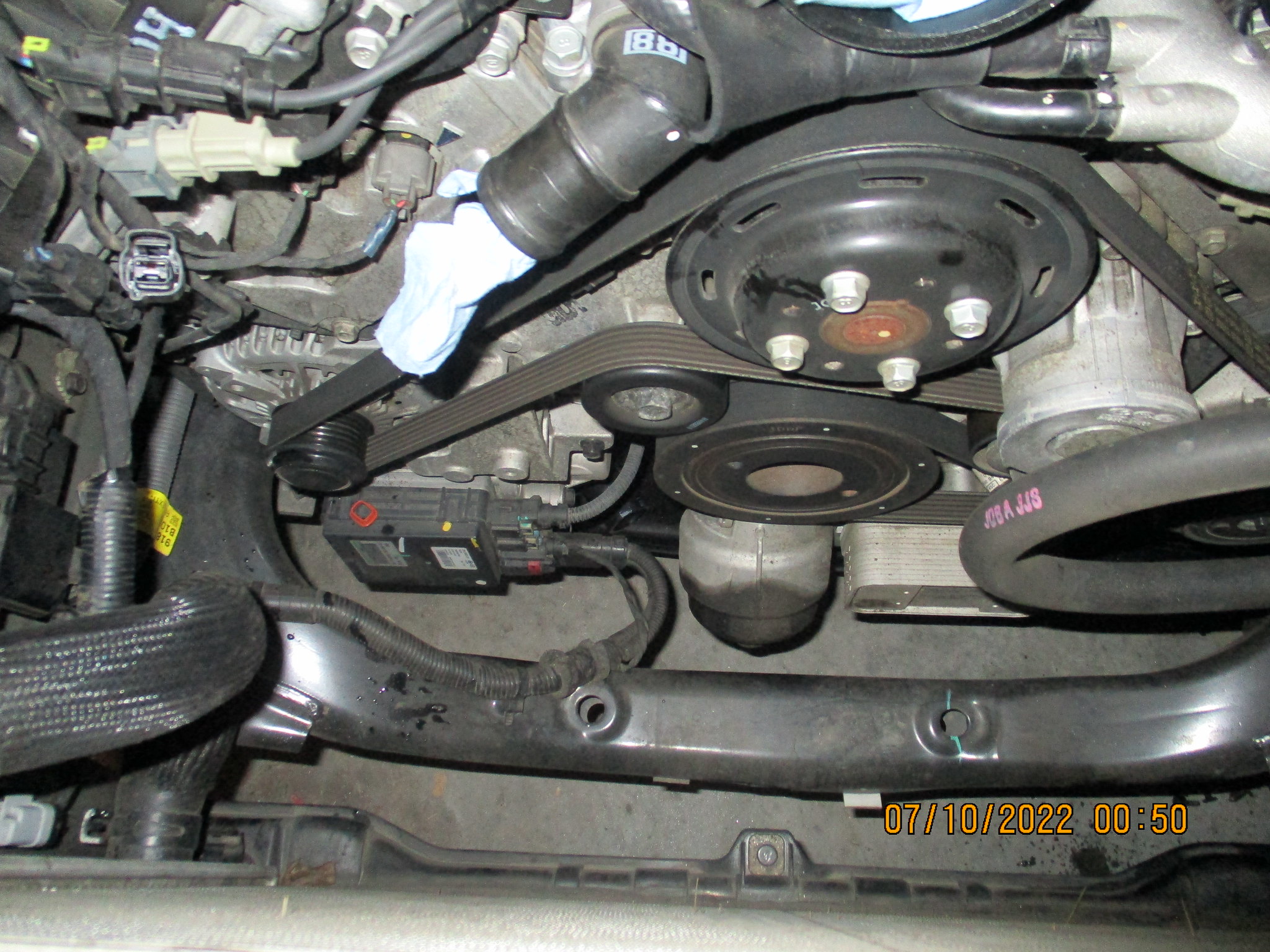
Removing the radiator fan unit does open up the front of the engine to properly work on the drive belt and alternator( and other components like the water pump). It only held in place by (2) upper 10mm nuts and (2) lower slide mounts. You will also have to remove wire loom clip. Hyundai did a good job with the TAU engine in terms of ease of repair for most of the common fail high mileage items such as the alternator, water pump, front timing chain covers, oil pressure sensor,etc.
52204917897_5a09d5cb44_k.jpg

52205929236_1d035e7579_k.jpg


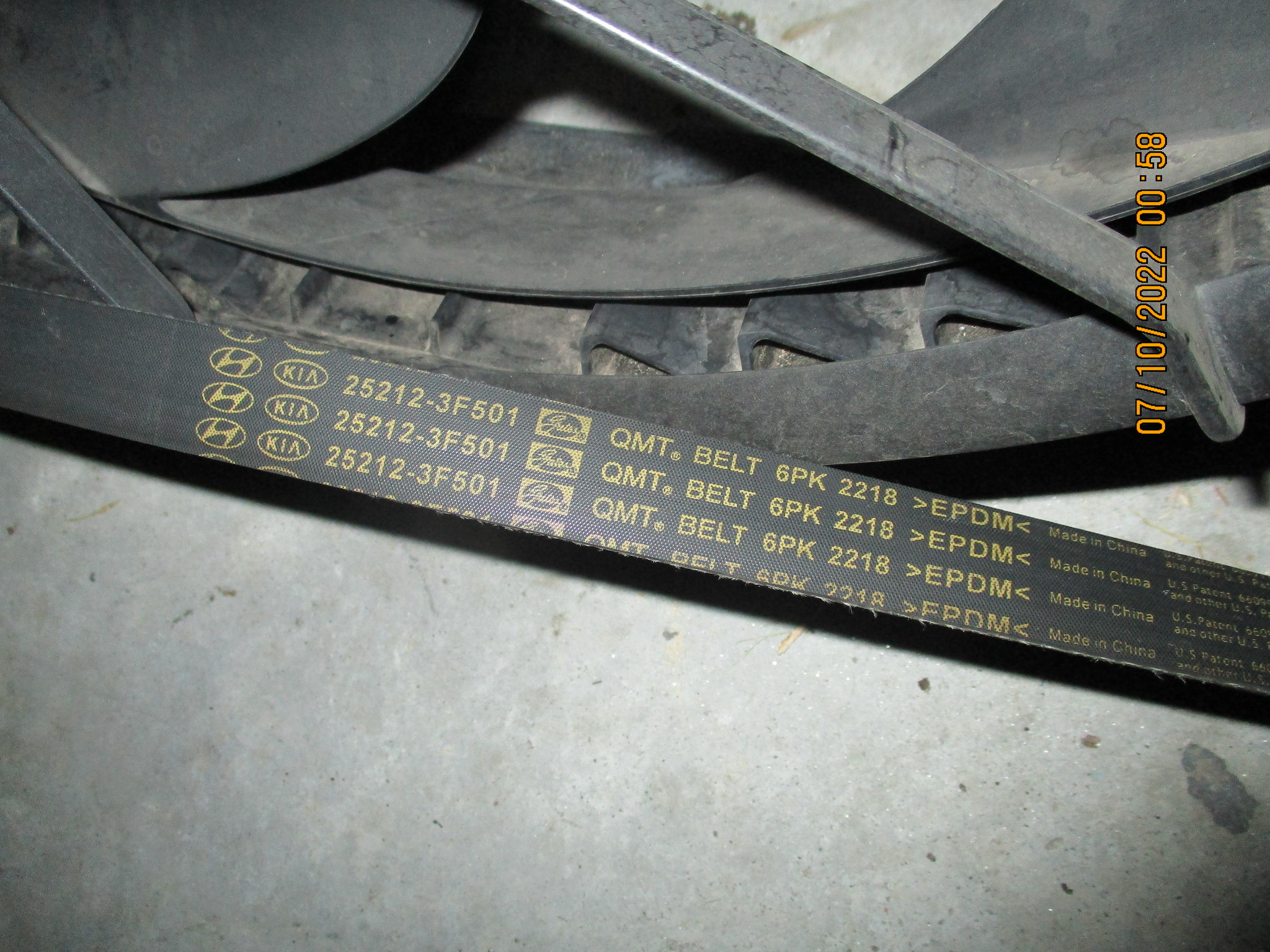
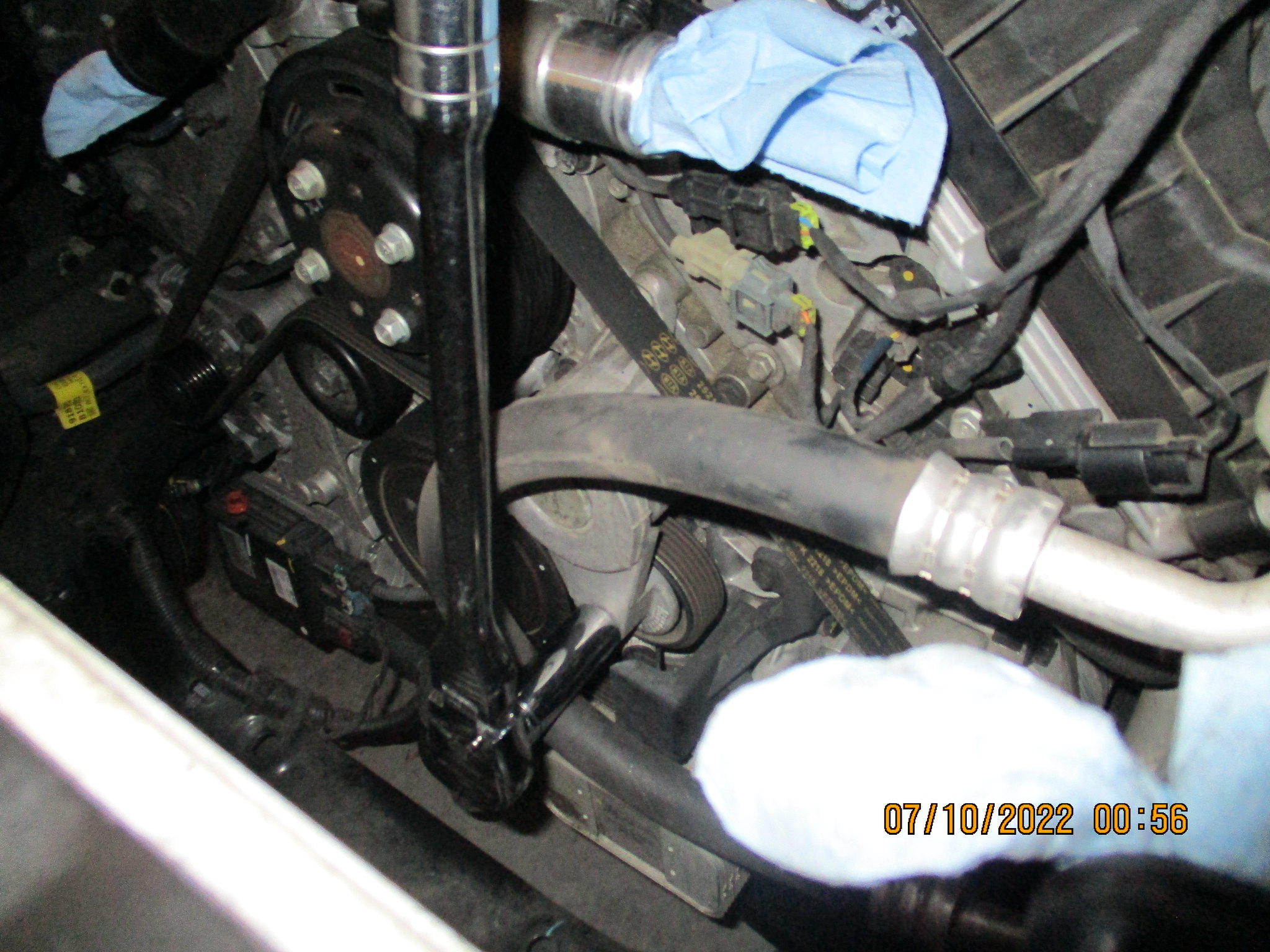
The drive belt was easy to remove as well. The belt tensioner only needs an 19mm socket and long handle socket wrench to disengage(clockwise). Hyundai actually uses a good quality Gates brand belt, mine was till good at 90k miles.
52206195079_9aec1110ca_k.jpg

52204919317_d30ac6a13a_k.jpg


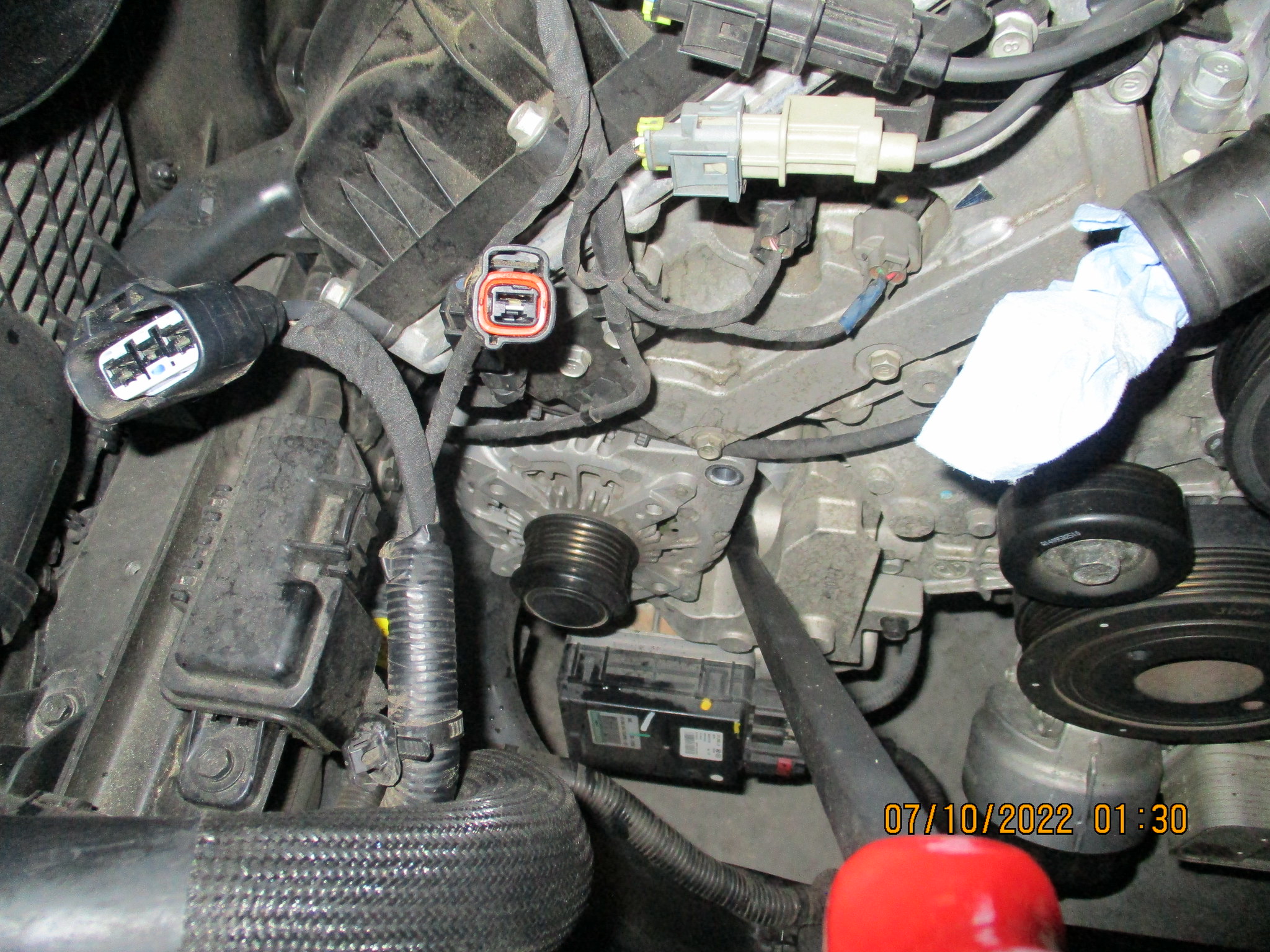
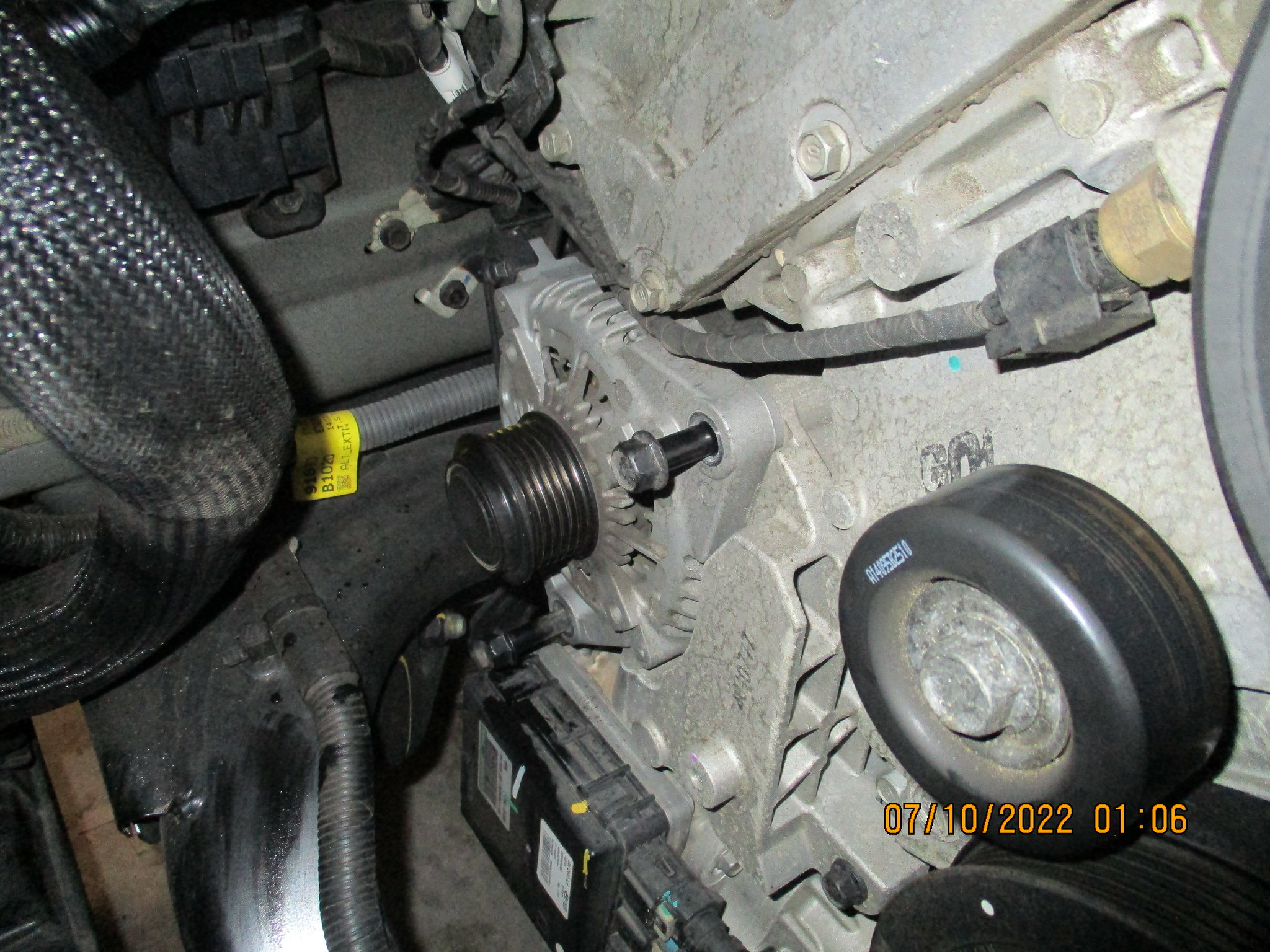
The alternator itself in only held by (2) 14mm nuts, (1) 10mm wire harness bracket, 12mm rear battery post nut and wire harness. I used a crow bar to pry it out of the supports to free it. I also remove the wire harness bracket on the engine block to give the alternator harness wires a bit more slack.
52206430815_4ce3906b2f_k.jpg

52205946078_2da5e1aecf_k.jpg

52205943873_19364b461e_k.jpg


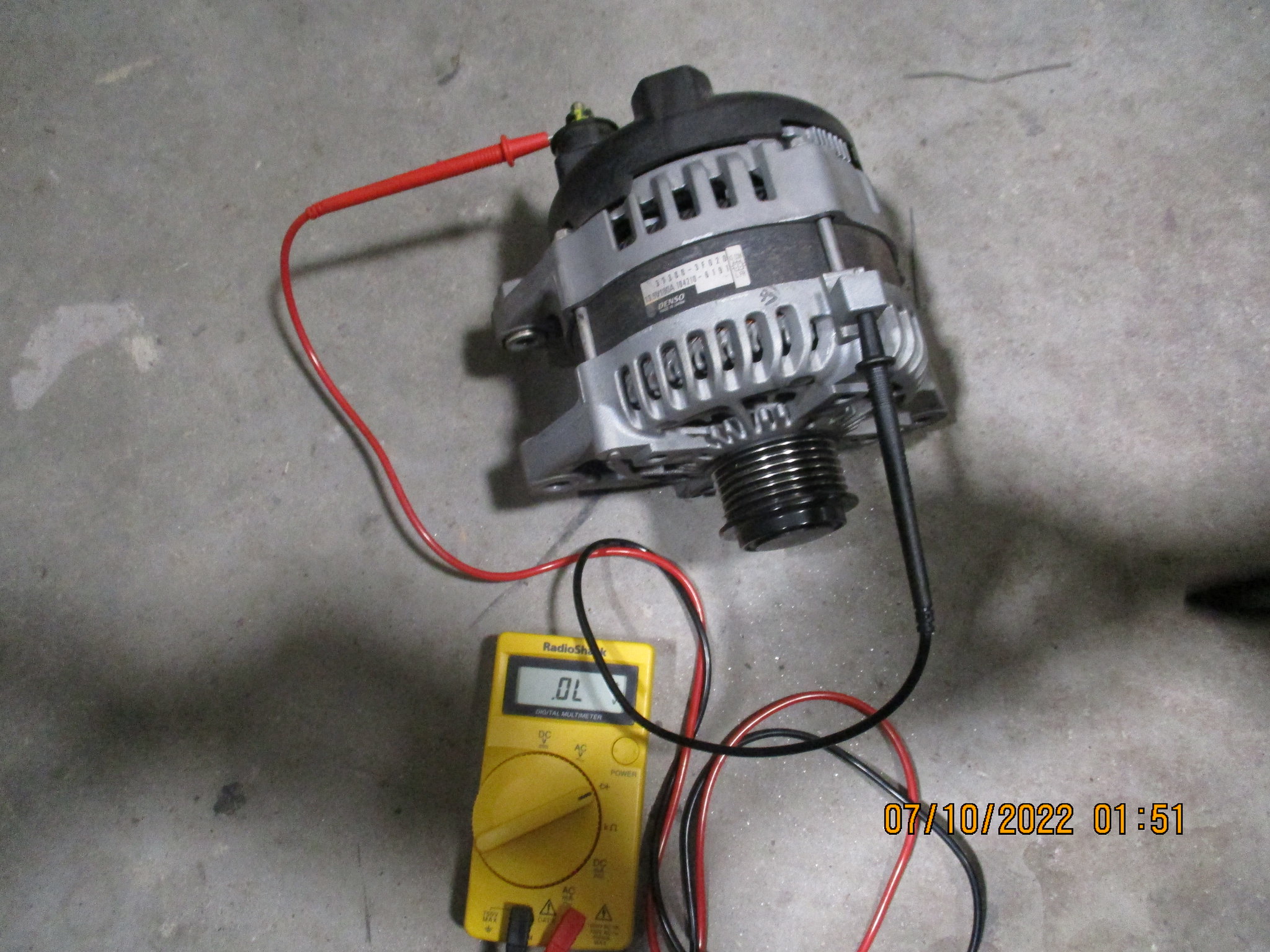
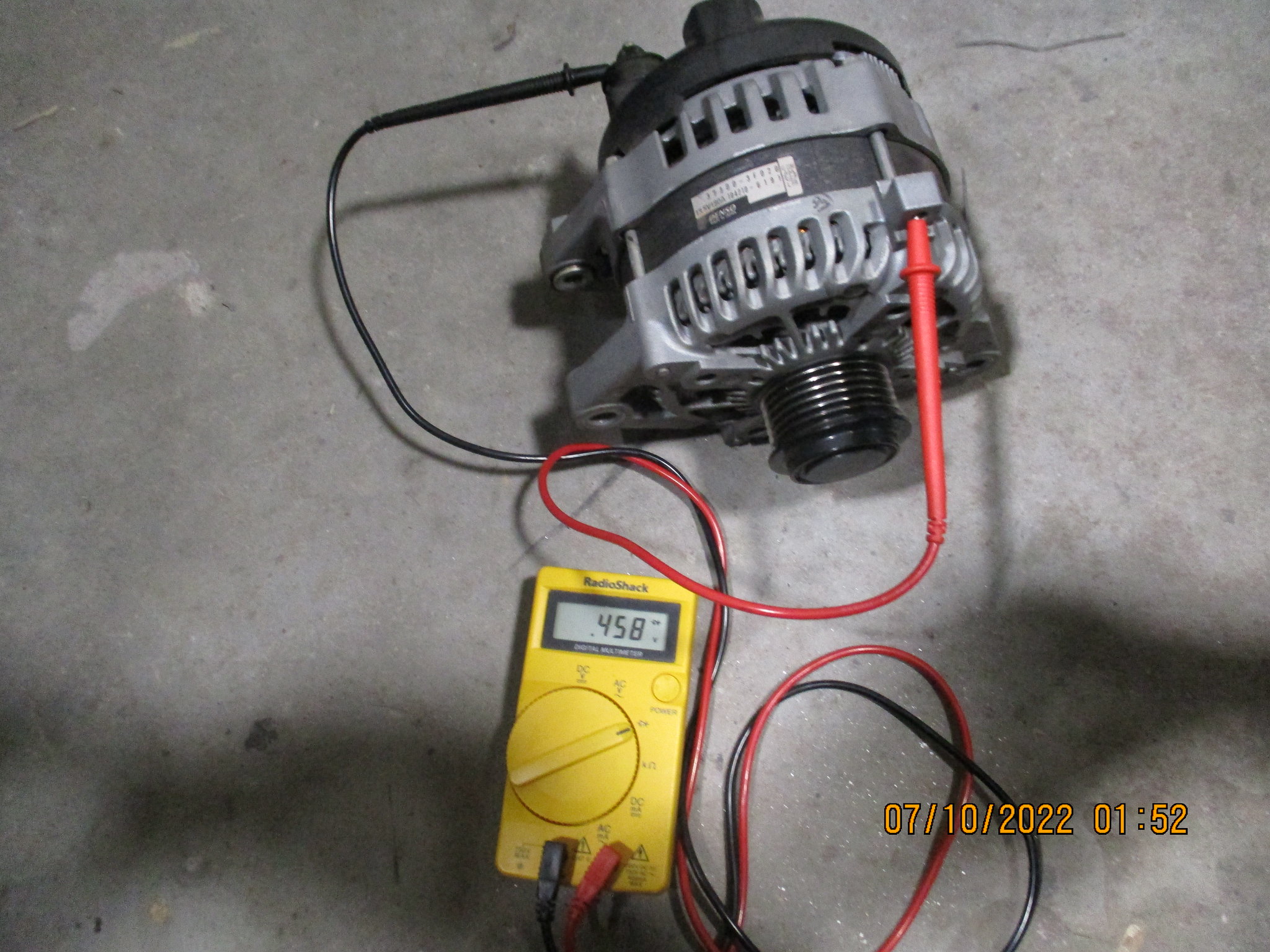
My stock alternator test with my old Radio Shack voltmeter(vintage, but accurate). The rectifer is good, but it may have a bad regulator and worn brushes that reduces the output. The first test was done in a tight space so that my connection may not have been very good with the meter clips; hence the voltage reading until open circuit. The alternator did go to an open circuit right way on this test; which is good
52206434780_eba217ad30_k.jpg

52205935336_e4a83f29f4_k.jpg


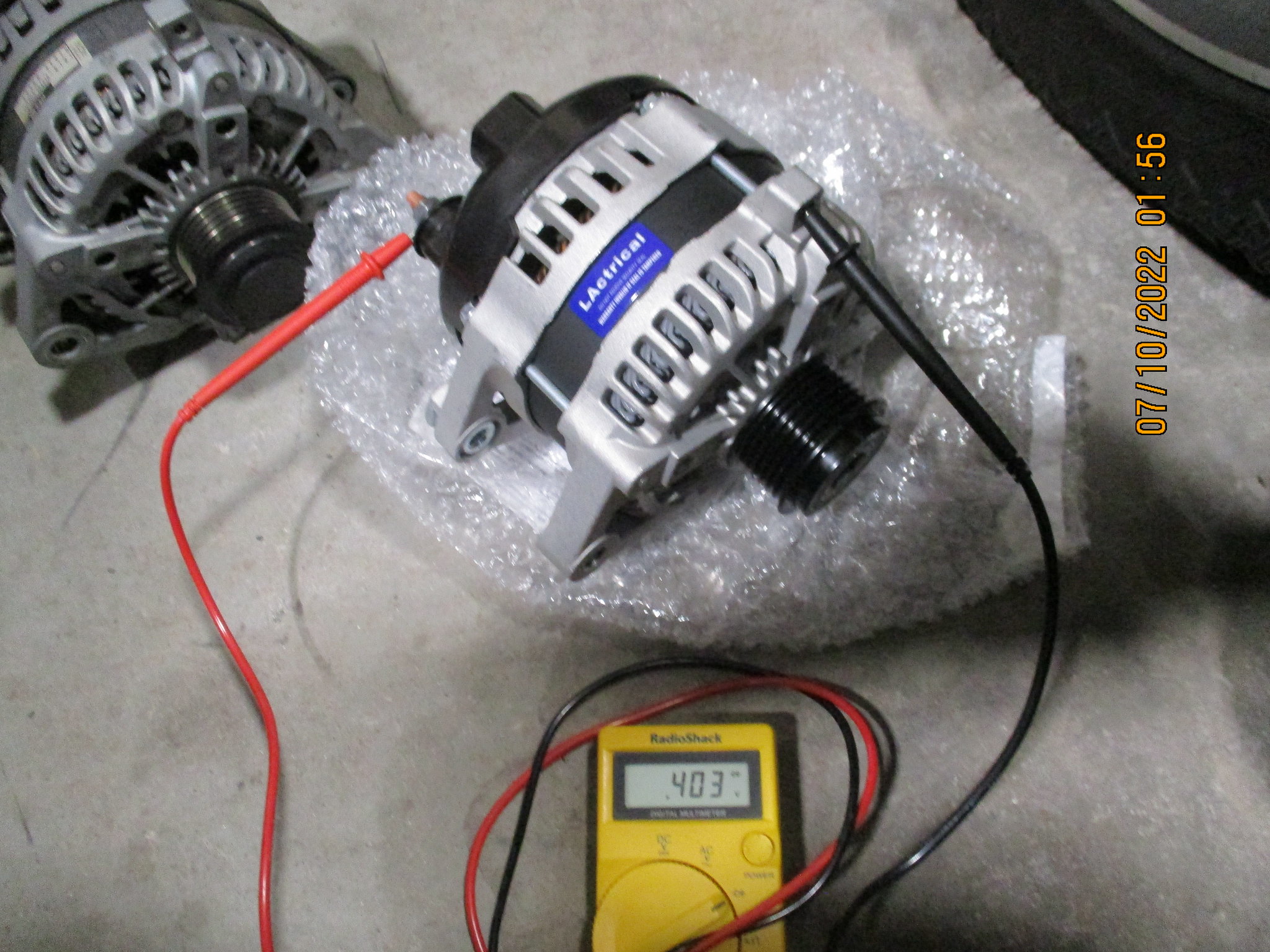
The LActrical failed the rectifier test. It would have just drained the battery if I installed it. It allowed voltage both ways; not good.
52205937186_2860bad75c_k.jpg

52205955443_6bdd1446ea_k.jpg


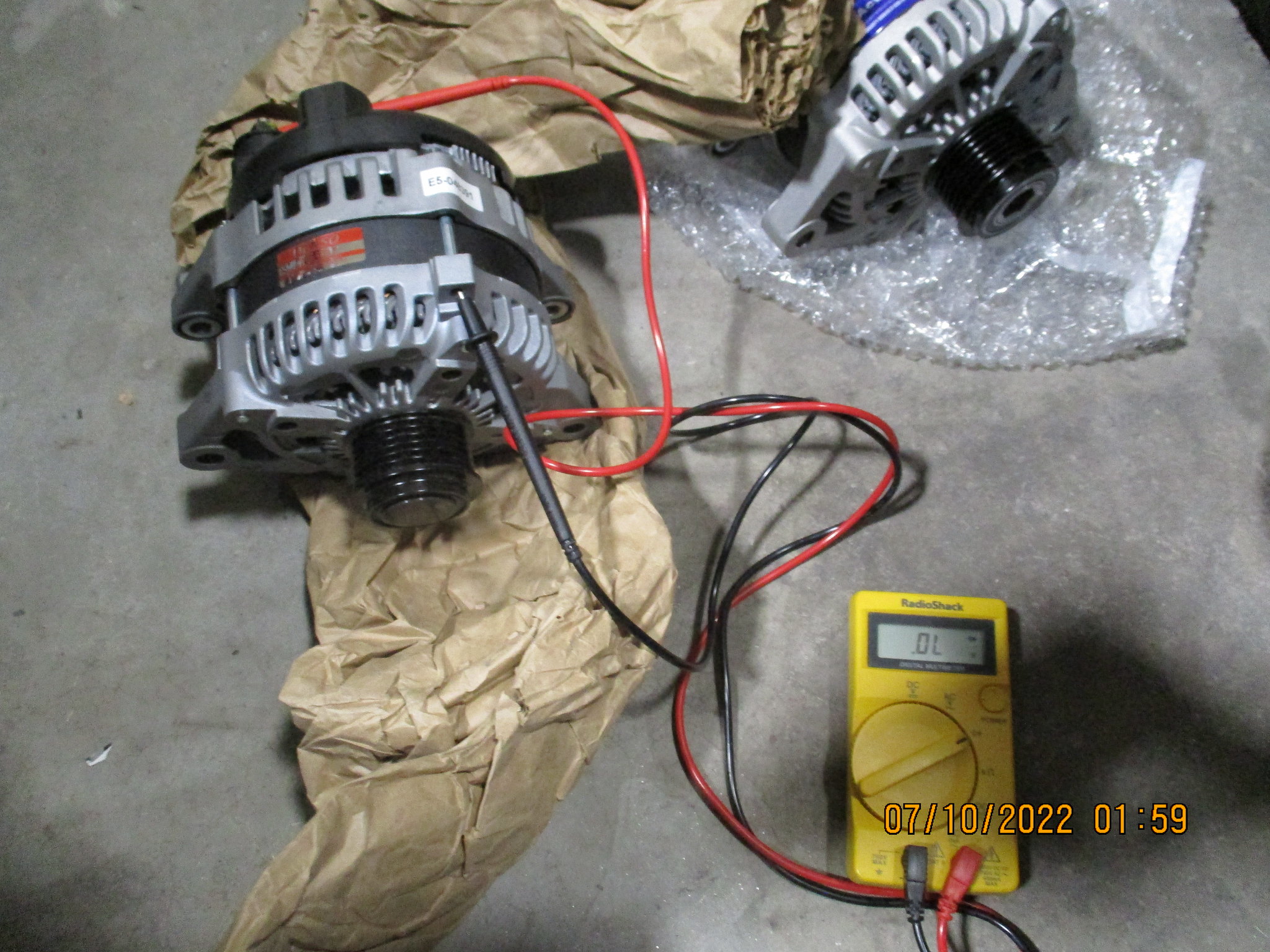
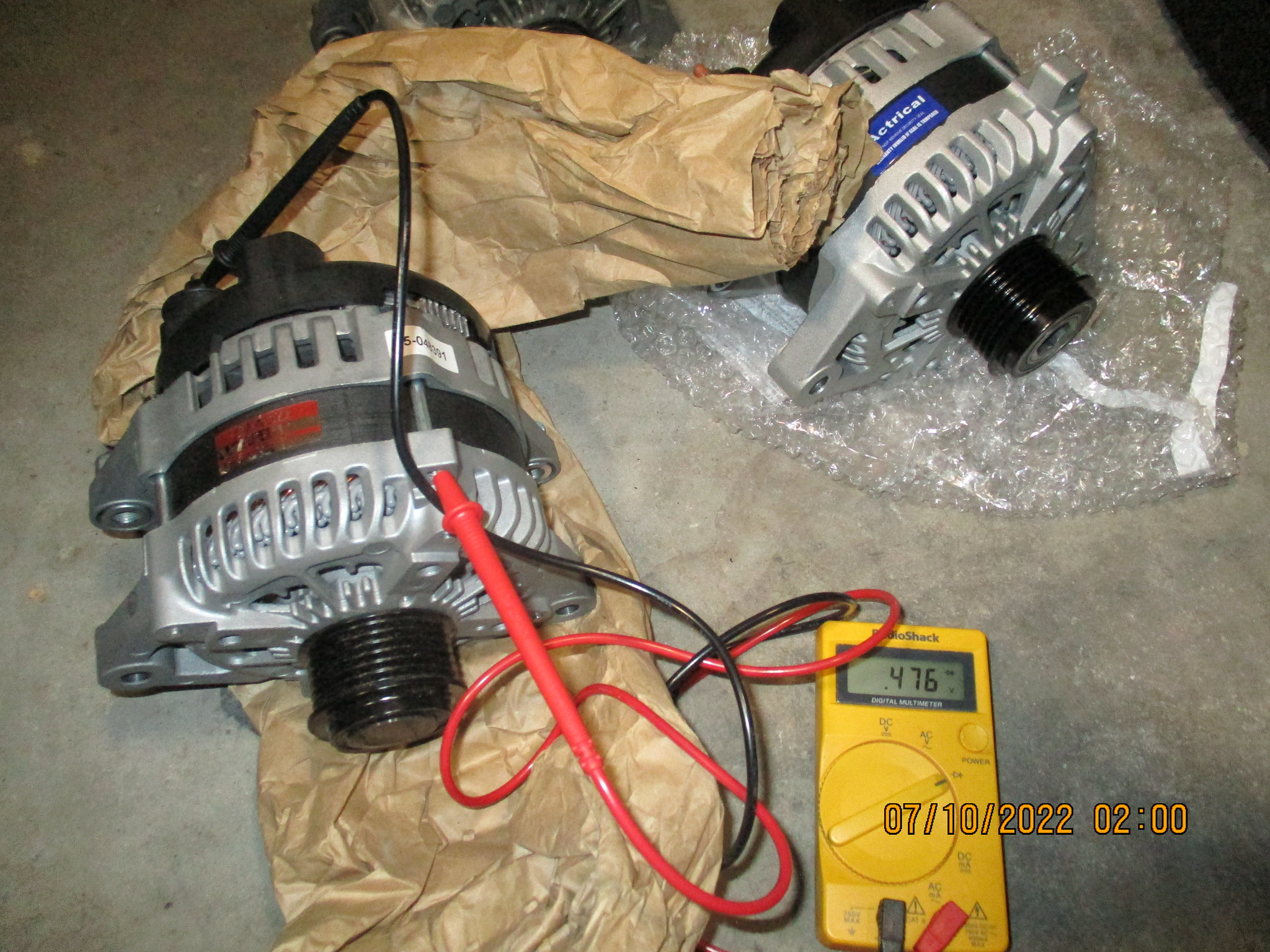
The new Denso alternator passed the rectifier test.
52206438085_aa703a1987_k.jpg

52205938506_7d76e56c4b_k.jpg


Next , I will install the new alternator.
 
Last edited:
Looking to update and upgrade your Genesis luxury sport automobile? Look no further than right here in our own forum store - where orders are shipped immediately!
Awesome write up !! I have been following thanks @carguy75
 
Awesome write up !! I have been following thanks @carguy75
Thank you. I was hoping that this thread may help someone since there is hardly(if any) information about repairing a 2015 and newer Genesis alternator online.
 
Last edited:
You reminded me of the old days and ways for truly testing alternators. I use to repair many on the big 3 domestics back in the day.
 
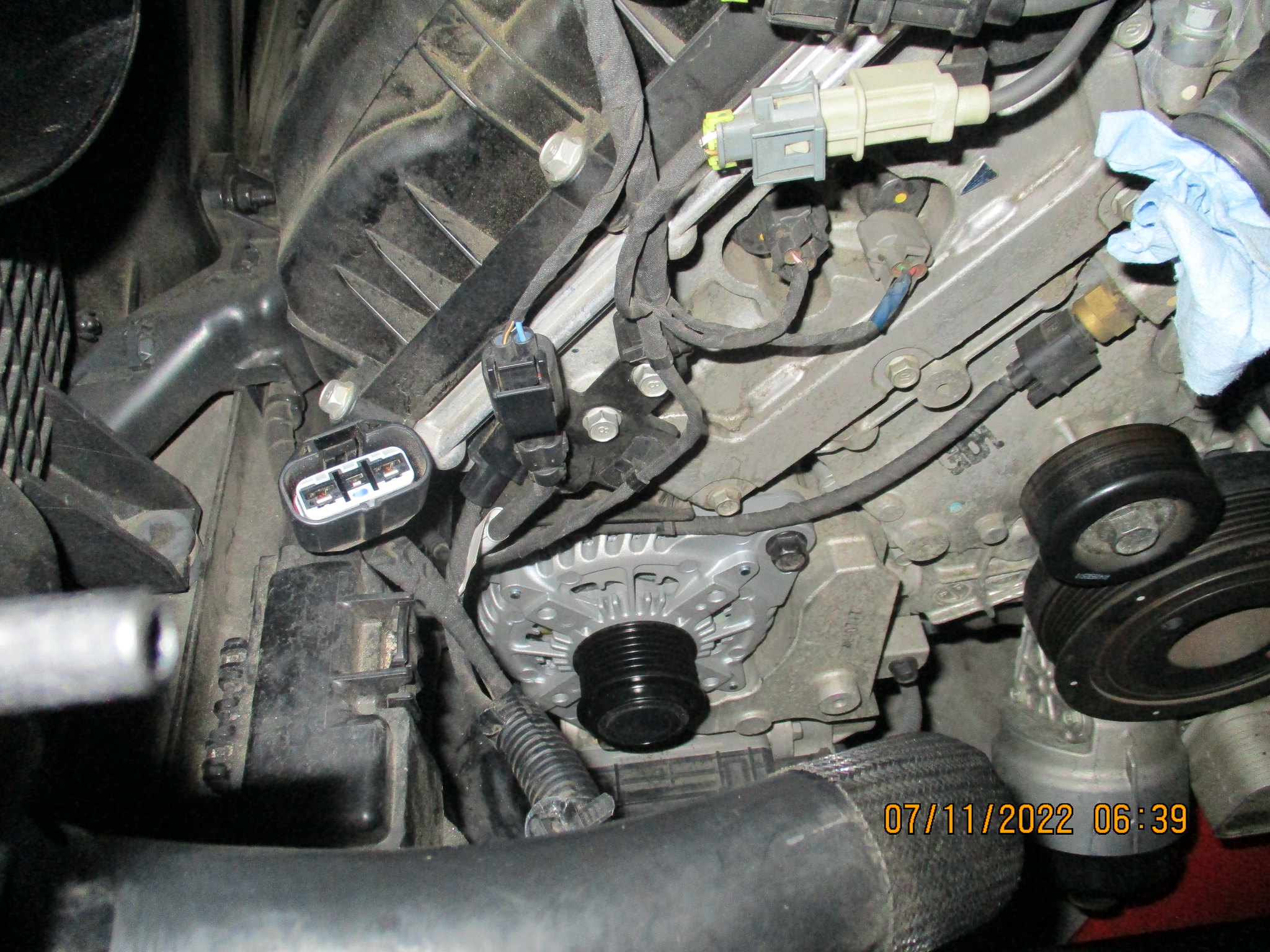
I installed the new Denso alternator and fit perfectly. Now, i am waiting for a new oil pressure sensor to arrive before I button everything back up. I decided to just tackle the oil pressure sensor while I got the front of the engine clear. My old 90k mile oil pressure sensor works I believe, but it is old and may give out sooner than later. The oil sensor I ordered is an updated part that is a replacement also for G80 models up to 2020. I may also change out the drive belt tensioner and idle roller as well since I am this far into the repairs.

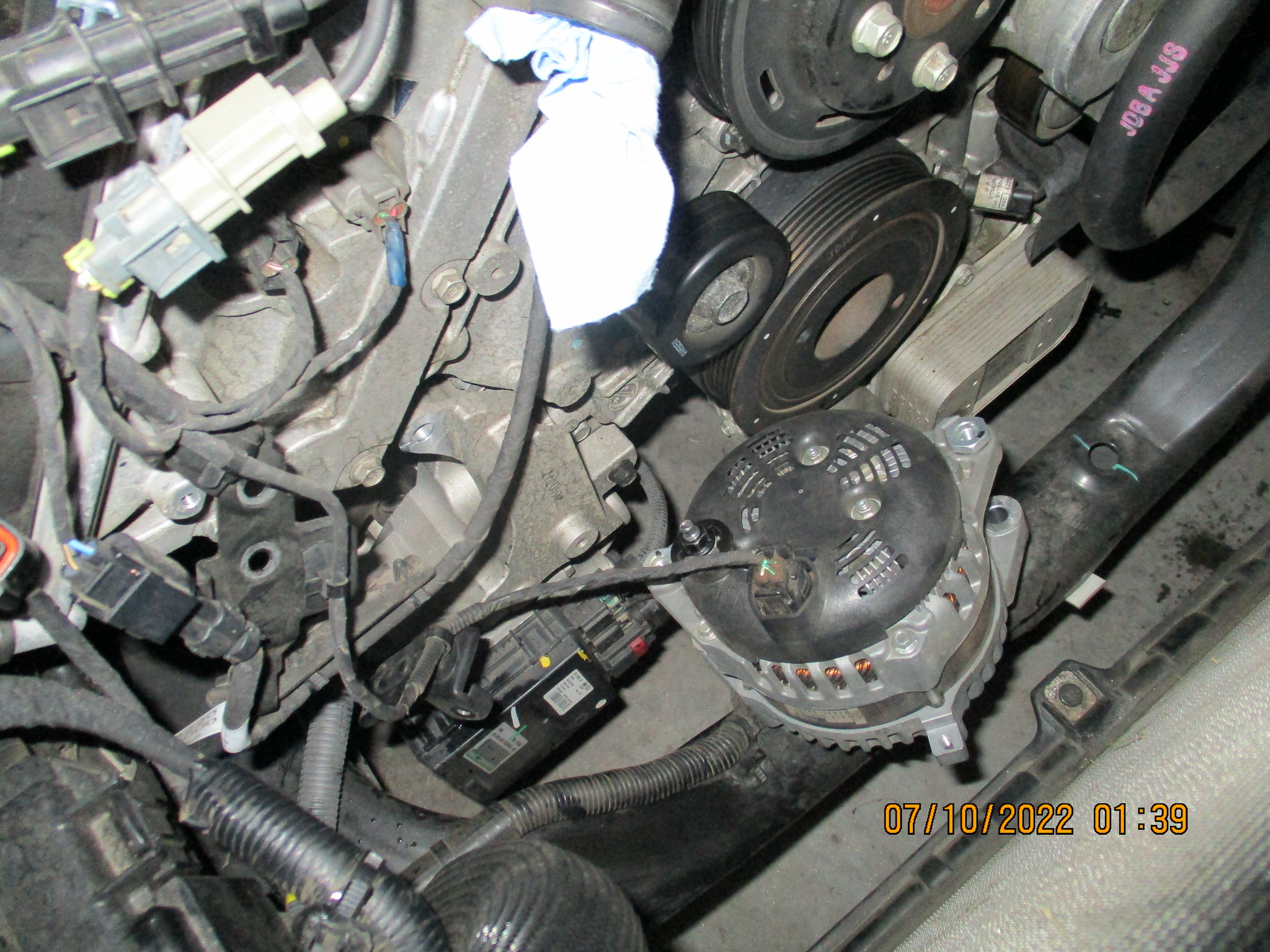
The new Denso alternator installed with no fitment issue.
52208751791_d23147307b_k.jpg


The oil pressure sensor location under the belt tensioner. I removed my belt tensioner to access one of the oil sensor bracket 10mm bolts which was covered by the tensioner. Then I pushed the oil sensor harness out of the way. The oil sensor wiring harness L-bracket prevented me from using an socket to remove the sensor. The belt tensioner is only held by (3)12mm bolts. I will remove the old oil sensor when the new one arrives.
52209243655_5ab70d9124_k.jpg

52209020834_51cc8b41ce_k.jpg

52209245550_40a2dbf169_k.jpg
 
You reminded me of the old days and ways for truly testing alternators. I use to repair many on the big 3 domestics back in the day.
I am glad I tested the LActrical alternator before I wasted time and effort installing it. Doing a quick bridge rectifer test can help rule out a dud right away straight out the box.
 
Well I ran into the problem of something bad happening when you work cars that is unexpected.

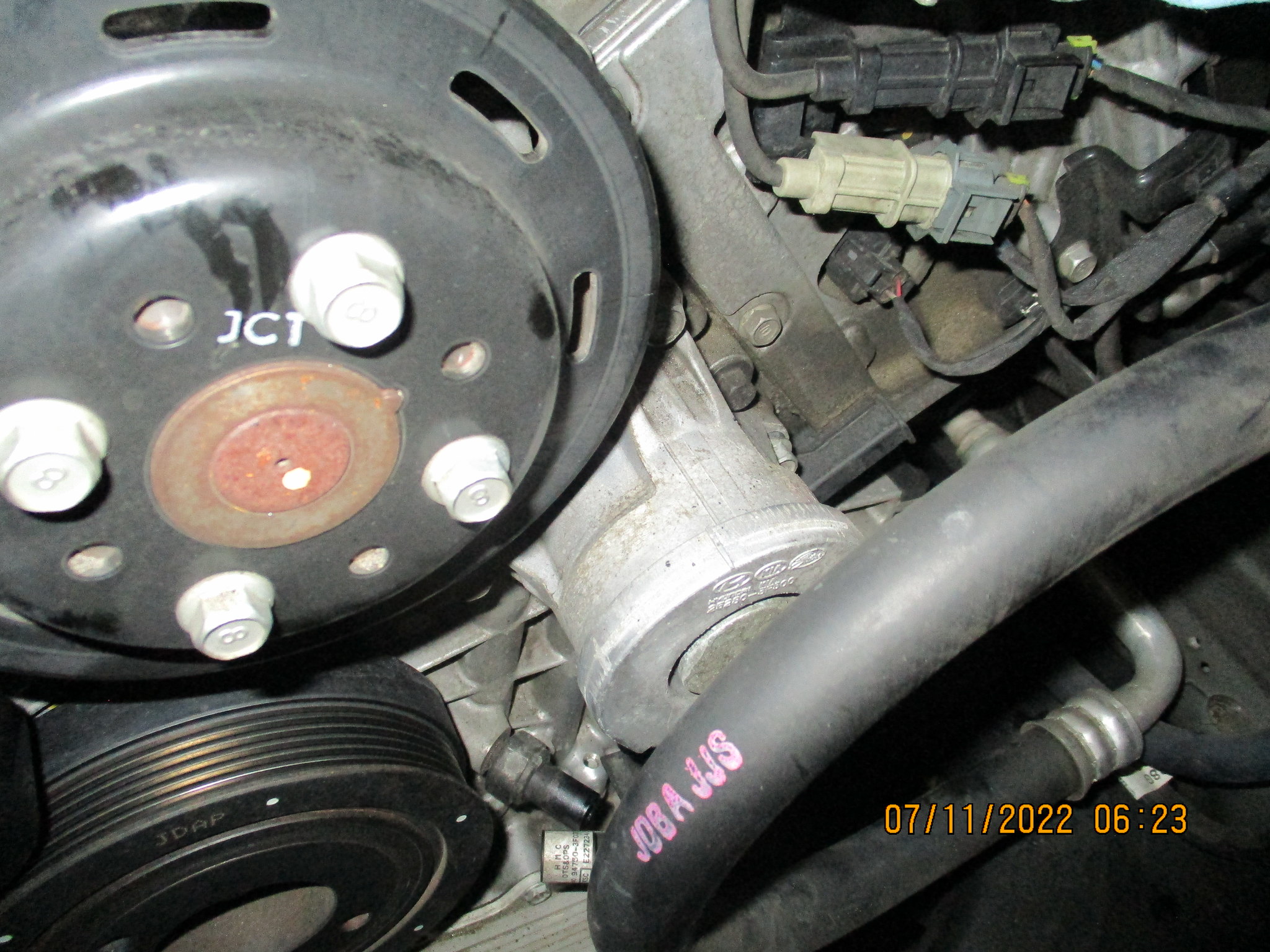
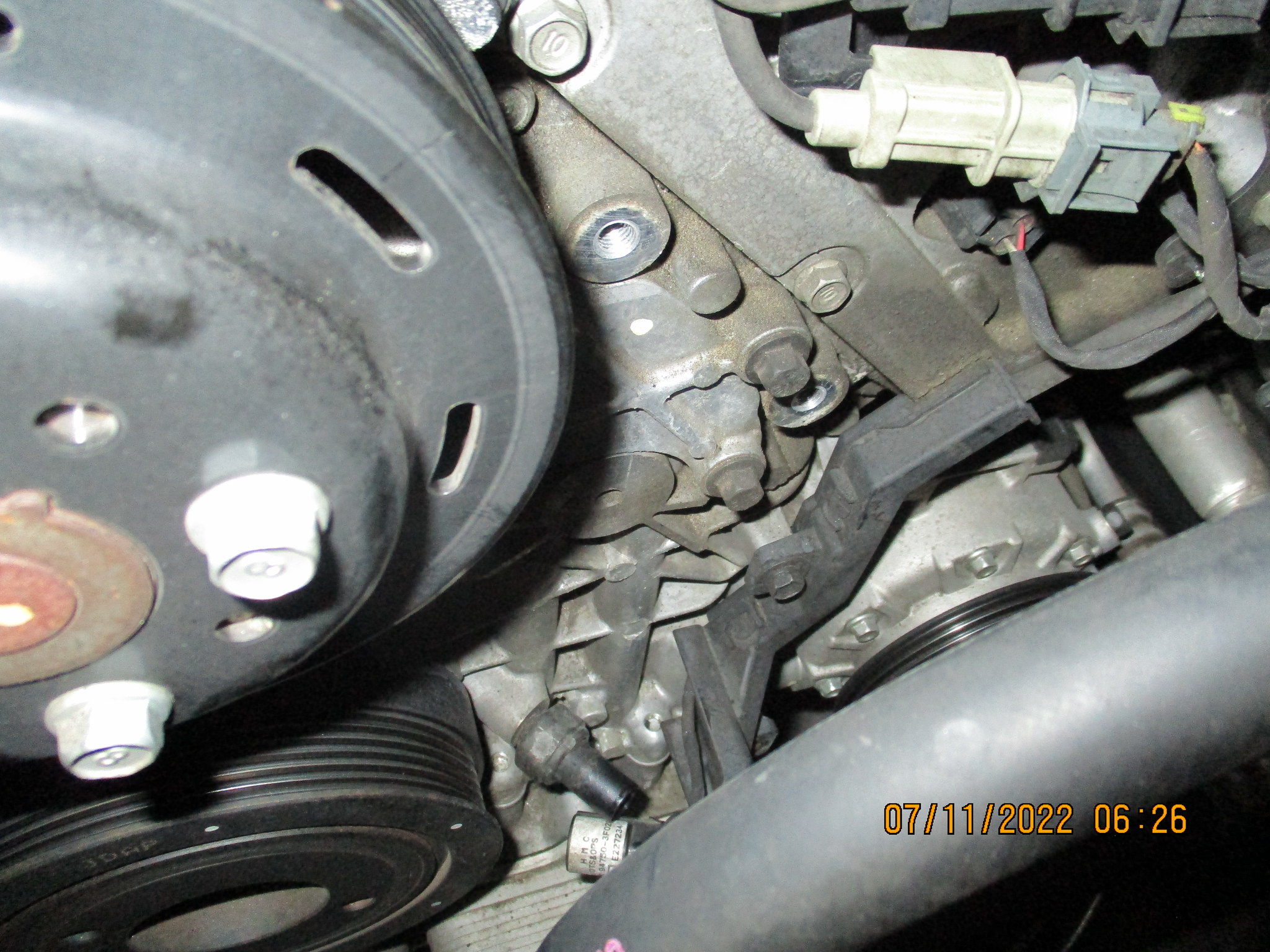
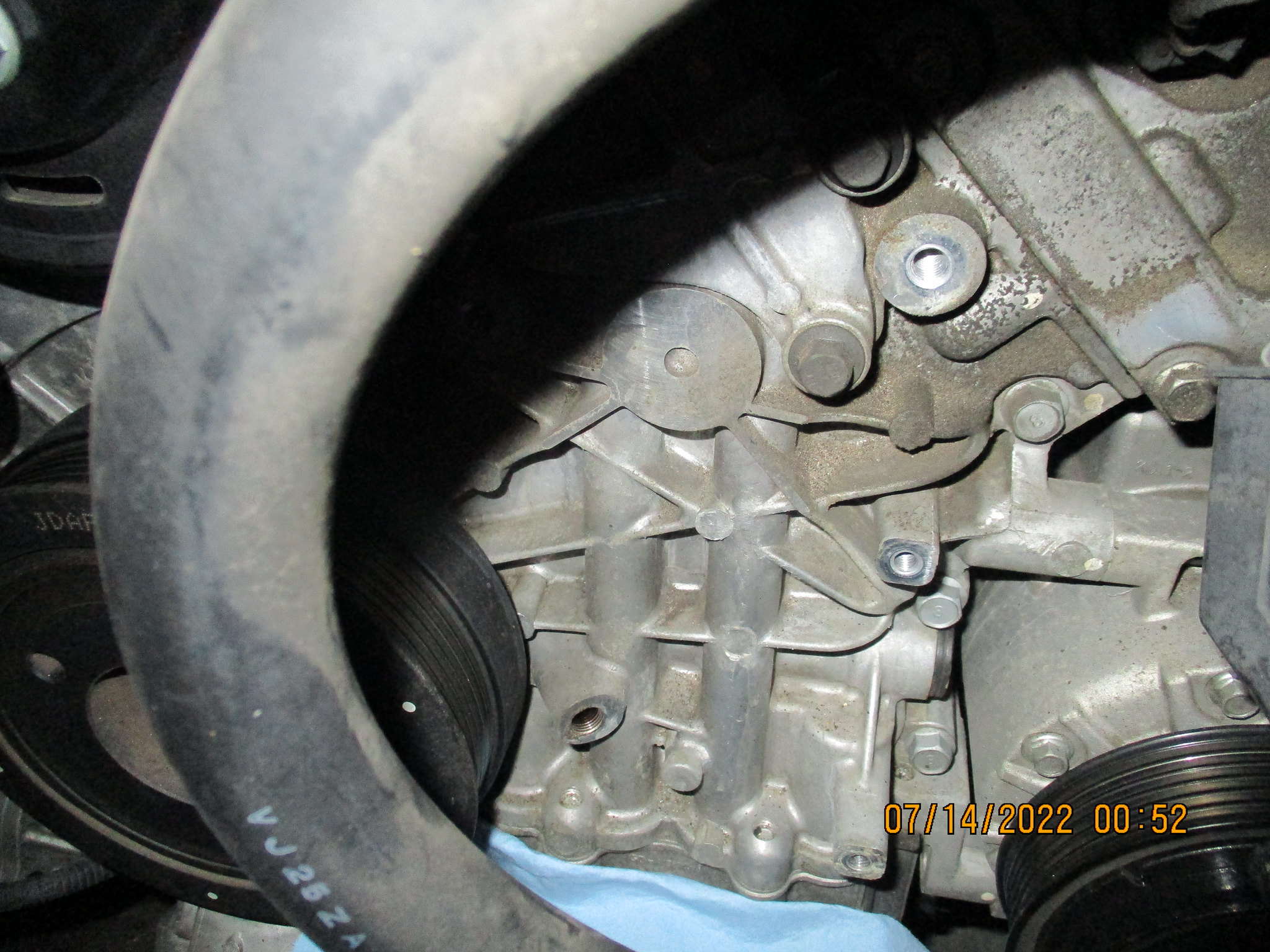
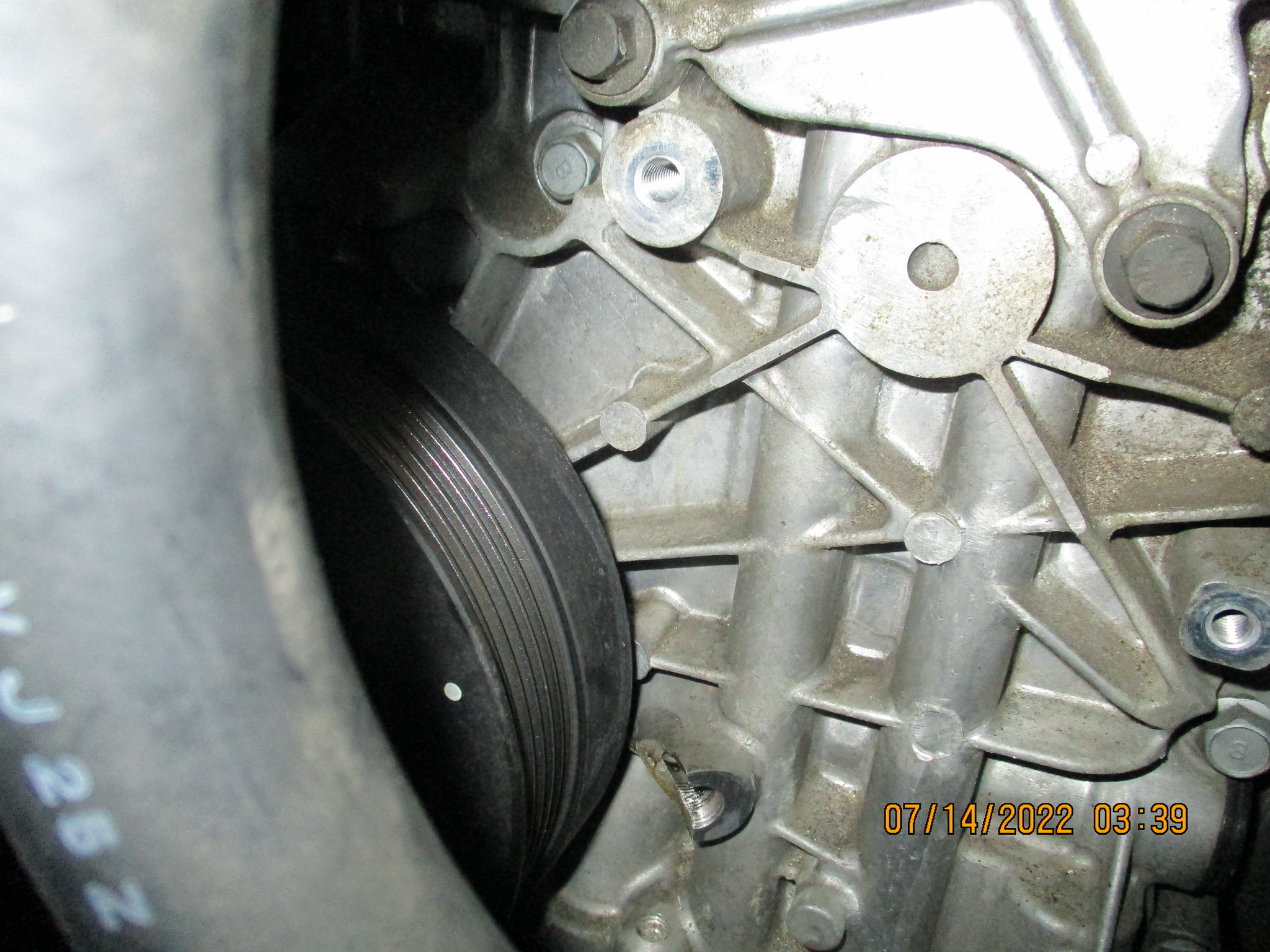
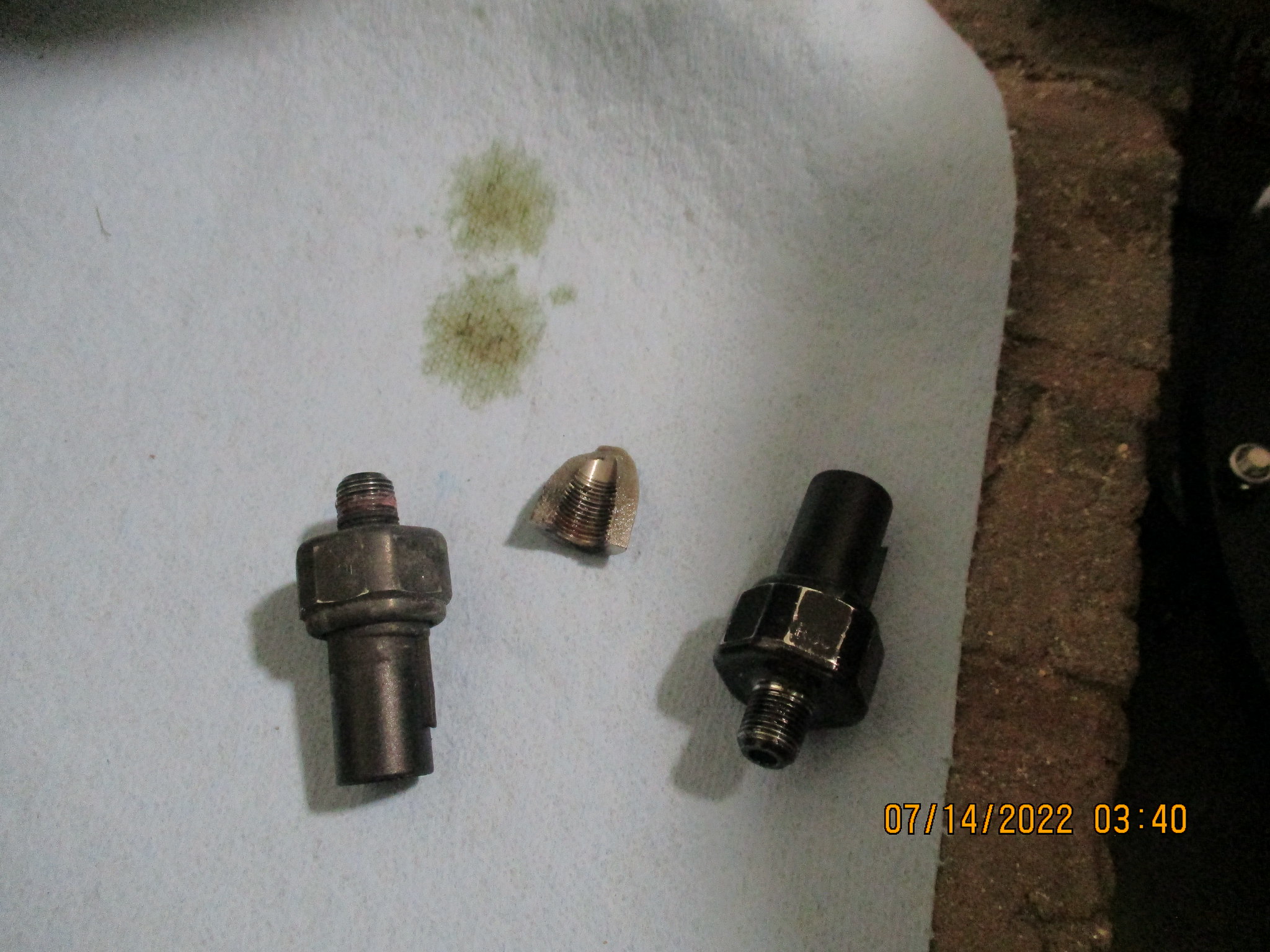
I was torquing down down the new oil pressure sensor to 15 ft/lb per the service manual and a part of the oil sensor port cracked and a broke off. The section is part of the lower front engine cover which is a $500 part from Hyundai. I will call a mobile welder to hopefully aluminum weld it back or braze it back on. Depending on the price; I may just blaze it on myself with an aluminum brazing rod and propane torch since the part is lightweight cast aluminum.

Aluminum brazing rods are rated to support heavy loads and temps than what the oil pressure sensor will need. I just do not want to deal with welding(or brazing), but I can do it if need be. It all depends on how much the mobile welder will charge.

Either way; I will need to remove my crank pulley to have better access to the oil sensor port. The risk of performing your own repairs is that crap happens. I should have just gone with the low end of the service manual torque range. The range was from about 10ft/lbs-15.9ft/lbs. I was thinking that 15 ft/lbs seem a bit much for the small threads on the oil pressure sensor, but I went for the high end to prevent any leaks. I will just use the low end of the Hyundai service manual torque specs for now on; lesson learn about Hyundai vague specifications. Most other service manuals just list one value.

I am pissed but what can I do but fix the problem. The broke piece is very light like foam so Hyundai uses very weak cast aluminum for the 5.0 engine block it seems. I will just use the low end for the all engine bolts for future repairs to avoid stripping and breaking mounts on the block.

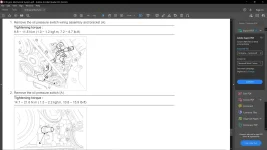
Here is how the service manual list torque specs for the oil sensor; a range from 10.8 ft/lbs to 15.9ft/lbs. I went with 15 ft/lbs and still broke the mount. Next time I will just go with 11 ft/lbs for the oil sensor.

1657788052114.png

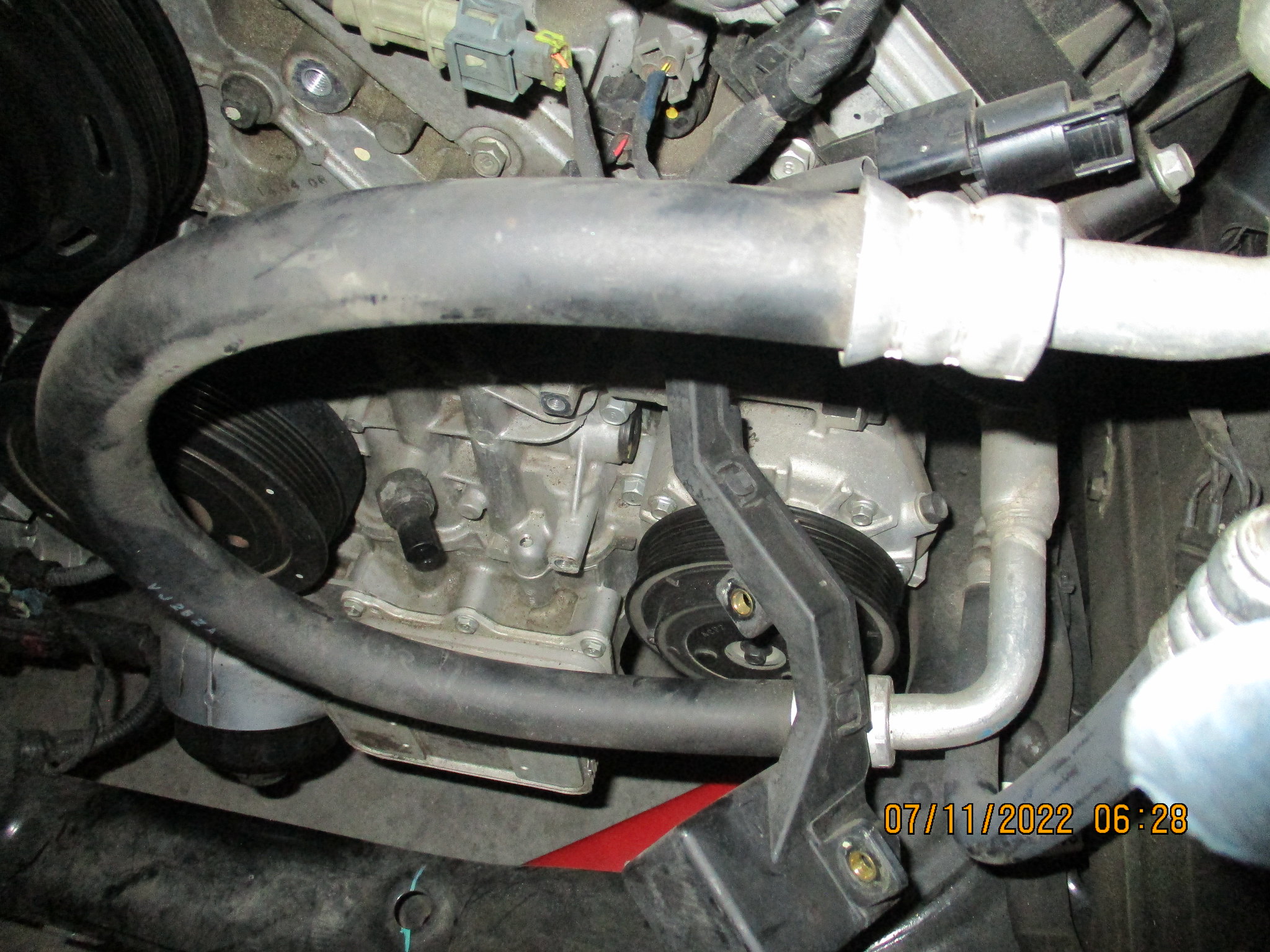
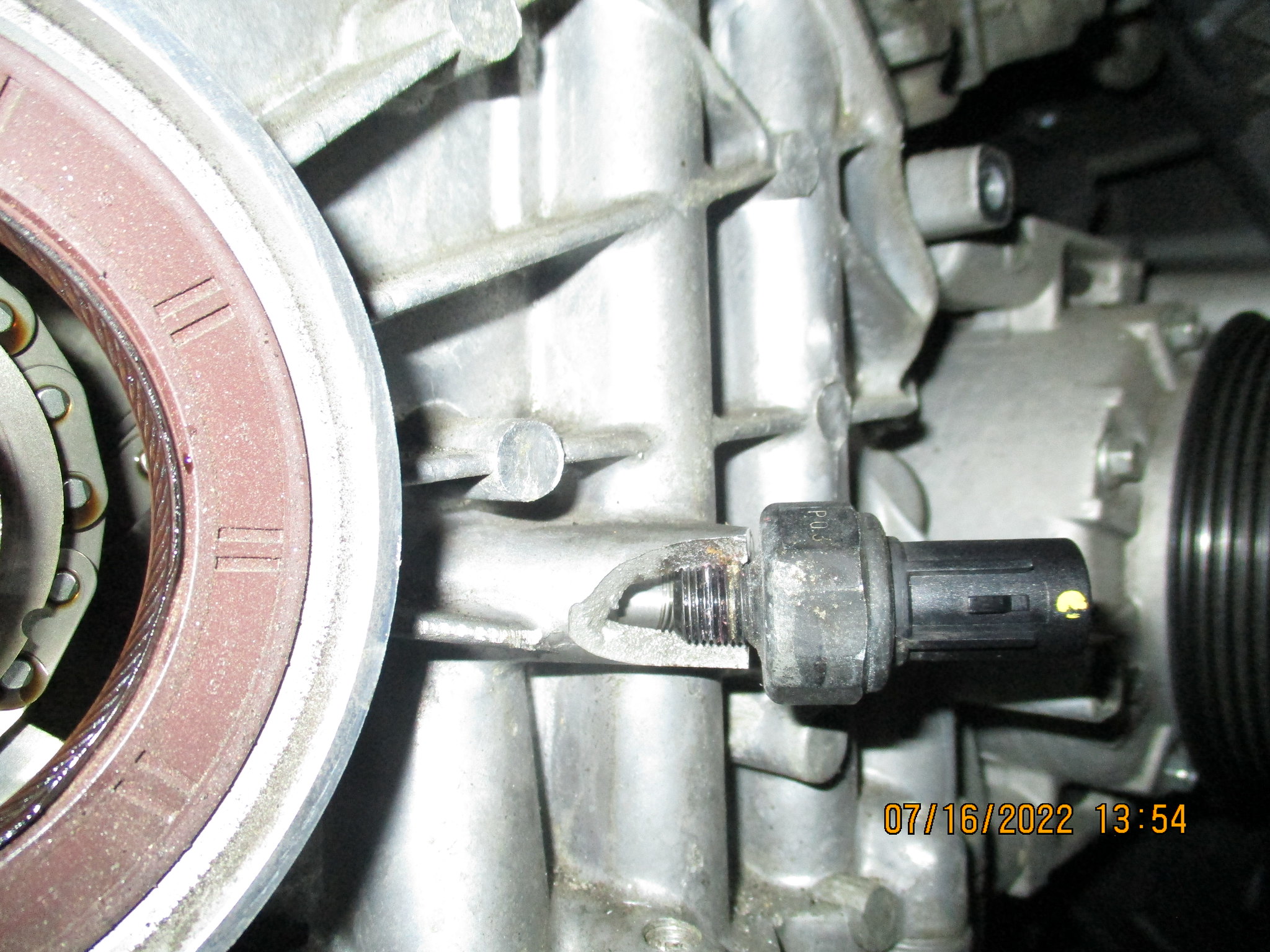
The oil sensor port before and after with the broken section that need to be welded or brazed back on.
52215642419_bc0343c753_k.jpg

52215368001_cf54bc5bcf_k.jpg

52215849245_bff8762f8a_k.jpg


Next, I will remove the crank pulley so that the welder or myself can repair this issue.
 
That seems incorrect on 1/8 npt it's typically in inch lbs not ft lbs, also the tightening sequence for NPT is typically from finger tight, and x number of turns from there based on thread size, I think the manual let you down. That being said that really sux !
 
That seems incorrect on 1/8 npt it's typically in inch lbs not ft lbs, also the tightening sequence for NPT is typically from finger tight, and x number of turns from there based on thread size, I think the manual let you down. That being said that really sux !
I agree that the Hyundai service manual is not well written and have some errors it seems. I think 8-11ft/lbs would have just been tight enough for the oil sensor; not 15ft/lbs on those small threads the sensor have. I should have just gone with my gut feeling and went with 11ft/lbs.

Well, I pulled the crank pulley(harmonic balancer). Next I will call an mobile welder and see how it goes. I should have just stuck with the alternator.:(

Wish me luck.


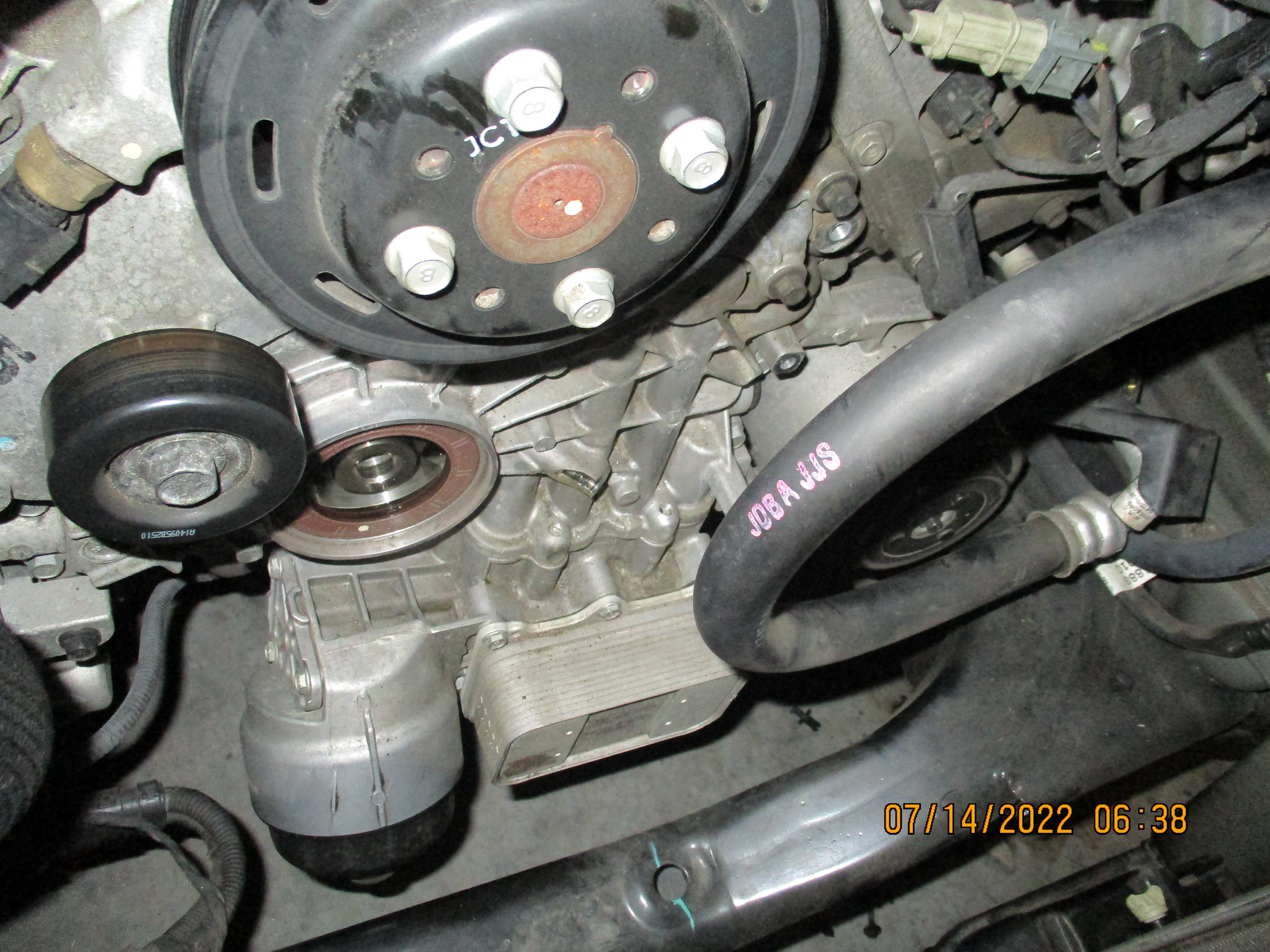
The balancer removed. The balancer is on tight in this car. It took a few tries with my air impact to break the 22mm nut loose. The service manual specify a range of torque from 289ft/lbs-296ft/lbs. I will using the lesser amount(or 290 ft/lbs). Now I(or a welder) can apply some heat without melting the rubber in the balancer.
52215578101_90a36367b3_k.jpg


The vague torque specs yet again in the service manual.
1657798992652.png
 
Man, after a few days of researching how to repair cast aluminum with a oil resistance seal and price checking; I have a solution to how to repair this problem.

I will use an expensive aluminum epoxy and fiber glass matting to repair the broken section of the oil sensor port. The port is still intact without any additional cracking so the epoxy "should" work to hold the broken section; especially since I will use a few coats with a some added fiberglass cloth for additional support. My first application will just be to glue the two parts back together to seal the crack and the other coats will just cover the entire port to form a super hard sealed cover and additional support. At best the repair will last a long time; at the worst it will be a temporary fix that slows the leak enough for me to drive the car to an repair shop to have to lower front cover replaced

I called a few repair shops and nobody wants to repair my car while it is disassembled in a non-running state for liability purposes; which I can understand. I could replace the lower front cover myself; but it would be a pain and requires removing the valve covers to properly do it. I could "easily" remove the front upper timing covers(to access the lower timing cover bolts) with the valve covers still in pace, but it may cause an leak since the front upper covers is sealed by a portion of the valve covers rubber gasket. Older rubber gaskets tend to fail when reused. Therefore, to properly replace the upper front covers without an leak the valve covers need to be removed and new valve cover gaskets used. The passenger valve cover is easy to remove; however the drivers side valve looks like it requires the AC lines to be disconnected to access the bolts(17 of them).

I am thinking a older Genesis maybe more trouble than it is worth; since valve cover gaskets tend to leak on high mileage cars and will need replacing soon I bet, so that driver side valve cover will need to be removed sooner or later. Plus, no import shops in my area work on Hyundai or Genesis models. They only work on the popular models like Lexus, Honda, BMW, etc. They even list the brands on their shops; none list KIA or Hyundai. The one mom and pop auto shop that claims they will work Genesis models would not take my car due to its being disassembled.

No welder will weld the part with it in place on the car; so I would have to remove the lower front cover just for them to weld the piece back on for about $300-400 in labor. A new lower timing cover cost $500. So no point in using a welder to repair the oil sensor port.

After I repair this oil sensor problem I may just go back to an easy to repair model like Lexus or Toyota. I normally will just keep an car and repair it based off the service manual specifications, but Hyundai service manual information is questionable and have cause me a major headache. Furthermore, the parts for the Genesis 5.0 is rare and expensive; if not on back order. The GDS scan tool needed for control module repairs is expensive. I believe my love affair with my 2015 is over at 90k miles.

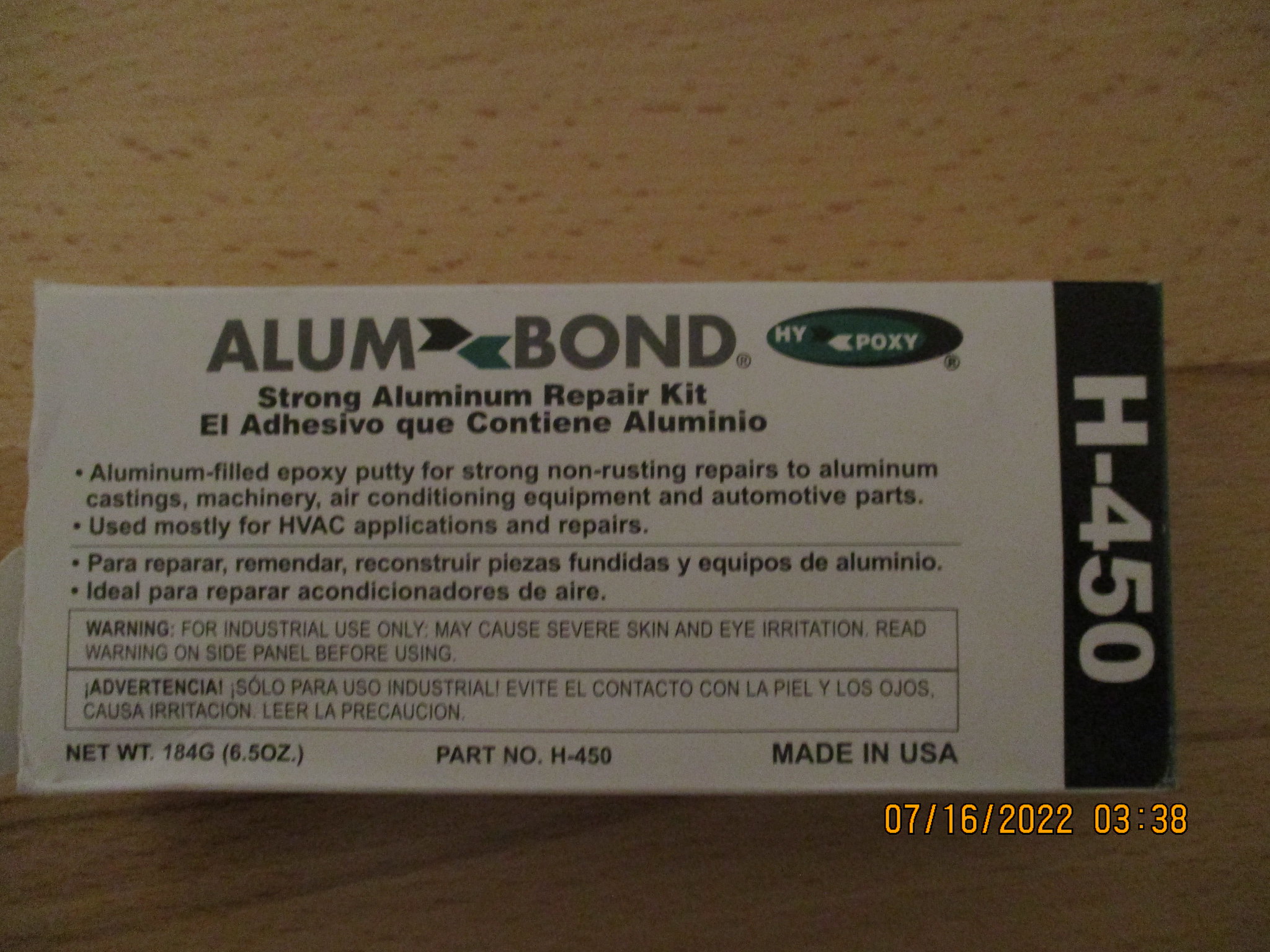
Here is the aluminum epoxy I will use with some BONDO fiber glass cloth to repair my broken oil sensor port on my lower timing cover. I was going to use JB Marine Weld, but saw this more expensive($30)professional grade epoxy that is rated for HVAC use and is it oil/fluid resistant. Perfect for my repair. Plus, it has aluminum embedded in the formula.
52219974175_1796654615_k.jpg
______________________________

Help support this site so it can continue supporting you!
 
Last edited:

Well, I decided to look into buying a used Toyota 3.5 V6 model like the Avalon. Well,Toyota 3.5 V6 engines seem to have an major issues with the front timing cover leaking, VVT timing actuators breaking due to a faulty pin, etc. So Toyota 3.5 V6 engines are not as reliable as they used to be from 2007-2016 or so. Fixing an front cover leak is a nightmare on those engines(requires dropping the subframe), therefore even worst than the Hyundai 5.0 V8. So I will just keep the Genesis and repair what I can that does not require dropping the sub frame. I will also just stick with low end of the bolt torque ranges listed in service manual for any bolts on the engine block to prevent any more bolt tightening issues.

I am just waiting on some more items to arrive so that I can repair the oil sensor port and get this car back on the road. I am prepared to just drop my car off at the local dealership if the aluminum epoxy fix does not work; which means a new lower front timing cover.

I also noticed that the oil sensor does not use all the threads in the port. I believe that I actually forced the oil sensor against the port itself while trying to reach 15 ft/lbs which split the port. I used a deep 24mm socket so that I could not see that the sensor was bottomed out to port when I tightening it down. Big mistake on my part and maybe costly. I should have just paid better attention to the actual oil sensor position instead of focusing on the torque wrench. Lesson learned.


The oil sensor port actually have a tapered threaded end in the block (weird) where the sensor bottom out. It seems that the oil sensor back is not meant to sit flush against the port. I guess that I just forced the oil sensor into the tapered end and split the port.


I should have stop tightening about here where the oil sensor treads ended inside the port.
52220672809_54a67e762c_k.jpg
 
Last edited:
Just my opinion...........
Those are tapered pipe threads.
No epoxy repair will hold against the wedging action of the tapered threads.
Since the broken parts will have to come off, see if a good welding shop will grind off the split thread section to good aluminum and create a solid aluminum block that fits snug against the cover; drill the block through and tap female pipe threads (probably 1/8" size); TIG weld the new block all the way around onto the cover.
Use plenty of pipe sealant or teflon pipe tape on the threads going back in.
Shame the OEM's don't use straight thread hydraulic fittings here; accounting probably rejects the 5 cent o-ring cost.

Best of luck with this very annoying issue.
 
Just my opinion...........
Those are tapered pipe threads.
No epoxy repair will hold against the wedging action of the tapered threads.
Since the broken parts will have to come off, see if a good welding shop will grind off the split thread section to good aluminum and create a solid aluminum block that fits snug against the cover; drill the block through and tap female pipe threads (probably 1/8" size); TIG weld the new block all the way around onto the cover.
Use plenty of pipe sealant or teflon pipe tape on the threads going back in.
Shame the OEM's don't use straight thread hydraulic fittings here; accounting probably rejects the 5 cent o-ring cost.

Best of luck with this very annoying issue.
Thank you.

If I decide to remove the front cover then I will just install a new one instead of spending about the same amount of money to have a welder "properly" fix the old one. Welding cast aluminum takes a lot of skill to get right.

The broken piece fits back on snugly by hand and actually can be held with the oil sensor screwed in place; so "hopefully" the aluminum epoxy can make a strong enough bond to hold it together. However, my concern is also what you think may happen. The piece will glue(epoxy) back on and then the oil sensor break it off when torqued down. Hence why i will try to first epoxy the broken section back on with quick setting Loctite HY 4070 and then after it cures I will completely coat the oil sensor port with the Alumni bond epoxy. Both epoxies are very strong so the repair to the small section of the port should hold since 3/4 of the port is still intact. The oil sensor only needs about 10 ft/lbs to seal up. My other concern is about the epoxy fix sealing in the engine oil at pressure while driving.

If the epoxy fix does not holdup, then I will just buy a new cover and do the repair the correct way. Heck, I will still replace the front cover anyway since I will never trust the patch even if it does hold up for a while. This will get the car back on the road until I can buy a new $500 front cover and figure how to remove the driver side valve cover without removing the AC refrigerant and lines.

The more expensive industrial grade epoxies seem to do a great job at holding metal parts together and are fluid resistant. Even the cheaper consumer grade epoxies like JB Weld does a decent job at repairing broken metal parts securely. Both epoxies I am using are industrial grade; so it should work to hold a piece on 1 inch cast aluminum and a small threaded oil sensor.

Good ideal about using a crap load of tread sealer; that was my plan to account for the slightly wider thread opening after the fix. Hopefully some of the epoxy make it the threads and fill in the gap. I am also considering just epoxying the oil sensor in place after the port repair to reduce the chance of leaks and then swap out the cover at a later time.

Wish me luck.
 
Last edited:

I know it'll cost a pretty penny, but I'd just replace it. More than convenient, it offers peace of mind.
 
I know it'll cost a pretty penny, but I'd just replace it. More than convenient, it offers peace of mind.
I agree that I will need to replace the front cover later for piece of mind, but for now I will try repairing the small section with industrial grade aluminum epoxy. Both of the epoxies are suppose to work at much higher stress levels than an inch long cast aluminum piece. I am sure that it will hold up fairly well; especially since I will use about three coats of epoxy on the port with fiber glass cloth to help resist twisting forces at the treads. If I was just trying stick on a heavier piece of metal that was completely seared off the block then I would not even try this fix. But most of the oil sensor port is still intact; so the broken section has a good place adhere to.

If the epoxies fail then I will just drop the car off at a repair shop or have it towed so they can just replace the front cover. I need a break from major auto repair work for a while. I just want this epoxy repair to hold up long enough so that I can order an new front cover and maybe a refrigerant recovery pump(to pull the AC lines) to tackle the front valve covers. However, just looking at videos on engine block repairs with the lesser grade epoxies like JB Weld; epoxies work well to repair and plug up engine block issues when used correctly for years.

Futhermore, I really do not like just anyone working on my engines. If the shop does it wrong it could cause even more issues down the road. The front cover need to be sealed properly and the crank bolt need to be properly torqued to specs( or close). Many shops will just reuse old crank bolts and use an air impact to crank down harmonic balancer bolts which causes more issues sometimes later down the road if the crank bolt was not properly tighten down(loose balancer) or a crack in the crankshaft if too much torque was used that cause it fail(split) later down the road. The shop will deny any wrong doings and probably just blame it on wear if the issues happen a couple years later.

Therefore, I still will not have better piece of mind if I just let someone else tear apart my engine.

I work on all my cars and most of the time things go well when I just follow the service manual, however sometimes the service manuals do get it wrong and will be updated to change minor errors(TSB,reprint,etc). I will look at the latest information located on the service website before I do anymore repairs on the engine block.

Sometimes cast aluminum breaking/cracking problem could also just be a result of a bad casting that was just prone to failure when a bolt is removed or reinstalled. It is pretty common to have this happen when changing the oil sensor on many engines. Nissan 3.5 engines have this happen a lot on the cast aluminum when changing the oil pressure sensor, but it causes cracks in the upper oil pan itself. So the whole aluminum upper oil pan have to replaced or repaired.

The risk of owning and working on older cars I suppose.
 
LOL. This guy in this video repaired a similar break in a cast aluminum part with some JB Weld Quick Weld; which is a weaker more brittle epoxy than regular JB Weld. However it worked perfectly to hold the broken cast aluminum piece back on. The cheaper epoxies are more rigid(less flex and brittle) when cured than the industrial grade(more flex and less brittle). The cheaper stuff still works well it seems based on the prep and usage.

I will do what he did in the video with the Locite HY 4020 epoxy since it has a quicker set time to hold and seal the piece in place since it is very hard to use a clamp to keep the broken piece still for the longer curing Alum Bond to set. And then I will use Alum Bond and fiber glass cloth on the entire port for added strength. It will not be pretty repair, but it will be strong.

I believe these epoxies will work because cast aluminum is porous which means the Locite HY 4020 epoxy will fill in the pores to bond well to mate the pieces back together. I could probably just use the Locite HY 4020 and still have a strong repair, but I want to make sure that the oil sensor port is strong enough to last for years. A additional coating with fiber glass support should make the cast aluminum port stronger than it was when new; so hopeful no cracking. It will be like a having a strong plastic-like engine part. Heck the transmission pan is plastic and have no issues with failing.

Hopefully these industrial grade epoxies can expand and contract with the engine heat cycles without and cracking and leaking. I will soon see. I am just waiting on the Bondo fiber glass cloth to arrive.

 
I decided to test the Alum Bond on some aluminum welding coupons(plates). The stuff is pretty tacky and can hold two coupons together without needing much pressure. Just press and hold for about a minute. I will give it 24hrs so that the epoxy fully cures and test how strong the bond is on the two coupons. I also tried it on some Bono fiber glass cloth. The cloth soaked it right up. I will see how strong that bond will be tomorrow as well.

A little goes a long way with this epoxy. I may just only use it and the fiber glass cloth to repair the oil sensor port. It seems look good stuff it holds. I did not prep the cast aluminum coupons. I just applied the epoxy on the coupon ends and pressed them together to see what happens if the mating surface is not perfectly clean. If the epoxy bonds well to the coupons without prepping them , it should work on my oil sensor port with proper prepping(sanding and cleaning).

Fingers cross that the epoxy actually works to create an weld like bond.

Here is my test. I will also place the bonded coupons in engine oil and let it soak for a few days to see if the bond hold up if the bond is strong after epoxy cures..

Alum Bond mixed up in plastic cap on wax paper.
52227623744_27d0ff981e_k.jpg


The cast aluminum welding coupons(plates)
52227354026_15dde5c785_k.jpg

52227626304_af8c5b59b0_k.jpg


The Bondo fiber glass cloth. It soaked up the epoxy fairly easy.
52227356121_334ca238f2_k.jpg

52227369713_d6c6d2421e_k.jpg
 
Last edited:

Well, the test went well sort of. The Alum Bond held the butt joint well after about 11 hours of cure time. However, it broke when I bent the plates by hand at the joint with about enough force to bend a hollow shower rod.

In Alum Bond defense I did not prep the bonding area nor did I clamp down the pieces. I just held the pieces together for a few seconds until the epoxy got tacky and let it set.

I did another test by prepping the area and pressing the plates together for a few minute since I do have not a clamp. I will let it set for 24hrs this time and see how the epoxy set when fully cured.

I think that nay just go with the Locite since it does stat it is for structural repairs.
 
Last edited:
Hey, could you take some photos of the process?
 
Hey, could you take some photos of the process?
I did for the first test. The second test is basically the same with some added sanding and me holding the plates together longer. I also mixed the epoxy longer for 4 minutes(per the directions) instead of the quick minute the first time.

These are more for me to see if the epoxy will be a workable solution before I waste my time. It also allows me time to perfect the process. I will add some more pics later.
 
Back
Top