This is an old thread, but I don't want to start Yet Another LED Conversion Thread (tm), so just tacking onto this one.
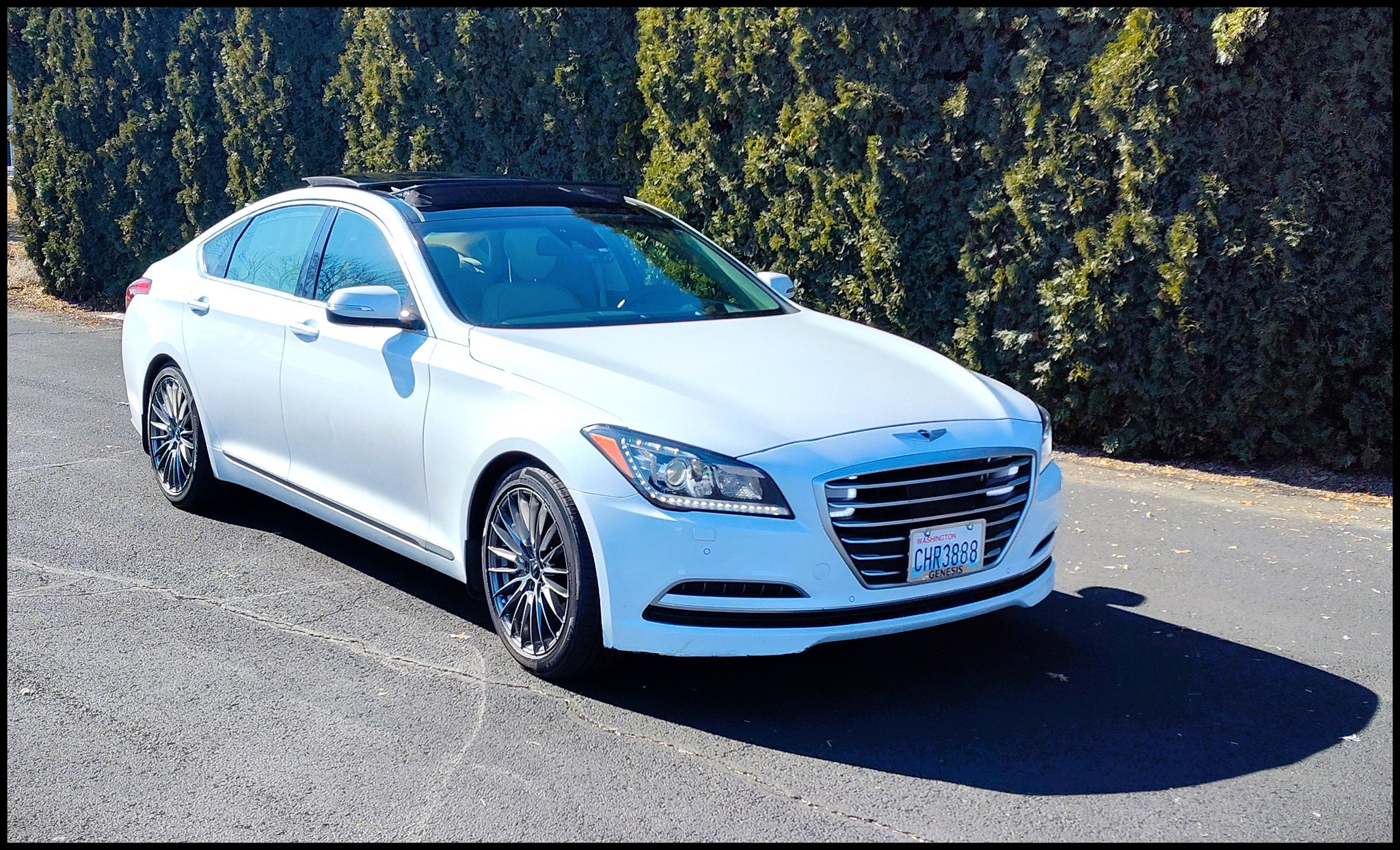
I ordered switchback LEDs thinking it would be awful cool to have amber LEDs for DRL, and white LEDs for blinker. Unfortunately, it just doesn't work that way, for a few reasons.
1. The existing wire harness has an 1156 socket intended for an 1156 bulb. The difference between 1156 and 1157 is that the 1156 has a single contact for a single input to drive a single filament. The 1157 has two contacts for two separate inputs to drive two separate filaments (e.g., one for DRL, one for blinker). When you pop a switchback (which is an 1157 bulb with two contacts - one for white, one for amber) into an 1156 socket, if you're lucky one of the 1157 contacts touches the 1156 socket contact and you have an LED replacement, but it'll only be amber. The switchback bulb expects to get signal on one of the signal pins for amber, and on the other signal pin for white. Newer cars actually provide one or the other depending which mode that bulb should be in (DRL or blinker). This is impossible "out of the box" on the Genesis since it provides signal (either off, on steady (PWM @60% duty cycle), or on intermittently) over a single input wire.
1a. The passenger side seems to be universally wired "backward" -- e.g., ground will contact the bulb edge and signal (more on this in a second) will contact the pin on the driver side, but ground will touch the signal pin and signal will touch the bulb edge on the passenger side. This works perfectly fine on an incandescent bulb, which doesn't actually have polarity as such, but is a problem for an LED, which very much has a polarity and expects ground to be ground.
2. The blinker signal is an intermittent +12V, but the DRL signal is PWM with ~60% duty cycle. In other words, when blinking, you get a full +12V, but when acting as a DRL, you have a +12V signal that pulses on and off very quickly, and is on about 60% of the time. This works for an incandescent bulb; it doesn't really care. It takes some time for the filament to glow/fade, and PWM cycles fast enough that you don't really see that. Your LED, however, really will not like this unless it's specifically intended to be dimmable. (Mine have started acting all sorts of weird, with individual LEDs within the LED cluster turning on and off more slowly in weird patterns that must be puzzling to oncoming cars.) I haven't run into any that are dimmable (granted I've only tried a few different more-or-less generic brands).
3. Of course the 6 ohm resistor thing. The Genesis doesn't (as best I can tell) use a blinker driver relay, so you can't swap it with an LED-friendly one. You have to simulate the old fashioned resistance of an incandescent bulb. And these resistors get hot. If you don't supply this resistance, the ECU believes the bulb in that slot is burned out (which is weird; it's not "open"; it's more like being "shorted", but stranger things have happened...), and you'll get the "hyperblink" problem where the blinker cycles at about 2x the normal rate, which is just dumb.
I embarked on a project to take care of problems 1 & 2. I have an 1156 "male" socket that impersonates the incandescent bulb and
plugs into the car's blinker/DRL "female" socket. It connects the input signal to the analog input on an Arduino Mini, which can read the input voltage. It's got an algorithm that reads that input over time and determines whether its state is "off", "on" (DRL), or "intermittend" (blinker), and drives two separate output pins to feed the white and amber signals on the switchback lamp (through a solid state relay switching a direct +12V input, since the Arduino Mini can't supply enough current for the LEDs itself). Those two output signals are fed to an 1157 socket that accepts the 1157 switchback LED units.
What I didn't understand when I embarked on the project was the PWM nature of the DRL signal. That really screwed up my ability to detect the "steady" DRL state, since at a micro level it's not "steady" at all; it's switching off and on super-quick! And when I drive the DRL on the output, I'm driving it at a steady +12V, which will make the DRL brighter than it's really supposed to be (the lesser of the two problems).
I've parked the project until I get the motivation to pick it back up. I may or may not finish it, but thought I'd share what I learned here to shed some light on the mystery of why folks are having mixed luck with the LED replacement. You're better off with the incandescent bulb or a single-color LED that's dimmable (for the crisp on-off that an LED provides). You'll need something with a bit more "logic" if you want true switchback with an amber DRL and white blinker.




 It's an app on my phone where I can control the LEDs, RGB strobe and flash, and solid colors. I don't use the obviously illegal settings, but run solid amber or solid purple, and I did contest it