CoconutRob
Registered Member
- Joined
- Jun 25, 2018
- Messages
- 740
- Reaction score
- 538
- Points
- 93
- Genesis Model Type
- Genesis G70
Does anyone know the proper torque for spark plugs?
The car lovers social network
Automotive components
Create videos that captivate
Automotive Hot or Not
Vehicle hacker protection
Genesis parts & accessories
Advertise with us!
The car lovers social network
Automotive components
Create videos that captivate
Automotive Hot or Not
Vehicle hacker protection
Genesis parts & accessories
Advertise with us!


Does anyone know the proper torque for spark plugs?
It all depends on what you feel comfortable with. If you were not feeling it after watching the Tork video, then I don't blame you for not wanting to do it! Nothing wrong with that. Also, if you're having trouble finding a good mechanic, then perhaps also try and look for a performance shop. If they've done spark plugs on a WRX or any Subaru they will be totally comfortable doing plugs on the G70/Stinger.
I am still planning on making a how-to video of the DIY spark plug replacement. I want to check my plugs once I get my car back together, lol.
Just like @Beefer said, the 2.0 would be easy breezy! Pretty much just like any other non-boxer 4 cylinder. I wouldn't sweat it!

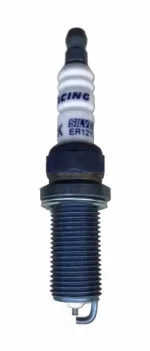


Just thought I'd post my results replacing the plugs in my G70 to give someone some encouragement. I read all the posts and bought the wobble spark plug socket; already had the 10mm box wrench and socket with extensions for the coils. I used all 3/8" drive ratchet and sockets. Watched the Kosa video posted in this thread (#22), this is what gave me the confidence to try.
Started with the drivers side plugs (easy side) to get some experience with the parts and process. It took me 45 minutes to do this side, and I did not try to go fast.
Now for the passenger side, I first disconnected clips and removed both outside coils front and rear (left plugs in so nothing would drop in the holes). This makes extra room for the hardest one in the middle. With a little patience and my medium sized hands, I was able to get the middle coil and plug out and maneuvered the coil toward the rear of the car; plug was easily removed toward the front of the car. Replaced the middle plug, reassembled, then worked my way to the outer plugs. This side took 1 hour, 15 minutes. So total of 2 hours for the job.
Recommendations:
- Must get the wobble socket! This is the one I got: https://www.amazon.com/gp/product/B0014ZVSVK. I suppose you could also do it with a standard plug socket and swivel, but having a single 6" magnetic tool to slide way down there seemed like a better option.
- Consider getting the offset 10mm wrench here: 8mm x 10mm 12 Point Offset Double Box End Wrench Polished Finish, Cr-V - - Amazon.com. This would have been helpful for the passenger side coil near the front of the car. I was able to get this one done, but would have been easier with this wrench.
- Get familiar with the spring clips that secure the coil wires on the driver's side so that you'll know how they work before doing the ones on the tighter passenger side. Find the clip to pull out first, then push down on the clip area. At this point, the plug should pull off the coil fairly easily.
- Keep the socket straight on the plugs or you risk cracking the insulator when torquing them down.
- If you have the time and can wait for the engine to cool, start the car and drive it after completing the 3 plugs on the driver's side. If the car runs fine, this will give you the confidence to do the other side knowing there is no problem with the first 3 plugs.
- Take your time and don't panic. If you get frustrated with what looks impossible, take a breather and come back. I was amazed how the center coil was able to slide up and out sideways. Almost seems like it was designed to do this with the tightest of tolerances.
I am not a mechanic, just your average Joe with a few tools in the garage. Give it a try and save some bucks! The extra benefit is if you ever need to swap your plugs back out, you can do it yourself without paying the mechanic again.
The 2.0T already has a Heat Range of 8 for the stock plugs. All my logs don't indicate and knocks or spark plug related issues so I'm staying put for now. But if they do need replacing, I will get the HKS M45XL or the NGK R2556.
The Denso plugs for the 3.3t is super cheap. The alternative plugs for the 2.0T are pricey!

Go towards the bottom for installation instructions of jb4: Kia / Hyundai Turbo JB4Do you know where i can find the instructions on how to install the spark plugs and jb4, neither came with instructions

What (if any) effects are there from just replacing the OEM plugs with Denso 5346 IKH24 1-step plugs? By this, I mean replacing just the plugs with no JB4 and getting the JB4 installed a few weeks after?
Just curious
It would be a downgrade.
1 - Colder plugs are only needed when creating a hotter, more volatile environment in the combustion chamber, as they're able to transfer more heat out of the combustion chamber than a hotter plug. The problem with this is that if you use a plug that is too cold (ie on a stock engine) then you're less likely to bring up the temperature of the plugs themselves hot enough to self clean the electrodes. Carbon buildup occurs, and the plugs will foul very quickly, resulting in very poor performance. Now, if you were to drive your car primarily on the track, with everything else stock, then a 1 step colder plug would be perfect for that.
2 - The Denso plug is an inferior plug to the OEM NGK, at least for our engines. Forget all the physical features and focus on this one fact.. The OEM plugs run at a 0.035" gap, reliably, on a stock engine. The Denso's *might* be able to get away with 0.028" on a stock engine...but if you gapped them up to 0.035", you'd be misfiring like crazy when on the throttle. The NGK's, in this case, create a stronger, more reliable spark.
Now, don't get me wrong. Denso makes fantastic plugs, but their product line hasn't yet been adapted to our engines. The iridium power line of plugs are beginning to get a little long in the tooth. Relatively, speaking.
Interesting, and thank you for the response. One take-away I am curious about is if the NGK is a better plug overall, should we go with a one-step colder NGK Iridium or Platinum? And, if so, what gap since the gap difference between NGK and Denso (on a stock engine) seem to not be anywhere close.
I will be getting the JB4...I just want to make sure I get the best plugs to go with it as well as with our engine.
Thanks again

Is it the same one for the G70 2.0T 2019As Beefer just said^
Definitely get the JB4, most effective and reliable tune for the g70 as of right now
Can anyone recommend spark plugs for 2.0 g70? And what would be the gap size on them?
Thank you,
Can anyone recommend spark plugs for 2.0 g70? And what would be the gap size on them?
Thank you,

We are running NGK ILKR9Q7G, which are pre-gapped to 0.028". All 8 of mine were between 0.026-0.027" so no need to change. Same specs and heat range as the recommended HKS at a lower cost.Bump this.. asking the same question, gap for 3.3 seems to be .022”, but wondering if the same goes across the board?
I have Denso IKH27/ 5347’s to put in, but want to gap them right and save for taking them back out
Thanks!We are running NGK ILKR9Q7G, which are pre-gapped to 0.028". All 8 of mine were between 0.026-0.027" so no need to change. Same specs and heat range as the recommended HKS at a lower cost.
Runs Map 0, 1, 2 no problem.
 | ||||
 |  |  |  |  |
 |  | |||